THE ADVENTURE COLLECTIVE® · Independent discovery and booking for outdoor travel

A compact five-day circuit that pairs the Golden Triangle’s historic highlights with immersive wildlife: Taj Mahal at sunrise, Bharatpur’s bird wetlands, and two Ranthambore safaris for a chance at tigers. Expect early mornings, long drives, and carefully timed park entries.
A compact five-day circuit that pairs the Golden Triangle’s historic highlights with immersive wildlife: Taj Mahal at sunrise, Bharatpur’s bird wetlands, and two Ranthambore safaris for a chance at tigers. Expect early mornings, long drives, and carefully timed park entries.
Sunrise breaks over the Yamuna as you step toward the Taj’s marble face—cool air, a hush of camera shutters, and the silhouette of domes sharpened by first light. From Delhi’s broad ceremonial avenues to the scrubby rise of the Aravalli foothills around Ranthambore, this five-day circuit pushes and pulls you between imperial architecture and living wilderness.
Verified experiences and guided adventures in the surrounding area.
Operated by Tour Guide Delhi · New Delhi, Delhi
Sunrise breaks over the Yamuna as you step toward the Taj’s marble face—cool air, a hush of camera shutters, and the silhouette of domes sharpened by first light. From Delhi’s broad ceremonial avenues to the scrubby rise of the Aravalli foothills around Ranthambore, this five-day circuit pushes and pulls you between imperial architecture and living wilderness.
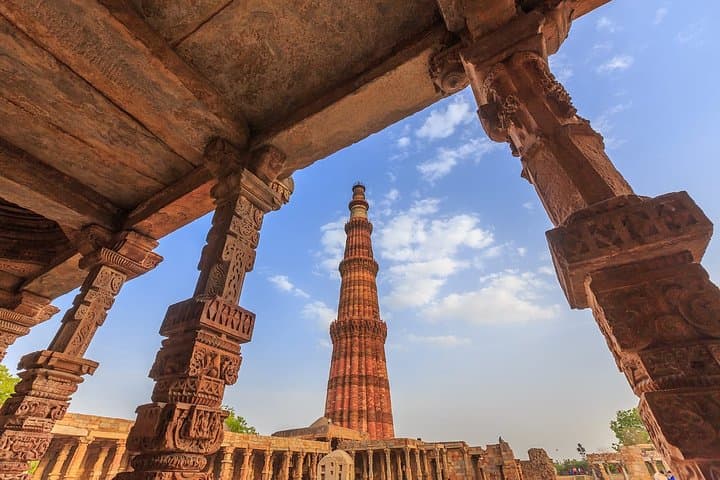
The route threads three eras: the Mughal legacy in Agra’s Taj Mahal and Agra Fort, the British-era planning and Lutyens landmarks across New Delhi, and Jaipur’s 18th-century Rajput cityscape—where palaces and stone observatories recall princely courts. Geologically the trip moves off the Indo‑Gangetic plain into older Aravalli outcrops near Ranthambore, which create the rocky ridgelines that tigers and leopards use as vantage points. Bharatpur (Keoladeo) adds a seasonal floodplain ecology—wetlands that host thousands of migratory birds each winter.
Practical guidance: days are long and driven—expect multiple early mornings for Taj sunrise and two game drives in Ranthambore (early morning and late afternoon). Carry binoculars for Bharatpur and a telephoto lens for safaris; permits and park slots are scheduled, so punctuality matters. Light layers accommodate dawn chills and midday heat; sun protection and plenty of water are nonnegotiable. Respect park rules: remain in authorized vehicles on safaris, keep noise low in birding zones, and follow guide instructions around wildlife. With modest packing and an appetite for varied terrain—from city streets to dry deciduous forest—this itinerary balances heritage sightseeing with high-impact wildlife encounters.
easy.
5 days.
Suitable for travelers with basic mobility—mostly vehicle-based sightseeing with short walks at monuments and wetland trails.
Tigers are wild and sightings cannot be guaranteed; the itinerary maximizes chances with two scheduled game drives, but success depends on luck, season, and park conditions.
Yes—days are largely vehicle-based with short walks; accommodations and transport are provided, but consider the early starts and long drives when booking for infants or mobility-limited travelers.
Many hotels and the private vehicle service are wheelchair accessible; major monuments have limited accessibility—check specific site facilities in advance and notify operators of needs.
Safari slots and park entry are arranged by the operator; bring valid ID (passport) and follow guide instructions—no separate permits usually required for travelers on organized tours.
The Golden Triangle stitches Mughal-era Agra, Lutyens’ New Delhi, and Jaipur’s Rajput capital—each stop reflects distinct political and architectural histories from medieval to colonial India.
Ranthambore operates under landscape-level conservation efforts balancing tourism and tiger protection; visitors should stick to designated vehicles and follow park rules to minimize disturbance.
Tour Guide Delhi operates guided outdoor trips and adventures with an emphasis on safety, stewardship, and memorable experiences.



Sunrise breaks over the Yamuna as you step toward the Taj’s marble face—cool air, a hush of camera shutters, and the silhouette of domes sharpened by first light. From Delhi’s broad ceremonial avenues to the scrubby rise of the Aravalli foothills around Ranthambore, this five-day circuit pushes and pulls you between imperial architecture and living wilderness.
Sunrise breaks over the Yamuna as you step toward the Taj’s marble face—cool air, a hush of camera shutters, and the silhouette of domes sharpened by first light. From Delhi’s broad ceremonial avenues to the scrubby rise of the Aravalli foothills around Ranthambore, this five-day circuit pushes and pulls you between imperial architecture and living wilderness.
The route threads three eras: the Mughal legacy in Agra’s Taj Mahal and Agra Fort, the British-era planning and Lutyens landmarks across New Delhi, and Jaipur’s 18th-century Rajput cityscape—where palaces and stone observatories recall princely courts. Geologically the trip moves off the Indo‑Gangetic plain into older Aravalli outcrops near Ranthambore, which create the rocky ridgelines that tigers and leopards use as vantage points. Bharatpur (Keoladeo) adds a seasonal floodplain ecology—wetlands that host thousands of migratory birds each winter.
Practical guidance: days are long and driven—expect multiple early mornings for Taj sunrise and two game drives in Ranthambore (early morning and late afternoon). Carry binoculars for Bharatpur and a telephoto lens for safaris; permits and park slots are scheduled, so punctuality matters. Light layers accommodate dawn chills and midday heat; sun protection and plenty of water are nonnegotiable. Respect park rules: remain in authorized vehicles on safaris, keep noise low in birding zones, and follow guide instructions around wildlife. With modest packing and an appetite for varied terrain—from city streets to dry deciduous forest—this itinerary balances heritage sightseeing with high-impact wildlife encounters.