THE ADVENTURE COLLECTIVE® · Independent discovery and booking for outdoor travel

Move between Santa Cruz and Isabela on a five-day program that pairs the Charles Darwin Research Station with island wetland trails, Tintoreras snorkeling, and the white sand of Tortuga Bay. Expect close wildlife encounters, short hikes, and boat transfers.
Move between Santa Cruz and Isabela on a five-day program that pairs the Charles Darwin Research Station with island wetland trails, Tintoreras snorkeling, and the white sand of Tortuga Bay. Expect close wildlife encounters, short hikes, and boat transfers.
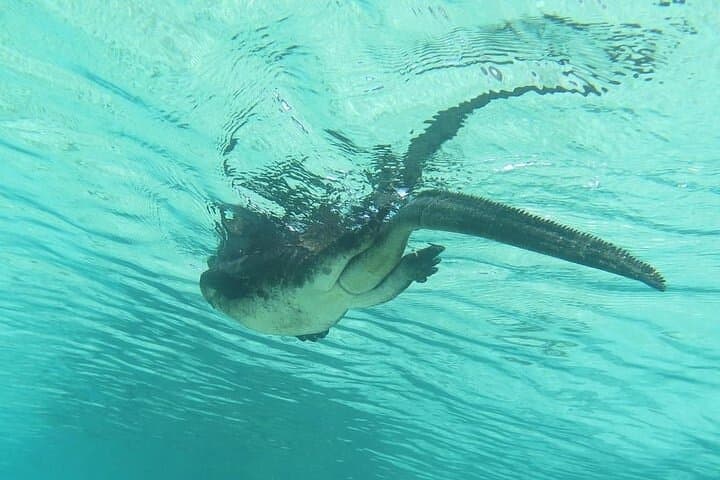
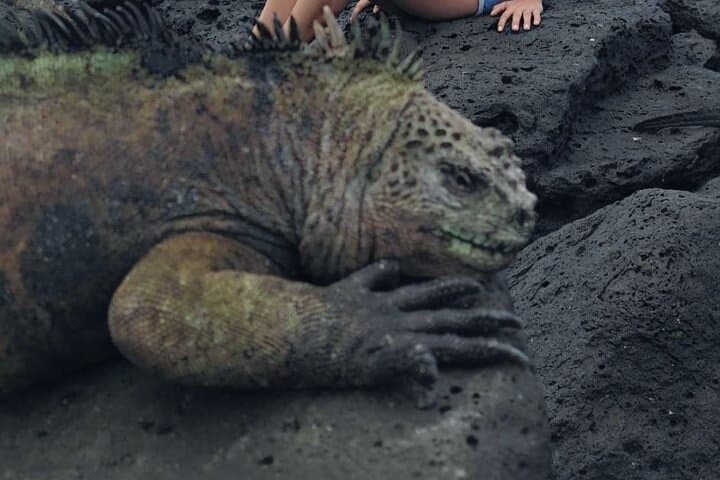
The ferry hums up out of Puerto Ayora before dawn, and the archipelago slides into a matte watercolor—black lava outcrops, red mangrove shadows, and the occasional bobbing sea lion that claims each dock like an old, comfortable friend. On this five-day loop you move between two islands that show the Galápagos at different scales: Santa Cruz’s bustling community and highland tortoise country, and Isabela’s raw volcanic edges where flamingos feed in brackish lagoons and marine iguanas camouflage themselves on sun-scorched rock.
Verified experiences and guided adventures in the surrounding area.
Operated by Perfect Destiny · Puerto Ayora, Galápagos
The ferry hums up out of Puerto Ayora before dawn, and the archipelago slides into a matte watercolor—black lava outcrops, red mangrove shadows, and the occasional bobbing sea lion that claims each dock like an old, comfortable friend. On this five-day loop you move between two islands that show the Galápagos at different scales: Santa Cruz’s bustling community and highland tortoise country, and Isabela’s raw volcanic edges where flamingos feed in brackish lagoons and marine iguanas camouflage themselves on sun-scorched rock.
History and geology are readable here in the landscape. Santa Cruz’s volcanic uplands retain the soft soil that allowed human settlement and agriculture, while Isabela—built from six overlapping volcanoes—is still shaping itself. Charles Darwin’s observations on these very shores helped frame modern evolutionary theory; at the Charles Darwin Research Station, you’ll see the tortoise breeding programs that stitch the islands’ past to their future.
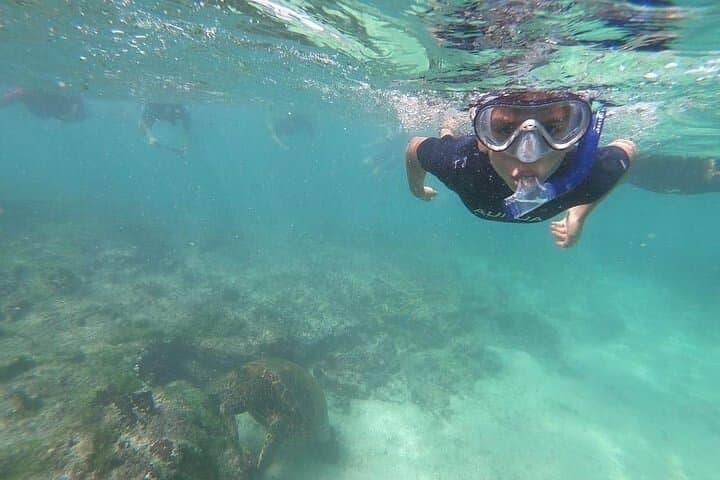
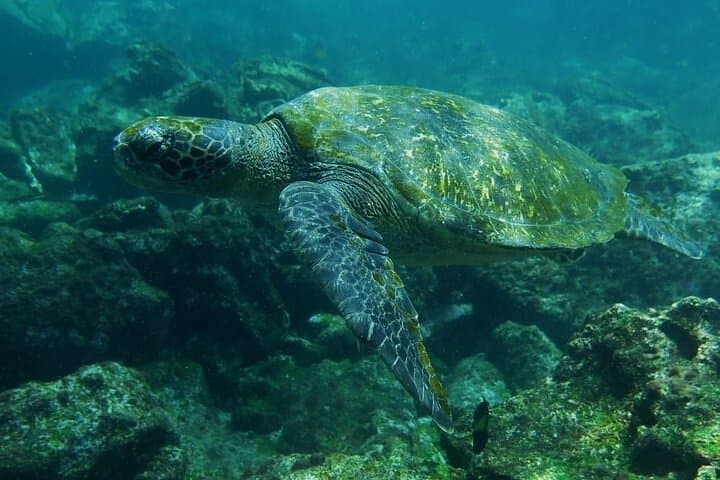
The itinerary blends focused wildlife encounters with simple, practical exploration. On day one you’ll arrive, settle in Puerto Ayora, and visit the research station to meet tortoises and learn about species recovery. Day two’s ferry to Puerto Villamil (about two hours) opens to wetland trails—flamingos, whimbrels, and quiet mangrove channels that feel like they dare you to move slowly. Day three is the Tintoreras islet, where snorkelers swim beside sea turtles, Galápagos penguins, and playful sea lions. Days four and five unpack snorkeling at La Lobería, walks to Tortuga Bay’s white sand and tide-sculpted rock, and a final transfer back to Baltra Airport.
Culturally, the islands are a working place—fishermen, park guides, and families maintain small-scale rhythms that support conservation-minded tourism. Expect bilingual guides and modest hotels with AC, often categorized as hostal or hotel depending on room counts rather than service quality.
Practical guidance: boats and light hikes define the pace, so pack reef-safe sunscreen, quick-dry layers, and a sturdy water shoe for rocky landings. Snorkel gear is often provided, but wetsuits are usually not included; if you’re sensitive to cool water or traveling in the upwelling season, rent one. Carry local currency for park entrance fees and sea taxi surcharges—these are typically paid on arrival.
Timing matters: mornings bring calmer seas and active wildlife; afternoons can deliver wind and choppier water on inter-island crossings. Because flights or ferries can reshuffle plans, keep a flexible mindset and photocopies (or photos) of passport details at hand for transfers and park check-ins.
This five-day program is compact but layered—designed to give you both the iconic wildlife moments and enough on-the-ground context to understand why the Galápagos remains one of the world’s most carefully watched wild places.
moderate.
5 days.
Suitable for travelers in regular physical condition who can manage short hikes (up to 2.5 km) and multiple boat transfers.
Wetsuits are not included; in cooler months or if you get cold easily, rent or bring a 3mm suit—water temperature varies with upwelling.
National Park entrance fees and some taxes are typically paid separately upon arrival and are not included in the itinerary price.
The shared ferry crossing takes about two hours each way; expect basic seating and room for luggage restrictions (2 bags + 1 carry-on typical).
Yes—operators note it’s appropriate for most fitness levels, but children must be accompanied by an adult and should be comfortable on boats and short hikes.
Sea lions, marine iguanas, and a variety of shorebirds are commonly encountered; sightings of tortoises and flamingos are frequent in the listed habitats.
Bring passport name, number, expiry, and country at booking; you’ll also present ID and vouchers at transfers and domestic departure points.
The islands played a crucial role in Charles Darwin’s development of evolutionary theory; scientific stations now coordinate conservation and species repatriation work.
Visitor numbers and activities are regulated by the Galápagos National Park—stick to trails, use reef-safe products, and avoid touching wildlife to minimize impact.
Perfect Destiny operates guided outdoor trips and adventures with an emphasis on safety, stewardship, and memorable experiences.
The ferry hums up out of Puerto Ayora before dawn, and the archipelago slides into a matte watercolor—black lava outcrops, red mangrove shadows, and the occasional bobbing sea lion that claims each dock like an old, comfortable friend. On this five-day loop you move between two islands that show the Galápagos at different scales: Santa Cruz’s bustling community and highland tortoise country, and Isabela’s raw volcanic edges where flamingos feed in brackish lagoons and marine iguanas camouflage themselves on sun-scorched rock.
The ferry hums up out of Puerto Ayora before dawn, and the archipelago slides into a matte watercolor—black lava outcrops, red mangrove shadows, and the occasional bobbing sea lion that claims each dock like an old, comfortable friend. On this five-day loop you move between two islands that show the Galápagos at different scales: Santa Cruz’s bustling community and highland tortoise country, and Isabela’s raw volcanic edges where flamingos feed in brackish lagoons and marine iguanas camouflage themselves on sun-scorched rock.
History and geology are readable here in the landscape. Santa Cruz’s volcanic uplands retain the soft soil that allowed human settlement and agriculture, while Isabela—built from six overlapping volcanoes—is still shaping itself. Charles Darwin’s observations on these very shores helped frame modern evolutionary theory; at the Charles Darwin Research Station, you’ll see the tortoise breeding programs that stitch the islands’ past to their future.
The itinerary blends focused wildlife encounters with simple, practical exploration. On day one you’ll arrive, settle in Puerto Ayora, and visit the research station to meet tortoises and learn about species recovery. Day two’s ferry to Puerto Villamil (about two hours) opens to wetland trails—flamingos, whimbrels, and quiet mangrove channels that feel like they dare you to move slowly. Day three is the Tintoreras islet, where snorkelers swim beside sea turtles, Galápagos penguins, and playful sea lions. Days four and five unpack snorkeling at La Lobería, walks to Tortuga Bay’s white sand and tide-sculpted rock, and a final transfer back to Baltra Airport.
Culturally, the islands are a working place—fishermen, park guides, and families maintain small-scale rhythms that support conservation-minded tourism. Expect bilingual guides and modest hotels with AC, often categorized as hostal or hotel depending on room counts rather than service quality.
Practical guidance: boats and light hikes define the pace, so pack reef-safe sunscreen, quick-dry layers, and a sturdy water shoe for rocky landings. Snorkel gear is often provided, but wetsuits are usually not included; if you’re sensitive to cool water or traveling in the upwelling season, rent one. Carry local currency for park entrance fees and sea taxi surcharges—these are typically paid on arrival.
Timing matters: mornings bring calmer seas and active wildlife; afternoons can deliver wind and choppier water on inter-island crossings. Because flights or ferries can reshuffle plans, keep a flexible mindset and photocopies (or photos) of passport details at hand for transfers and park check-ins.
This five-day program is compact but layered—designed to give you both the iconic wildlife moments and enough on-the-ground context to understand why the Galápagos remains one of the world’s most carefully watched wild places.