THE ADVENTURE COLLECTIVE® · Independent discovery and booking for outdoor travel

Walk the vast dunes of Erg Chebbi on a five-day guided trek from Merzouga, camping each night and crossing dry river beds, oases and low mountains. Expect long sand hikes, communal camp life, and dramatic sunsets with practical support including tents, mattresses and camel luggage transport.
Walk the vast dunes of Erg Chebbi on a five-day guided trek from Merzouga, camping each night and crossing dry river beds, oases and low mountains. Expect long sand hikes, communal camp life, and dramatic sunsets with practical support including tents, mattresses and camel luggage transport.
The day begins with wind-scraped quiet: morning light pins sharp ridges across the sand as you shoulder a pack and step out from the edge of the camp. Sand gives and grips with every footfall; the dunes ahead rise like slow waves, and the air tastes faintly of iron and thyme. Over five days you move through broad erg, dry river beds and low, fossil-rich mountains, camping each night under a sky that shifts from hot blue to a scatter of stars.
Verified experiences and guided adventures in the surrounding area.
Operated by Berber Adventure Tours · Merzouga, Errachidia Province
The day begins with wind-scraped quiet: morning light pins sharp ridges across the sand as you shoulder a pack and step out from the edge of the camp. Sand gives and grips with every footfall; the dunes ahead rise like slow waves, and the air tastes faintly of iron and thyme. Over five days you move through broad erg, dry river beds and low, fossil-rich mountains, camping each night under a sky that shifts from hot blue to a scatter of stars.
This route threads Erg Chebbi and nearby Erg Znigui, areas shaped by the Atlas uplift and millennia of wind-driven sorting of quartz and feldspar. You’ll pass small oases and traces of old caravan routes tied to Saharan trade and local nomadic culture; evenings often center on communal tea and bread baked at the campfire, reflecting Berber hospitality and simple desert craft.
Expect sensible terrain: 8–15 km of walking per day across soft sand and packed wadi bottoms, with short rocky climbs offering panoramic sunsets. Luggage is moved by camels; participants help pitch tents and break camp. Temperatures swing—hot by day, cold at night—so timing hikes for morning and late afternoon is common.
Practical guidance: carry 2–3 liters of water on your person, use closed hiking boots with good traction and gaiters for sand, and protect skin and eyes from sun and blowing sand. Moderate fitness is required; travelers with significant spinal, cardiac or pregnancy-related restrictions should not join. This is a low-impact way to experience the Sahara’s scale—quiet, physical, and vividly elemental.
moderate.
5 days.
Should be comfortable walking 8–15 km across soft sand daily and able to manage short rocky ascents; cardiovascular fitness and ankle stability helpful.
Hikes are moderate: expect 8–15 km per day over soft sand with some rocky climbs; pace is steady and guides set breaks.
Luggage is transported by camel between camps; you only need a daypack for water, snacks and layers.
Tents and mattresses are provided; camps are simple and shared unless a private upgrade is offered.
Breakfast, lunch and most dinners are included; notify guides of dietary restrictions at booking and they will accommodate when possible.
The region sits along former Saharan trade corridors and is within cultural zones of Amazigh (Berber) nomads whose seasonal movements and craft traditions still influence campsite life.
The Sahara is ecologically fragile—stick to established camps and paths, avoid collecting biological or cultural artifacts, and minimize water use to respect local scarcity.
Berber Adventure Tours operates guided outdoor trips and adventures with an emphasis on safety, stewardship, and memorable experiences.
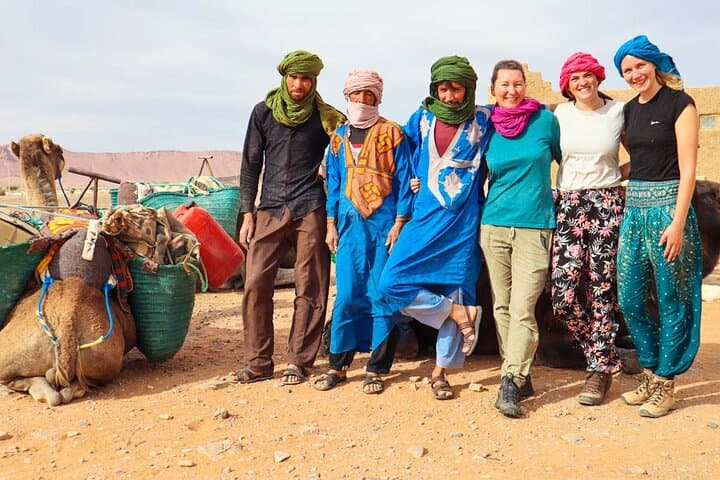
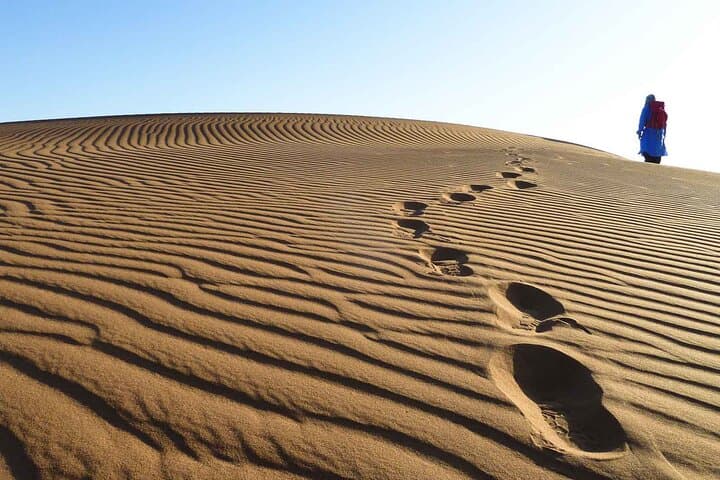
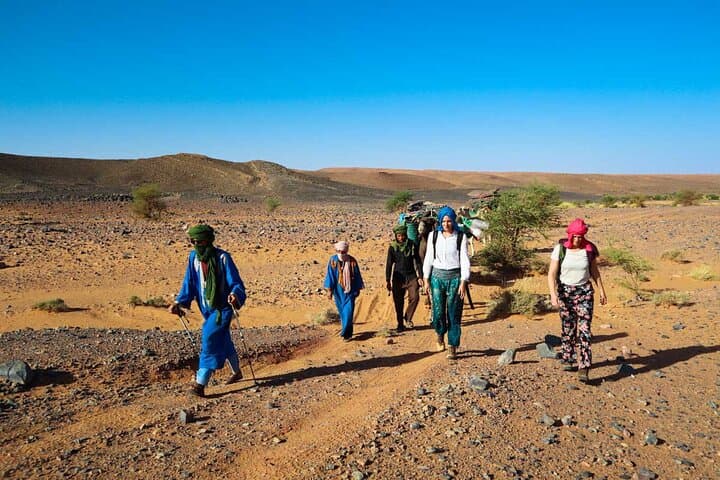
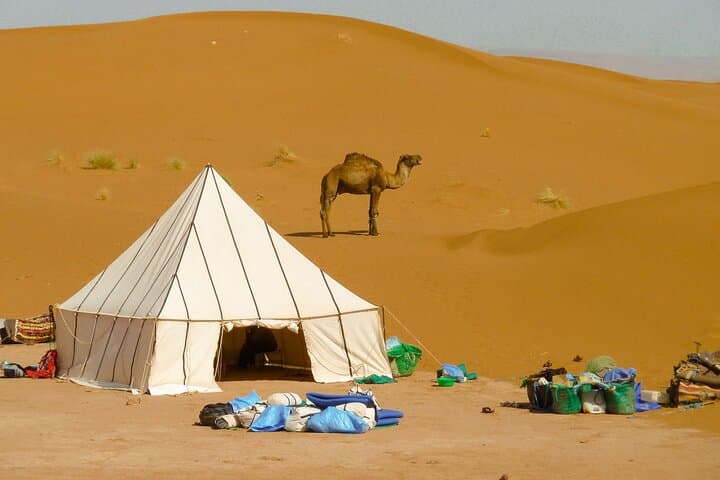
The day begins with wind-scraped quiet: morning light pins sharp ridges across the sand as you shoulder a pack and step out from the edge of the camp. Sand gives and grips with every footfall; the dunes ahead rise like slow waves, and the air tastes faintly of iron and thyme. Over five days you move through broad erg, dry river beds and low, fossil-rich mountains, camping each night under a sky that shifts from hot blue to a scatter of stars.
The day begins with wind-scraped quiet: morning light pins sharp ridges across the sand as you shoulder a pack and step out from the edge of the camp. Sand gives and grips with every footfall; the dunes ahead rise like slow waves, and the air tastes faintly of iron and thyme. Over five days you move through broad erg, dry river beds and low, fossil-rich mountains, camping each night under a sky that shifts from hot blue to a scatter of stars.
This route threads Erg Chebbi and nearby Erg Znigui, areas shaped by the Atlas uplift and millennia of wind-driven sorting of quartz and feldspar. You’ll pass small oases and traces of old caravan routes tied to Saharan trade and local nomadic culture; evenings often center on communal tea and bread baked at the campfire, reflecting Berber hospitality and simple desert craft.
Expect sensible terrain: 8–15 km of walking per day across soft sand and packed wadi bottoms, with short rocky climbs offering panoramic sunsets. Luggage is moved by camels; participants help pitch tents and break camp. Temperatures swing—hot by day, cold at night—so timing hikes for morning and late afternoon is common.
Practical guidance: carry 2–3 liters of water on your person, use closed hiking boots with good traction and gaiters for sand, and protect skin and eyes from sun and blowing sand. Moderate fitness is required; travelers with significant spinal, cardiac or pregnancy-related restrictions should not join. This is a low-impact way to experience the Sahara’s scale—quiet, physical, and vividly elemental.