THE ADVENTURE COLLECTIVE® · Independent discovery and booking for outdoor travel

Drift from Luxor to Aswan aboard a restored Dahabiya, where half-shaded decks, on-board Egyptology talks and shore visits to the Valley of the Kings, Karnak, Edfu and Philae compress millennia into five slow-moving days. Read on for what to expect and how to prepare.
Drift from Luxor to Aswan aboard a restored Dahabiya, where half-shaded decks, on-board Egyptology talks and shore visits to the Valley of the Kings, Karnak, Edfu and Philae compress millennia into five slow-moving days. Read on for what to expect and how to prepare.
Boarding at dawn, the Nile slips under the Dahabiya like a slow, patient hand guiding you south. The sundeck offers a half-shaded vantage point where villages, palm groves and desert cliffs pass with a gentle bargaining of light and shadow; below deck, a small library and salon keep conversations about pharaohs and geology alive with Turkish coffee.
Verified experiences and guided adventures in the surrounding area.
Operated by Egypt 24 Tours · Luxor, Luxor Governorate
Boarding at dawn, the Nile slips under the Dahabiya like a slow, patient hand guiding you south. The sundeck offers a half-shaded vantage point where villages, palm groves and desert cliffs pass with a gentle bargaining of light and shadow; below deck, a small library and salon keep conversations about pharaohs and geology alive with Turkish coffee.
This five-day route follows the river corridor that has shaped Upper Egypt for millennia. You’ll visit the Valley of the Kings and Hatshepsut’s mortuary temple—rock-cut tombs and a colonnaded funerary complex carved from the same limestone and sandstone beds that define the Nile valley. The itinerary moves downstream past Karnak’s hypostyle halls, the Hellenistic Edfu and the unusual double temple at Kom Ombo, finishing amid Aswan’s granite quarries, Philae’s relocated temples and the modern bulk of the Aswan High Dam.
Culturally the cruise balances colonial-era Dahabiya comfort with local guides who interpret hieroglyphs, agricultural rhythms and the Nile’s seasonal pulse. Geologically, the river slices sedimentary plains and exposes Precambrian and Pharaonic-era stone in the Aswan region.
Practically: expect relaxed days on board punctuated by shore excursions of 1–3 hours. Bring sun protection, comfortable walking shoes for temple grounds (uneven stone and steps), and a small daypack for cameras and water. Boarding and transfers are arranged from Luxor; mobility-friendly options are noted but some sites have uneven surfaces. Plan cash for local purchases and tips, book morning visits to avoid mid-day heat, and carry photocopies of travel documents for museum entry. This cruise is as much a cultural river passage as a gentle adventure down Egypt’s historic lifeline.
easy.
5 days.
Suitable for travelers in average physical condition; requires short walks and stair/climb ability at ruins.
Most operators include transfers from central Luxor hotels; confirm pickup time and meeting point in advance.
Yes—entrance fees and Egyptology guide services listed on the itinerary are included for the stated sites.
The Dahabiya and transfers are wheelchair accessible, but many archaeological sites have uneven terrain and steps—ask about site-specific accommodations.
Carry Egyptian pounds for small purchases and crew tips; tipping is customary for guides and service staff—budget modestly per day.
The Dahabiya revives a 19th-century style of leisurely Nile travel used by travelers and archaeologists; the route follows ancient transport arteries that supported temple-building campaigns.
Tour operators emphasize limited-impact shore visits and reduced single-use plastics; respect site barriers to protect fragile painted reliefs and archaeological surfaces.
Egypt 24 Tours operates guided outdoor trips and adventures with an emphasis on safety, stewardship, and memorable experiences.
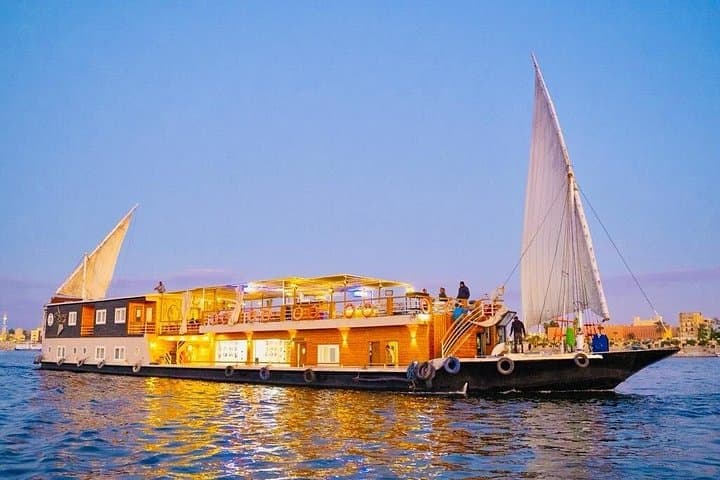
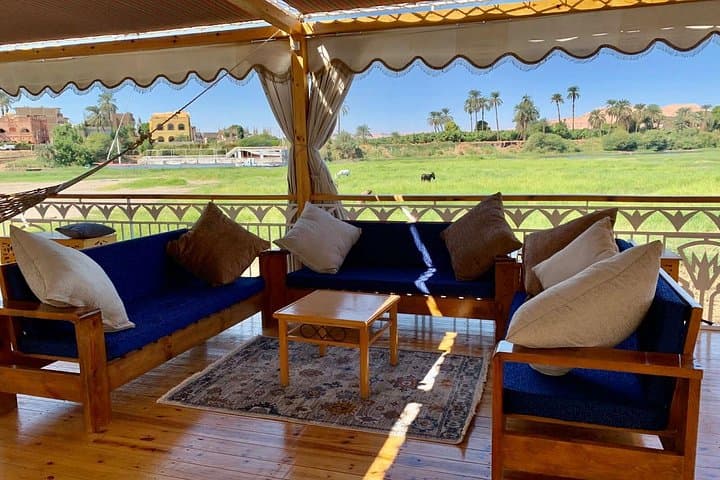
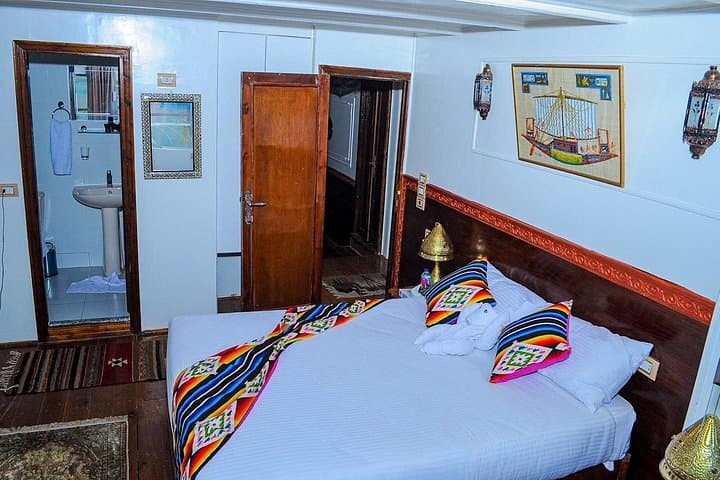
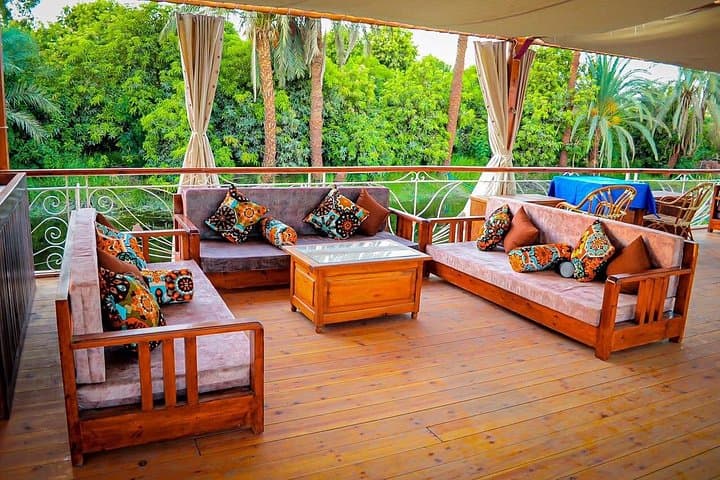
Boarding at dawn, the Nile slips under the Dahabiya like a slow, patient hand guiding you south. The sundeck offers a half-shaded vantage point where villages, palm groves and desert cliffs pass with a gentle bargaining of light and shadow; below deck, a small library and salon keep conversations about pharaohs and geology alive with Turkish coffee.
Boarding at dawn, the Nile slips under the Dahabiya like a slow, patient hand guiding you south. The sundeck offers a half-shaded vantage point where villages, palm groves and desert cliffs pass with a gentle bargaining of light and shadow; below deck, a small library and salon keep conversations about pharaohs and geology alive with Turkish coffee.
This five-day route follows the river corridor that has shaped Upper Egypt for millennia. You’ll visit the Valley of the Kings and Hatshepsut’s mortuary temple—rock-cut tombs and a colonnaded funerary complex carved from the same limestone and sandstone beds that define the Nile valley. The itinerary moves downstream past Karnak’s hypostyle halls, the Hellenistic Edfu and the unusual double temple at Kom Ombo, finishing amid Aswan’s granite quarries, Philae’s relocated temples and the modern bulk of the Aswan High Dam.
Culturally the cruise balances colonial-era Dahabiya comfort with local guides who interpret hieroglyphs, agricultural rhythms and the Nile’s seasonal pulse. Geologically, the river slices sedimentary plains and exposes Precambrian and Pharaonic-era stone in the Aswan region.
Practically: expect relaxed days on board punctuated by shore excursions of 1–3 hours. Bring sun protection, comfortable walking shoes for temple grounds (uneven stone and steps), and a small daypack for cameras and water. Boarding and transfers are arranged from Luxor; mobility-friendly options are noted but some sites have uneven surfaces. Plan cash for local purchases and tips, book morning visits to avoid mid-day heat, and carry photocopies of travel documents for museum entry. This cruise is as much a cultural river passage as a gentle adventure down Egypt’s historic lifeline.