THE ADVENTURE COLLECTIVE® · Independent discovery and booking for outdoor travel

A five-day itinerary that pairs Hoi An’s lantern-lit streets with Hue’s imperial legacy, Ba Na Hills’ cable-car panoramas and the karst caves of Marble Mountains. Expect cultural immersion, short hikes, coastal drives and authentic local cuisine.
A five-day itinerary that pairs Hoi An’s lantern-lit streets with Hue’s imperial legacy, Ba Na Hills’ cable-car panoramas and the karst caves of Marble Mountains. Expect cultural immersion, short hikes, coastal drives and authentic local cuisine.
You step off the minivan into Hoi An as lantern light spills across the Hoai River — wooden boats bob gently, and a faint scent of grilling fish peppers the air. Over five days the coast and mountains trade scenes: Ba Na Hills lifts you above clouds on a modern cable car, the Marble Mountains rise as five limestone pinnacles pocked with caves and sanctuaries, and Son Trà (Monkey Mountain) watches the city and sea with pagodas and forest trails.
Verified experiences and guided adventures in the surrounding area.
Operated by Chill Tourist · Da Nang, Da Nang
You step off the minivan into Hoi An as lantern light spills across the Hoai River — wooden boats bob gently, and a faint scent of grilling fish peppers the air. Over five days the coast and mountains trade scenes: Ba Na Hills lifts you above clouds on a modern cable car, the Marble Mountains rise as five limestone pinnacles pocked with caves and sanctuaries, and Son Trà (Monkey Mountain) watches the city and sea with pagodas and forest trails.
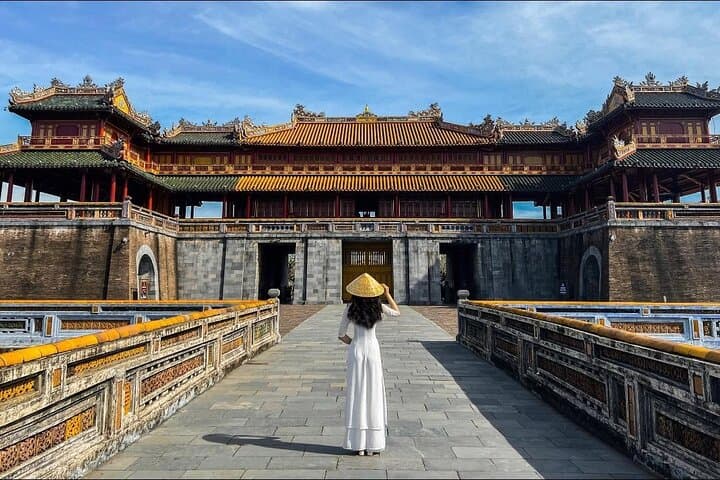
This route traces centuries of trade and empire: Hoi An was a thriving port from the 15th–19th centuries; Hue served as the Nguyen dynasty capital and still wears its imperial walls. Geologically, Marble Mountains are karst limestone with steep steps and cavern passages, while Ba Na’s ridge reaches roughly 1,487 m and offers markedly cooler air. Local culture is visible in craft villages — stone carvers at Non Nuoc, potters at Thanh Ha — and in everyday rituals, from lantern releases on the river to pagoda offerings.
Practical guidance: expect short steep climbs (Marble Mountains climbs are roughly 100 m elevation gain on stone steps), uneven cave paths, and a full day on the Hai Van Pass (21 km of switchbacks) between Da Nang and Hue. Bring sun protection, comfortable trekking shoes for temple steps and limestone trails, and a lightweight rain jacket for quick tropical downpours. Cash is useful in markets; dress respectfully at religious sites. Plan early starts for cooler morning light at Ba Na and Son Trà, and leave time to savor street food and evening lanterns — the trip is as much about pace as place.
easy.
5 days.
Suitable for travelers in average condition; involves walking, short stair climbs and brief hikes to viewpoints.
Transfers to and from Da Nang airport are included as specified in the itinerary for the tour’s start and finish.
Many historic sites have steps and uneven paths; Marble Mountains and some pagodas require stair climbs, so accessibility is limited at those locations.
Vietnamese đồng (VND) is standard—major hotels and restaurants accept cards, but markets, boat operators and small vendors often require cash.
Lunches are included on select days per the itinerary; expect to pay for some meals, snacks and drinks independently.
Hoi An was a major international trading port from the 15th–19th centuries; Hue served as the Nguyen dynasty’s imperial capital, shaping the region’s royal architecture and cuisine.
Tourist pressure affects fragile cave interiors and coastal habitats—avoid touching cave formations, don’t release non-native lantern materials into waterways, and minimize single-use plastics.
Chill Tourist operates guided outdoor trips and adventures with an emphasis on safety, stewardship, and memorable experiences.


You step off the minivan into Hoi An as lantern light spills across the Hoai River — wooden boats bob gently, and a faint scent of grilling fish peppers the air. Over five days the coast and mountains trade scenes: Ba Na Hills lifts you above clouds on a modern cable car, the Marble Mountains rise as five limestone pinnacles pocked with caves and sanctuaries, and Son Trà (Monkey Mountain) watches the city and sea with pagodas and forest trails.
You step off the minivan into Hoi An as lantern light spills across the Hoai River — wooden boats bob gently, and a faint scent of grilling fish peppers the air. Over five days the coast and mountains trade scenes: Ba Na Hills lifts you above clouds on a modern cable car, the Marble Mountains rise as five limestone pinnacles pocked with caves and sanctuaries, and Son Trà (Monkey Mountain) watches the city and sea with pagodas and forest trails.
This route traces centuries of trade and empire: Hoi An was a thriving port from the 15th–19th centuries; Hue served as the Nguyen dynasty capital and still wears its imperial walls. Geologically, Marble Mountains are karst limestone with steep steps and cavern passages, while Ba Na’s ridge reaches roughly 1,487 m and offers markedly cooler air. Local culture is visible in craft villages — stone carvers at Non Nuoc, potters at Thanh Ha — and in everyday rituals, from lantern releases on the river to pagoda offerings.
Practical guidance: expect short steep climbs (Marble Mountains climbs are roughly 100 m elevation gain on stone steps), uneven cave paths, and a full day on the Hai Van Pass (21 km of switchbacks) between Da Nang and Hue. Bring sun protection, comfortable trekking shoes for temple steps and limestone trails, and a lightweight rain jacket for quick tropical downpours. Cash is useful in markets; dress respectfully at religious sites. Plan early starts for cooler morning light at Ba Na and Son Trà, and leave time to savor street food and evening lanterns — the trip is as much about pace as place.