THE ADVENTURE COLLECTIVE® · Independent discovery and booking for outdoor travel

A practical five-day self-drive that trades Auckland’s skyline for sweeping coastlines, hidden beaches and the marine life of Te Whanganui‑a‑Hei. Expect scenic drives, short coastal walks and a mix of heritage and natural highlights.
A practical five-day self-drive that trades Auckland’s skyline for sweeping coastlines, hidden beaches and the marine life of Te Whanganui‑a‑Hei. Expect scenic drives, short coastal walks and a mix of heritage and natural highlights.
Mist lifts off the Hauraki Plains as the Corolla slips south out of Auckland — paddocks roll into coastal forest and the road narrows to the Pohutukawa-lined spine of the Coromandel Peninsula. By late morning visitors feel the temperature shift: ocean air replaces city exhaust and the map becomes a choice between ridgeline passes or the slower, seaside route that threads through gold-era towns.
Verified experiences and guided adventures in the surrounding area.
Operated by Discover New Zealand · Coromandel, Waikato
Mist lifts off the Hauraki Plains as the Corolla slips south out of Auckland — paddocks roll into coastal forest and the road narrows to the Pohutukawa-lined spine of the Coromandel Peninsula. By late morning visitors feel the temperature shift: ocean air replaces city exhaust and the map becomes a choice between ridgeline passes or the slower, seaside route that threads through gold-era towns.
The peninsula’s story is layered: Māori settlement and navigational use of sheltered harbours; 19th-century kauri logging and a gold rush that left ghost shafts and heritage buildings in Thames and Coromandel Town; and the more recent conservation push to protect fragile forests and marine life. Geology here is raw — folded greywacke ranges dropping steeply to white-sand coves, with volcanic influences visible around Hot Water Beach and the steam-heated sand at low tide.
Travelers split time between short coastal drives, steep lookout walks, and boat or glass-bottom tours through Te Whanganui‑a‑Hei Marine Reserve. Expect forested boardwalks, narrow coastal roads with sudden views, and pockets of solitude at bays only reachable via short tracks.
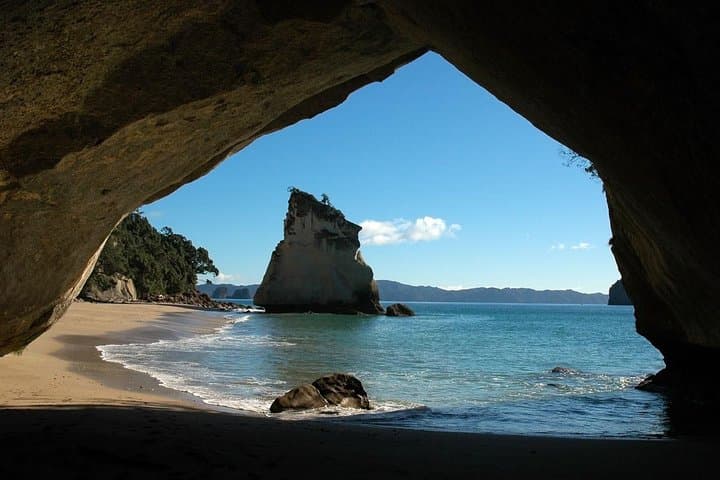
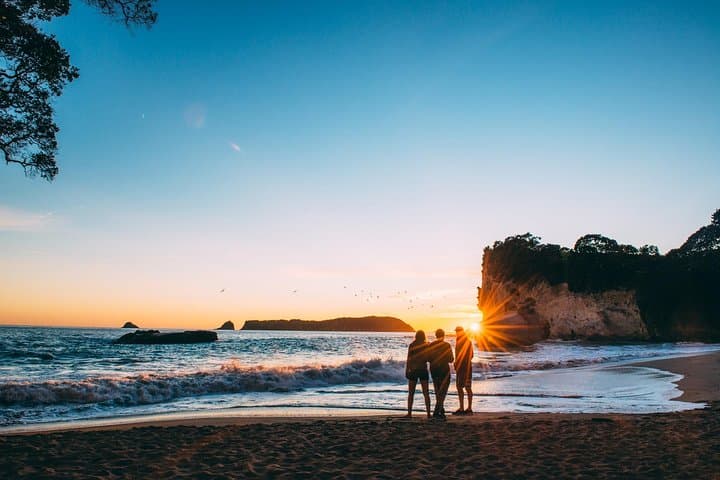
Practical edge: plan fuel and timing — many side roads are single-lane with passing bays, and parking fills fast at Cathedral Cove and Hot Water Beach in summer. Carry cash for smaller cafés, observe kauri dieback protocols on forest trails, and book popular boat trips and Hobbiton visits in advance. Mornings reward calmer seas and softer light for photos; late afternoons are best for quieter beaches and short sunset walks.
easy.
5 days.
Suitable for travelers comfortable with short coastal walks and getting in and out of the car multiple times; no special fitness required.
You must carry a valid international driver’s licence and be at least 21; under‑25 drivers may pay an extra fee at collection.
Daily drives are generally 1–3 hours between stops, with plenty of time to explore beaches and short walks each day.
Boat and glass-bottom tours of Te Whanganui‑a‑Hei are described in the itinerary but may be optional extras — book and confirm availability in advance.
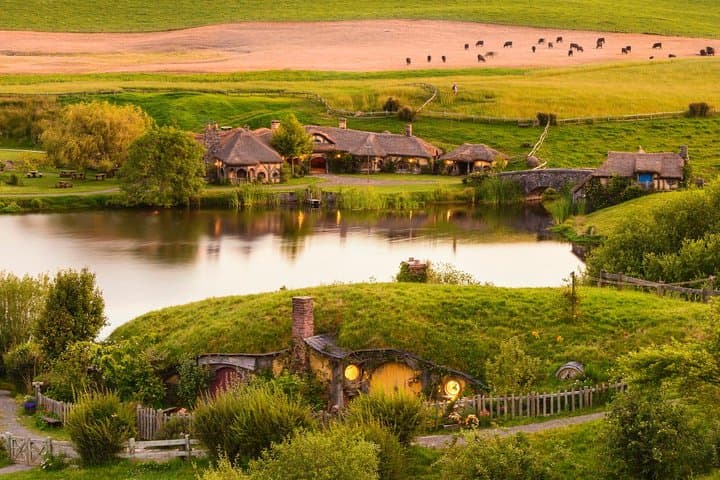
Yes — the itinerary routes through Matamata and the optional Hobbiton Movie Set tours should be reserved ahead, especially in peak season.
The Coromandel’s growth was driven by 19th-century kauri logging and gold mining; many historic buildings and relics remain in Thames and Coromandel Town.
Te Whanganui‑a‑Hei is a protected marine reserve — follow no‑take rules and practice leave‑no‑trace on beaches; adhere to kauri dieback cleaning stations on forest tracks.
Discover New Zealand operates guided outdoor trips and adventures with an emphasis on safety, stewardship, and memorable experiences.
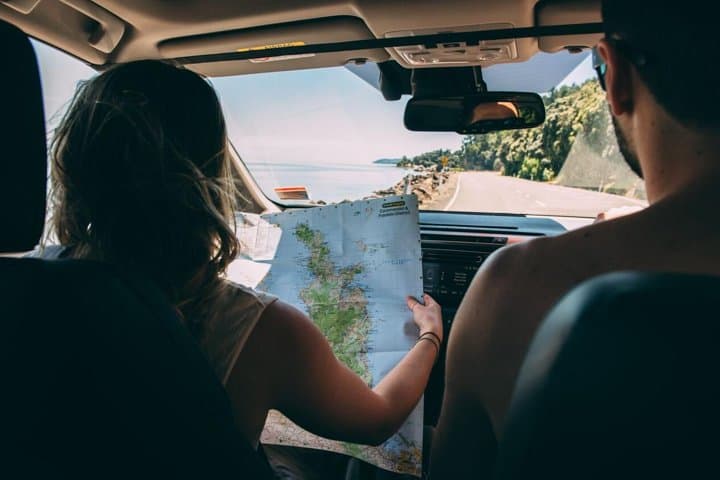
Mist lifts off the Hauraki Plains as the Corolla slips south out of Auckland — paddocks roll into coastal forest and the road narrows to the Pohutukawa-lined spine of the Coromandel Peninsula. By late morning visitors feel the temperature shift: ocean air replaces city exhaust and the map becomes a choice between ridgeline passes or the slower, seaside route that threads through gold-era towns.
Mist lifts off the Hauraki Plains as the Corolla slips south out of Auckland — paddocks roll into coastal forest and the road narrows to the Pohutukawa-lined spine of the Coromandel Peninsula. By late morning visitors feel the temperature shift: ocean air replaces city exhaust and the map becomes a choice between ridgeline passes or the slower, seaside route that threads through gold-era towns.
The peninsula’s story is layered: Māori settlement and navigational use of sheltered harbours; 19th-century kauri logging and a gold rush that left ghost shafts and heritage buildings in Thames and Coromandel Town; and the more recent conservation push to protect fragile forests and marine life. Geology here is raw — folded greywacke ranges dropping steeply to white-sand coves, with volcanic influences visible around Hot Water Beach and the steam-heated sand at low tide.
Travelers split time between short coastal drives, steep lookout walks, and boat or glass-bottom tours through Te Whanganui‑a‑Hei Marine Reserve. Expect forested boardwalks, narrow coastal roads with sudden views, and pockets of solitude at bays only reachable via short tracks.
Practical edge: plan fuel and timing — many side roads are single-lane with passing bays, and parking fills fast at Cathedral Cove and Hot Water Beach in summer. Carry cash for smaller cafés, observe kauri dieback protocols on forest trails, and book popular boat trips and Hobbiton visits in advance. Mornings reward calmer seas and softer light for photos; late afternoons are best for quieter beaches and short sunset walks.