THE ADVENTURE COLLECTIVE® · Independent discovery and booking for outdoor travel

In five days you travel from Cappadocia’s rock-carved villages to Pamukkale’s white travertines and the marble avenues of Ephesus. This compact itinerary pairs internal flights with high-class cave and boutique hotels so you can cover geology, history and local craft without the logistics headache.
In five days you travel from Cappadocia’s rock-carved villages to Pamukkale’s white travertines and the marble avenues of Ephesus. This compact itinerary pairs internal flights with high-class cave and boutique hotels so you can cover geology, history and local craft without the logistics headache.
You step off the morning flight into a landscape that looks engineered by wind and time: in Cappadocia the earth has been pushed and hollowed into towers, cones and mushroom-shaped pinnacles that throw long shadows at dawn. The trip opens there—three days spent moving between valleys, underground cities and a cave-hotel room where stone becomes architecture—before a short internal flight drops you onto the Aegean plains for Pamukkale’s white travertines and then the downhill avenue of marble and columns at Ephesus.
Verified experiences and guided adventures in the surrounding area.
Operated by City of Sultans · Istanbul, Istanbul
You step off the morning flight into a landscape that looks engineered by wind and time: in Cappadocia the earth has been pushed and hollowed into towers, cones and mushroom-shaped pinnacles that throw long shadows at dawn. The trip opens there—three days spent moving between valleys, underground cities and a cave-hotel room where stone becomes architecture—before a short internal flight drops you onto the Aegean plains for Pamukkale’s white travertines and then the downhill avenue of marble and columns at Ephesus.
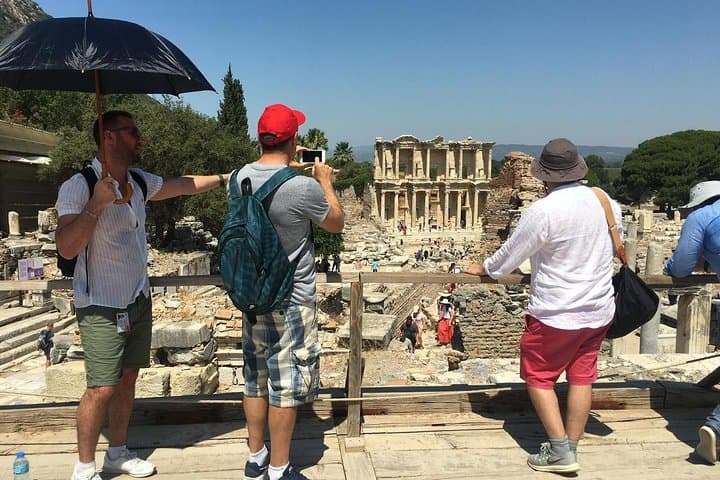
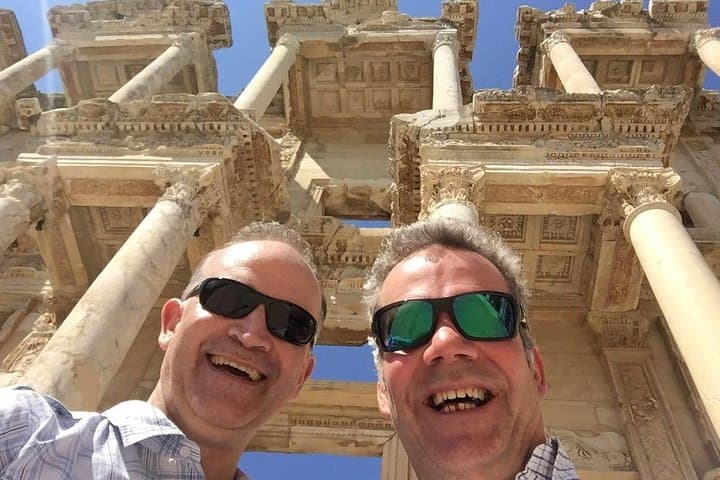
Cappadocia’s geology is recent in geological terms: layers of volcanic ash and tuff compacted and then eroded into the so-called fairy chimneys. Human history followed quickly; rock-cut churches and frescoed chapels date to Byzantine and early Christian eras, and entire underground cities were carved to shelter communities from invasion. Pamukkale’s travertines form when mineral-rich hot springs deposit calcium carbonate on terraces; adjacent Hierapolis keeps the Roman grid of streets, baths and necropolises. Ephesus, once a Mediterranean powerhouse, is one of the best-preserved Classical cities—walk past the Odeon, past the Library of Celsus and down toward the theater that once sat 25,000 people.
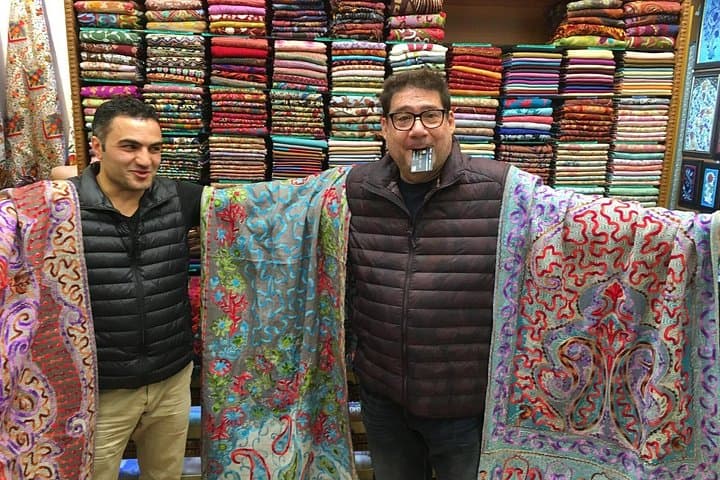
Culturally, the Aegean leg of the tour contrasts with central Anatolia. Expect tile and pottery traditions in Avanos, wine and carpet weaving around Göreme, and seafood-influenced cuisine in Kusadasi. Local guides on this itinerary usually cover logistics—internal flights are included—so you spend more time exploring than planning transfers.
Practical side: the tour runs over five days with internal flights and four nights’ accommodation in high-class cave and boutique hotels. Daily walking ranges from easy 45–120 minute site tours to up to 2–3 hours of on-foot exploration in valleys; terrain is uneven, with loose stone, stairs and narrow passages in underground cities. Bring a good pair of grip-soled shoes and be ready to climb. Temperatures vary—Cappadocia can be cool at sunrise and hot by midday; Pamukkale’s travertines are exposed and reflective; Ephesus is mostly open-air with long downhill walks.
Timing matters: plan Cappadocia visits for early morning or late afternoon for softer light and cooler air; Pamukkale is busiest midday, so aim for afternoon to avoid crowds and glare. The operator provides breakfast and lunch on most days; carry water, sun protection and light layers for fluctuating temperatures. If you have mobility constraints, note that some sites require negotiating steps and narrow alleys. For photographers, sunrise in Cappadocia and sunset at Uchisar give the strongest compositions.
This itinerary is dense but efficient: if you want a compact introduction to three of Turkey’s signature landscapes—volcanic rock, calcium terraces and ancient marble avenues—this five-day package delivers history, geology and local craft in a single, well-sequenced sweep.
moderate.
5 days.
Should be comfortable walking 2–3 hours a day on uneven ground and climbing stairs; basic endurance for full-day sightseeing required
Yes—domestic/internal flights between Istanbul, Cappadocia and Izmir are included in the package.
Yes—pickup is offered from centrally located hotels across multiple Istanbul neighborhoods; confirm your pickup point at booking.
The itinerary notes admissions for several locations are included or not applicable; confirm specific entrance fees with the operator before travel.
This tour involves uneven terrain, stairs and narrow underground passages; travelers with significant mobility limitations should consult the operator for site-specific accessibility options.
No—hot air balloon rides are not included. Operators can often help arrange them as an optional extra subject to availability.
Turkish lira is the local currency; most hotels and larger vendors accept cards, but carry cash for small purchases and tipping guides/drivers.
Cappadocia’s cave churches and underground cities reflect centuries of Byzantine and early Christian habitation; Ephesus was a Roman provincial capital whose public buildings survive in impressive scale.
Pamukkale’s travertines are sensitive—walking is restricted to specific paths to protect mineral deposits; follow local guidelines and avoid soaps or lotions in thermal pools.
City of Sultans operates guided outdoor trips and adventures with an emphasis on safety, stewardship, and memorable experiences.
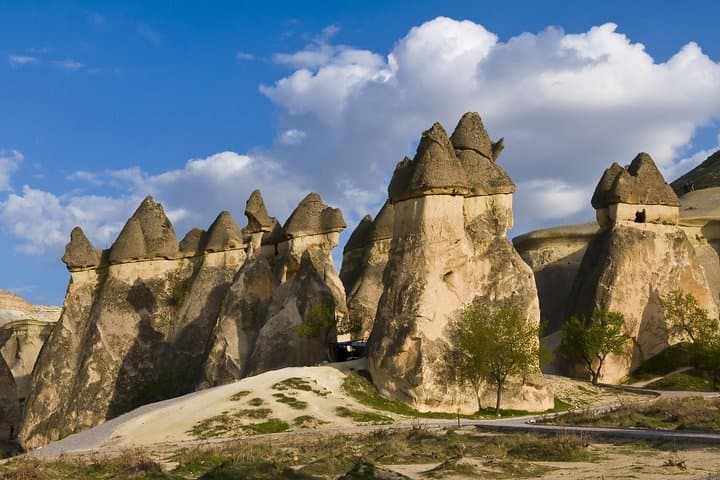
You step off the morning flight into a landscape that looks engineered by wind and time: in Cappadocia the earth has been pushed and hollowed into towers, cones and mushroom-shaped pinnacles that throw long shadows at dawn. The trip opens there—three days spent moving between valleys, underground cities and a cave-hotel room where stone becomes architecture—before a short internal flight drops you onto the Aegean plains for Pamukkale’s white travertines and then the downhill avenue of marble and columns at Ephesus.
You step off the morning flight into a landscape that looks engineered by wind and time: in Cappadocia the earth has been pushed and hollowed into towers, cones and mushroom-shaped pinnacles that throw long shadows at dawn. The trip opens there—three days spent moving between valleys, underground cities and a cave-hotel room where stone becomes architecture—before a short internal flight drops you onto the Aegean plains for Pamukkale’s white travertines and then the downhill avenue of marble and columns at Ephesus.
Cappadocia’s geology is recent in geological terms: layers of volcanic ash and tuff compacted and then eroded into the so-called fairy chimneys. Human history followed quickly; rock-cut churches and frescoed chapels date to Byzantine and early Christian eras, and entire underground cities were carved to shelter communities from invasion. Pamukkale’s travertines form when mineral-rich hot springs deposit calcium carbonate on terraces; adjacent Hierapolis keeps the Roman grid of streets, baths and necropolises. Ephesus, once a Mediterranean powerhouse, is one of the best-preserved Classical cities—walk past the Odeon, past the Library of Celsus and down toward the theater that once sat 25,000 people.
Culturally, the Aegean leg of the tour contrasts with central Anatolia. Expect tile and pottery traditions in Avanos, wine and carpet weaving around Göreme, and seafood-influenced cuisine in Kusadasi. Local guides on this itinerary usually cover logistics—internal flights are included—so you spend more time exploring than planning transfers.
Practical side: the tour runs over five days with internal flights and four nights’ accommodation in high-class cave and boutique hotels. Daily walking ranges from easy 45–120 minute site tours to up to 2–3 hours of on-foot exploration in valleys; terrain is uneven, with loose stone, stairs and narrow passages in underground cities. Bring a good pair of grip-soled shoes and be ready to climb. Temperatures vary—Cappadocia can be cool at sunrise and hot by midday; Pamukkale’s travertines are exposed and reflective; Ephesus is mostly open-air with long downhill walks.
Timing matters: plan Cappadocia visits for early morning or late afternoon for softer light and cooler air; Pamukkale is busiest midday, so aim for afternoon to avoid crowds and glare. The operator provides breakfast and lunch on most days; carry water, sun protection and light layers for fluctuating temperatures. If you have mobility constraints, note that some sites require negotiating steps and narrow alleys. For photographers, sunrise in Cappadocia and sunset at Uchisar give the strongest compositions.
This itinerary is dense but efficient: if you want a compact introduction to three of Turkey’s signature landscapes—volcanic rock, calcium terraces and ancient marble avenues—this five-day package delivers history, geology and local craft in a single, well-sequenced sweep.