THE ADVENTURE COLLECTIVE® · Independent discovery and booking for outdoor travel

A compact five-day loop from Cairo’s monuments to Alexandria’s Roman remains, Sinai desert quads and the carved wonders of Petra. Expect long transfers, cultural depth and pockets of wild desert scenery.
A compact five-day loop from Cairo’s monuments to Alexandria’s Roman remains, Sinai desert quads and the carved wonders of Petra. Expect long transfers, cultural depth and pockets of wild desert scenery.
You step out of the airport into Cairo’s heat and the trip snaps into motion: ancient limestone blocks, salt-flat air, and a string of cities that change pace every time the road bends. Over five days the itinerary moves from Alexandria’s coastal ruins to Sinai’s red sands, across the Gulf of Aqaba by boat and into Petra’s rose-red cliffs — a route that reads like a condensed history of the eastern Mediterranean.
Verified experiences and guided adventures in the surrounding area.
Operated by Sheba Tours · Sharm El Sheikh, South Sinai Governorate
You step out of the airport into Cairo’s heat and the trip snaps into motion: ancient limestone blocks, salt-flat air, and a string of cities that change pace every time the road bends. Over five days the itinerary moves from Alexandria’s coastal ruins to Sinai’s red sands, across the Gulf of Aqaba by boat and into Petra’s rose-red cliffs — a route that reads like a condensed history of the eastern Mediterranean.
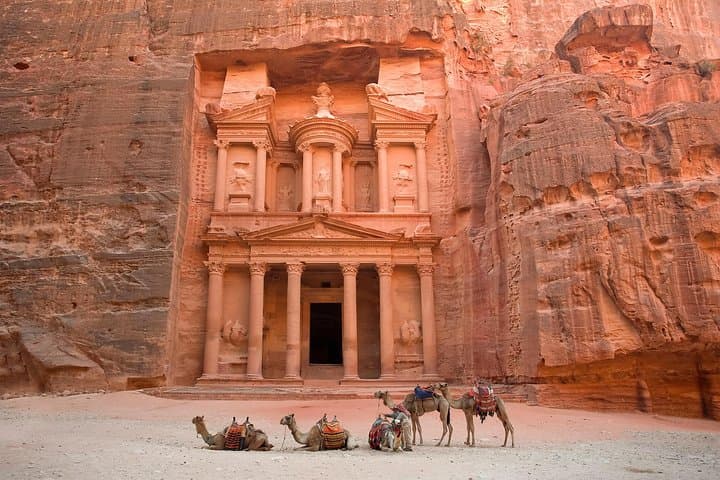
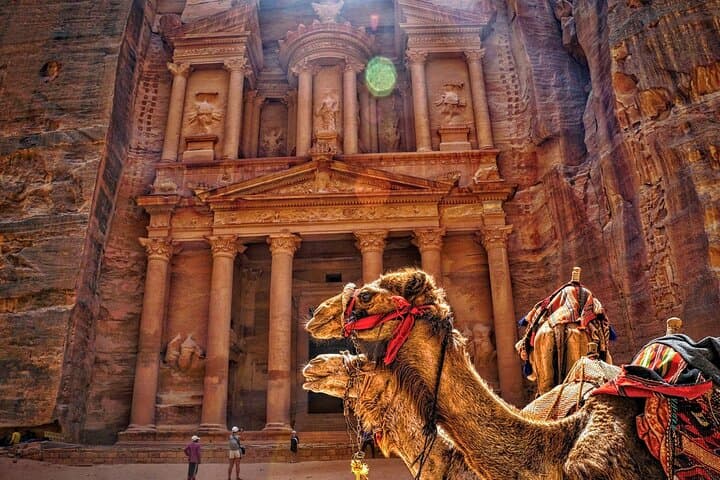
Alexandria opens with Roman marble and subterranean tombs: the Kom el-Dikka theater (once seating ~800) and the multi-level Catacombs of Kom el-Shoqafa where Egyptian, Greek and Roman motifs argue in stone. Sharm’s desert answers with wind-swept dunes and quad-bike tracks that dare you up to ridgelines and into a Bedouin tent for tea. The passage to Petra — a one-kilometer Siq cutting through Nubian sandstone — culminates in El Khazneh, the 140-foot carved Treasury, and streets lined with Nabatean tombs, temples and a Roman-style theater.
Geology here is literal: coastal calcareous rock in Alexandria, wind-sculpted sandstone in Sinai and the Nubian sandstone of Wadi Musa. Culture is immediate — Bedouin hospitality, Coptic and Islamic layers in Cairo, and the living communities that maintain Petra’s approach routes.
Practical edge: expect long transfer days, varied footwear needs, sun protection and patience at border formalities. Plan lightweight layers, durable shoes for uneven rock and extra water for desert sections. Timing trips in cooler months reduces heat strain; keep passport and visas handy and allow buffer time for flights and local transfers.
moderate.
5 days (multi-day).
Should be comfortable with long days of walking, brief hikes over uneven terrain, and short periods of physical activity like quad riding and camel rides.
Most travelers require visas for Egypt and Jordan; requirements depend on nationality — check consular sites and ensure visas or e-visas are obtained before travel when necessary.
Expect several hours of walking over uneven rock and cobbled paths, including a ~1 km walk through the Siq to reach the Treasury; some visitors use hired horses for short sections but still walk extensively.
Yes — operators provide safety briefings and basic instruction; however riders should be comfortable on off-road surfaces and follow guides’ instructions to avoid accidents.
Carry Egyptian pounds for Egypt and Jordanian dinars for Jordan; tipping is customary for guides, drivers and local helpers — small local notes are practical.
The route traces millennia: Alexandria’s Hellenistic and Roman layers, Sinai’s Bedouin desert culture and Petra’s Nabatean city carved into Nubian sandstone.
High visitor numbers stress fragile sandstone and archaeological fabric; stick to marked paths, avoid climbing facades and minimize plastic waste, especially in water-scarce desert zones.
Sheba Tours operates guided outdoor trips and adventures with an emphasis on safety, stewardship, and memorable experiences.
You step out of the airport into Cairo’s heat and the trip snaps into motion: ancient limestone blocks, salt-flat air, and a string of cities that change pace every time the road bends. Over five days the itinerary moves from Alexandria’s coastal ruins to Sinai’s red sands, across the Gulf of Aqaba by boat and into Petra’s rose-red cliffs — a route that reads like a condensed history of the eastern Mediterranean.
You step out of the airport into Cairo’s heat and the trip snaps into motion: ancient limestone blocks, salt-flat air, and a string of cities that change pace every time the road bends. Over five days the itinerary moves from Alexandria’s coastal ruins to Sinai’s red sands, across the Gulf of Aqaba by boat and into Petra’s rose-red cliffs — a route that reads like a condensed history of the eastern Mediterranean.
Alexandria opens with Roman marble and subterranean tombs: the Kom el-Dikka theater (once seating ~800) and the multi-level Catacombs of Kom el-Shoqafa where Egyptian, Greek and Roman motifs argue in stone. Sharm’s desert answers with wind-swept dunes and quad-bike tracks that dare you up to ridgelines and into a Bedouin tent for tea. The passage to Petra — a one-kilometer Siq cutting through Nubian sandstone — culminates in El Khazneh, the 140-foot carved Treasury, and streets lined with Nabatean tombs, temples and a Roman-style theater.
Geology here is literal: coastal calcareous rock in Alexandria, wind-sculpted sandstone in Sinai and the Nubian sandstone of Wadi Musa. Culture is immediate — Bedouin hospitality, Coptic and Islamic layers in Cairo, and the living communities that maintain Petra’s approach routes.
Practical edge: expect long transfer days, varied footwear needs, sun protection and patience at border formalities. Plan lightweight layers, durable shoes for uneven rock and extra water for desert sections. Timing trips in cooler months reduces heat strain; keep passport and visas handy and allow buffer time for flights and local transfers.