THE ADVENTURE COLLECTIVE® · Independent discovery and booking for outdoor travel

Move from Paro’s mountain light to Thimphu’s cultural pulse and Punakha’s riverside dzong on a five-day Bhutan loop. Hike to Tiger’s Nest, explore markets and monasteries, and experience farm stays with guided logistics and local insight.
Move from Paro’s mountain light to Thimphu’s cultural pulse and Punakha’s riverside dzong on a five-day Bhutan loop. Hike to Tiger’s Nest, explore markets and monasteries, and experience farm stays with guided logistics and local insight.
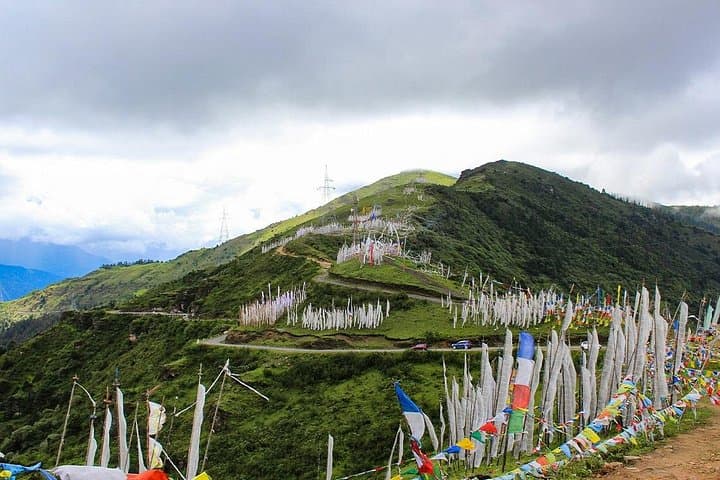
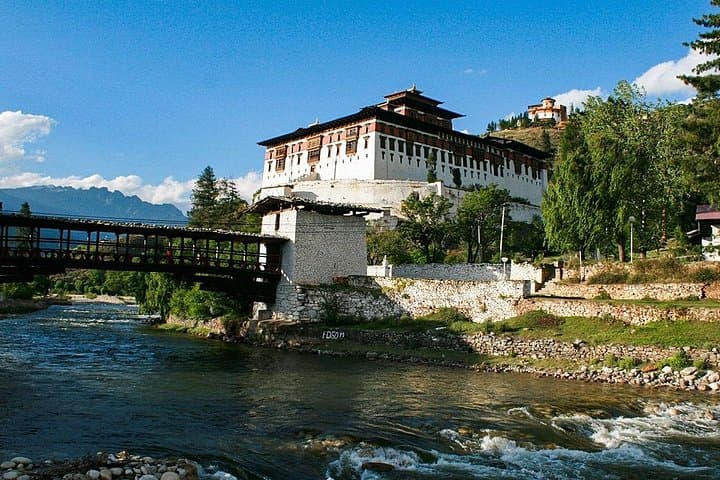
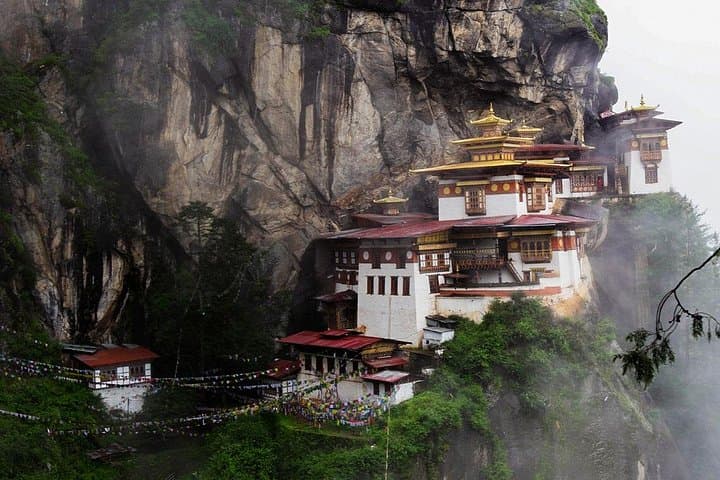
A thin mountain light settles over Paro valley as the road climbs toward Dochula Pass; prayer flags snap like small alarms, and the air thins until each breath feels like an invitation. On this five-day loop visitors move between wide river valleys, fortress-dzongs, and a forested trail that leads to Taktsang—Tiger’s Nest—clinging to a cliffface above Paro.
Verified experiences and guided adventures in the surrounding area.
Operated by Heavenly Bhutan · Paro, Paro District
A thin mountain light settles over Paro valley as the road climbs toward Dochula Pass; prayer flags snap like small alarms, and the air thins until each breath feels like an invitation. On this five-day loop visitors move between wide river valleys, fortress-dzongs, and a forested trail that leads to Taktsang—Tiger’s Nest—clinging to a cliffface above Paro.
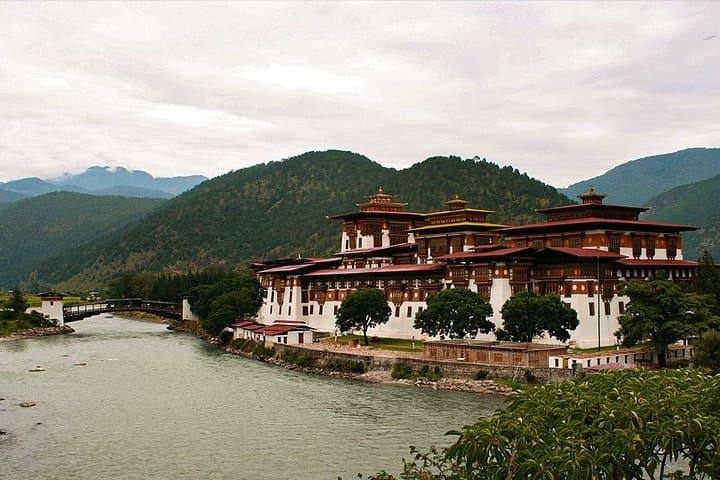
Bhutan’s landscape is young Himalaya: folded grey rock heaved skyward, river gorges carving terraces where farmers grow rice and mustard. Culturally the kingdom measures success in Gross National Happiness; monasteries, chortens, and handwoven textiles are everyday expressions of that philosophy. Punakha Dzong sits at the confluence of two rivers, its whitewashed walls and ornate woodwork a reminder of centuries of Bhutanese statecraft and spiritual life.
Expect short drives between towns (Paro–Thimphu ~1–1.5 hrs), easy-to-moderate walks through markets and museums, and one sustained hike to Taktsang—roughly 6–7 km round-trip with ~600–700 m elevation gain depending on your start point; allow 3–4 hours on the trail.
Practical notes: acclimatize in Thimphu before pushing higher, carry 1–2 liters of water for the Tiger’s Nest ascent, and wear sturdy boots with ankle support—trail surfaces alternate between packed earth, stone steps, and exposed roots. Weather changes fast; layers and a lightweight rain shell are essential. With a local guide handling permits and logistics, travelers get cultural context, rural farm stays, and the kind of quiet moments—tea shared under a wooden eave—that make Bhutan travel distinct.
moderate.
5 days.
Suitable for travelers with basic fitness who can manage sustained uphill walks and short steep sections; brief stair-like climbs to Taktsang.
Yes—most visitors must obtain a Bhutan visa and pay a Sustainable Development Fee; the tour operator typically facilitates visa processing and fees.
The trail is steep with stone steps and loose surfaces; it’s moderate in difficulty with ~600–700 m elevation gain and takes 3–4 hours round-trip for most walkers.
The itinerary includes comfortable hotel and farmhouse stays with breakfasts and several meals specified—confirm meal counts at booking.
Travel insurance covering medical evacuation and trip cancellation is strongly recommended given the remote mountain locations and altitude-related risks.
Punakha Dzong was the political center of Bhutan for centuries and hosts important religious festivals; many dzongs combine administrative and monastic functions.
Bhutan maintains high forest cover through national policies and requires Sustainable Development Fees to support conservation and cultural preservation.
Heavenly Bhutan operates guided outdoor trips and adventures with an emphasis on safety, stewardship, and memorable experiences.
A thin mountain light settles over Paro valley as the road climbs toward Dochula Pass; prayer flags snap like small alarms, and the air thins until each breath feels like an invitation. On this five-day loop visitors move between wide river valleys, fortress-dzongs, and a forested trail that leads to Taktsang—Tiger’s Nest—clinging to a cliffface above Paro.
A thin mountain light settles over Paro valley as the road climbs toward Dochula Pass; prayer flags snap like small alarms, and the air thins until each breath feels like an invitation. On this five-day loop visitors move between wide river valleys, fortress-dzongs, and a forested trail that leads to Taktsang—Tiger’s Nest—clinging to a cliffface above Paro.
Bhutan’s landscape is young Himalaya: folded grey rock heaved skyward, river gorges carving terraces where farmers grow rice and mustard. Culturally the kingdom measures success in Gross National Happiness; monasteries, chortens, and handwoven textiles are everyday expressions of that philosophy. Punakha Dzong sits at the confluence of two rivers, its whitewashed walls and ornate woodwork a reminder of centuries of Bhutanese statecraft and spiritual life.
Expect short drives between towns (Paro–Thimphu ~1–1.5 hrs), easy-to-moderate walks through markets and museums, and one sustained hike to Taktsang—roughly 6–7 km round-trip with ~600–700 m elevation gain depending on your start point; allow 3–4 hours on the trail.
Practical notes: acclimatize in Thimphu before pushing higher, carry 1–2 liters of water for the Tiger’s Nest ascent, and wear sturdy boots with ankle support—trail surfaces alternate between packed earth, stone steps, and exposed roots. Weather changes fast; layers and a lightweight rain shell are essential. With a local guide handling permits and logistics, travelers get cultural context, rural farm stays, and the kind of quiet moments—tea shared under a wooden eave—that make Bhutan travel distinct.