THE ADVENTURE COLLECTIVE® · Independent discovery and booking for outdoor travel

Swap Marrakech bustle for wind-sculpted dunes on a private five-day journey to Erg Chegaga. Expect kasbahs, oasis stops, a comfortable bivouac at the dune’s base, camel rides and immersive encounters with Saharan culture.
Swap Marrakech bustle for wind-sculpted dunes on a private five-day journey to Erg Chegaga. Expect kasbahs, oasis stops, a comfortable bivouac at the dune’s base, camel rides and immersive encounters with Saharan culture.
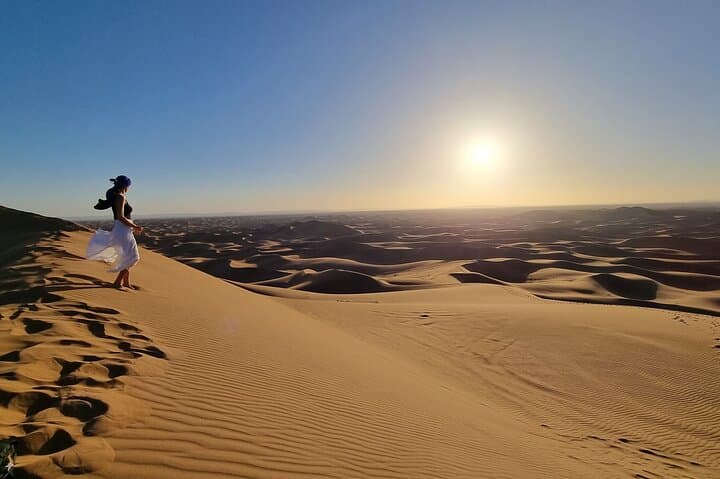
Heat rises off the track as the Atlas recedes behind you and the road opens into a desert of stone and sand. By late afternoon the light sharpens the ridges of Erg Chegaga and the camp—rows of comfortable canvas tents with low lantern glow—appears at the dune’s foot. You trade the city’s pulse for a sky that pushes stars close enough to touch.
Verified experiences and guided adventures in the surrounding area.
Operated by Bivouac Erg Chegaga Nomademoi · M'Hamid, Drâa-Tafilalet
Heat rises off the track as the Atlas recedes behind you and the road opens into a desert of stone and sand. By late afternoon the light sharpens the ridges of Erg Chegaga and the camp—rows of comfortable canvas tents with low lantern glow—appears at the dune’s foot. You trade the city’s pulse for a sky that pushes stars close enough to touch.
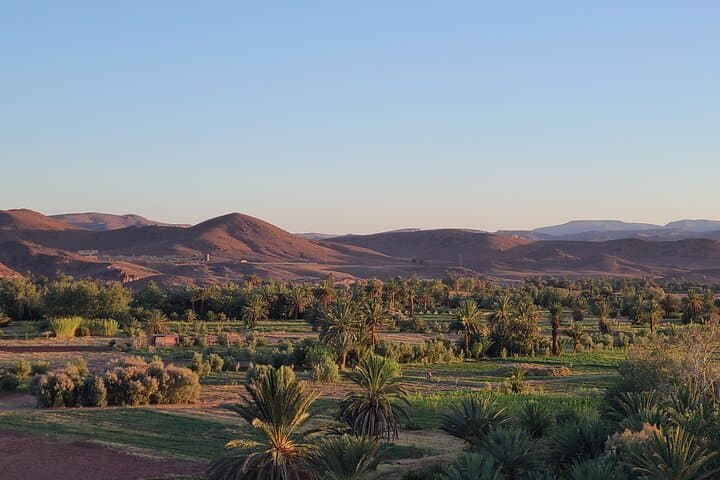
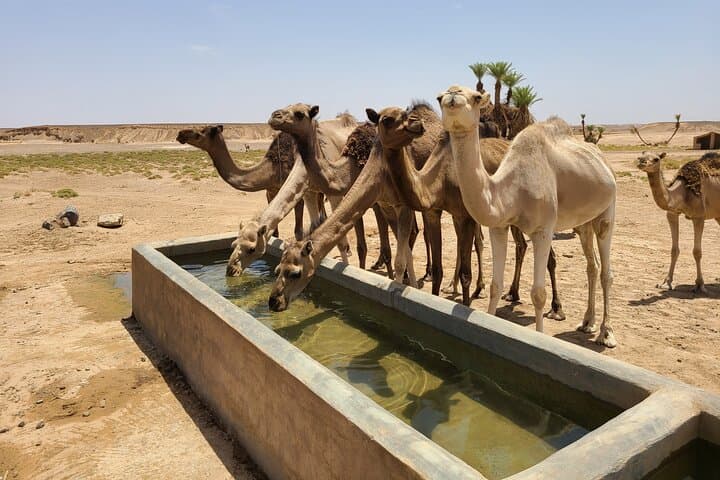
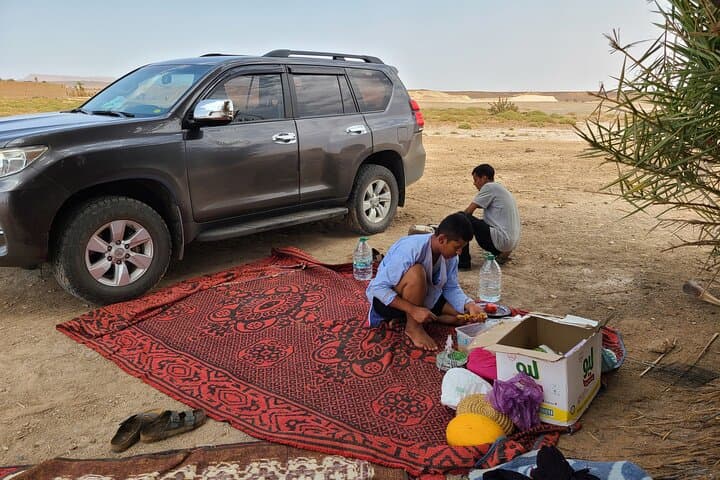
The route follows ancient caravan corridors: kasbahs of rammed earth, palm-lined Draa Valley oases and pottery workshops in Tamgroute whose clay-making traditions span centuries. Geologically, this part of southern Morocco alternates hammada (rock plateau), reg (stony plains), and ergs—fields of wind-shaped dunes where sand shifts at every season. Nomadic culture remains visible in daily rhythms—camel herds, bread baked in sand, and tented hospitality that centers group meals and music.
Over five days expect long but comfortable transfers in an air-conditioned vehicle, two nights under desert skies in a bivouac, visits to Ait Ben Haddou and Ouarzazate, and a sunset camel ride up the dunes. Terrain underfoot varies from compact piste to soft sand; basic walking and dune scrambling are part of the experience but no technical climbing is required. Bring layered clothing for chilly desert nights, sun protection for long daytime exposure, and a small daypack for walks and cultural stops.
Plan for limited connectivity, follow guides’ instructions on dune travel, and arrive with photocopies of travel documents. Pace your water intake on hikes and protect gear from sand. The payoff is unmistakable: wide-open silence, an enormous night sky, and a direct encounter with desert life.
easy.
5 days.
Suitable for travelers in average fitness; includes short dune scrambles, walking around villages and multi-hour vehicle transfers
No—this private tour is suitable for first-time desert travelers; guides handle navigation and camp logistics.
Yes—the bivouac offers comfortable tents with sleeping pads and shared sanitary facilities; some evenings include traditional music and meals.
Daily walking is light to moderate—dune scrambles, short village strolls and optional camel rides; no technical hiking required.
Generally yes—travellers should be able to manage unpaved transfers and variable temperatures; inform the operator of mobility or health concerns when booking.
The route traces historic trans-Saharan trade paths; Ait Ben Haddou and nearby kasbahs were strategic caravan and film locations.
The Chegaga area is ecologically fragile—stick to established tracks, respect nomadic camps, and avoid leaving waste or plastic in the desert.
Bivouac Erg Chegaga Nomademoi operates guided outdoor trips and adventures with an emphasis on safety, stewardship, and memorable experiences.
Heat rises off the track as the Atlas recedes behind you and the road opens into a desert of stone and sand. By late afternoon the light sharpens the ridges of Erg Chegaga and the camp—rows of comfortable canvas tents with low lantern glow—appears at the dune’s foot. You trade the city’s pulse for a sky that pushes stars close enough to touch.
Heat rises off the track as the Atlas recedes behind you and the road opens into a desert of stone and sand. By late afternoon the light sharpens the ridges of Erg Chegaga and the camp—rows of comfortable canvas tents with low lantern glow—appears at the dune’s foot. You trade the city’s pulse for a sky that pushes stars close enough to touch.
The route follows ancient caravan corridors: kasbahs of rammed earth, palm-lined Draa Valley oases and pottery workshops in Tamgroute whose clay-making traditions span centuries. Geologically, this part of southern Morocco alternates hammada (rock plateau), reg (stony plains), and ergs—fields of wind-shaped dunes where sand shifts at every season. Nomadic culture remains visible in daily rhythms—camel herds, bread baked in sand, and tented hospitality that centers group meals and music.
Over five days expect long but comfortable transfers in an air-conditioned vehicle, two nights under desert skies in a bivouac, visits to Ait Ben Haddou and Ouarzazate, and a sunset camel ride up the dunes. Terrain underfoot varies from compact piste to soft sand; basic walking and dune scrambling are part of the experience but no technical climbing is required. Bring layered clothing for chilly desert nights, sun protection for long daytime exposure, and a small daypack for walks and cultural stops.
Plan for limited connectivity, follow guides’ instructions on dune travel, and arrive with photocopies of travel documents. Pace your water intake on hikes and protect gear from sand. The payoff is unmistakable: wide-open silence, an enormous night sky, and a direct encounter with desert life.