THE ADVENTURE COLLECTIVE® · Independent discovery and booking for outdoor travel

A compact, high-gain trek from Pokhara that climbs to Annapurna Base Camp (4,130 m) through Gurung villages, rhododendron forests and glacial amphitheatre views. Ideal for trekkers short on time who can tolerate fast altitude gain.
A compact, high-gain trek from Pokhara that climbs to Annapurna Base Camp (4,130 m) through Gurung villages, rhododendron forests and glacial amphitheatre views. Ideal for trekkers short on time who can tolerate fast altitude gain.
Early-morning bus winds out of Kathmandu and the road opens to lake-strewn Pokhara; by the time you step into the first terrace village the Himalaya already sit like a row of slow-awake giants on the horizon. Over five intense days this trek pushes from subtropical river valleys into bamboo and rhododendron forests, then into the stony, wind-scoured amphitheatre of the Annapurna Sanctuary at 4,130 m — the base of Annapurna I.
Verified experiences and guided adventures in the surrounding area.
Operated by Alpine Ramble Treks · Pokhara, Gandaki Province
Early-morning bus winds out of Kathmandu and the road opens to lake-strewn Pokhara; by the time you step into the first terrace village the Himalaya already sit like a row of slow-awake giants on the horizon. Over five intense days this trek pushes from subtropical river valleys into bamboo and rhododendron forests, then into the stony, wind-scoured amphitheatre of the Annapurna Sanctuary at 4,130 m — the base of Annapurna I.
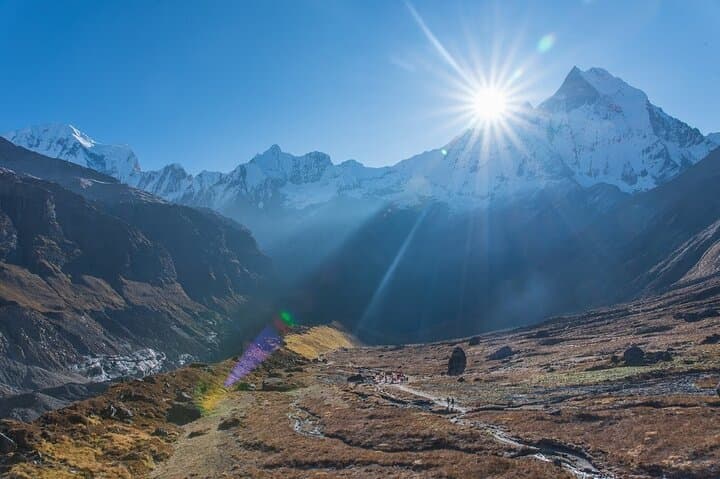
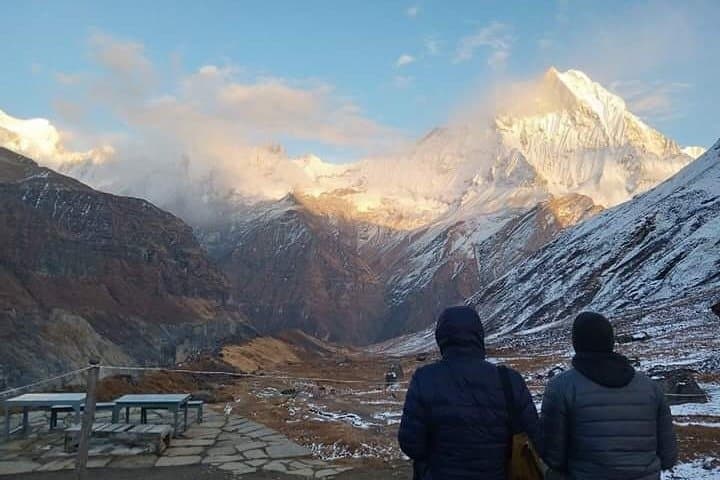
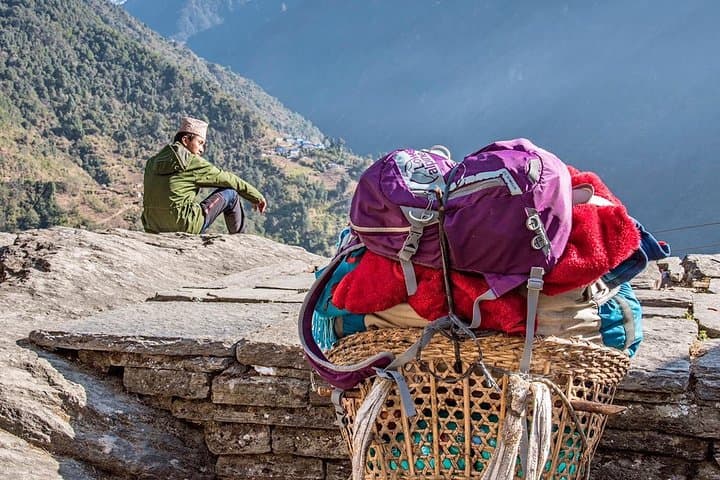
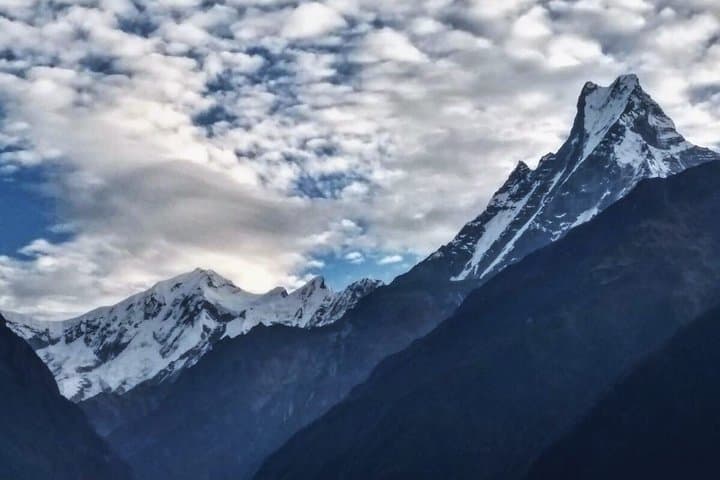
The route threads through Gurung and Magar villages whose stone houses and terraced fields record centuries of mountain agriculture. Geologically the trail climbs from river-cut alluvium to glacial moraine and cirque scenery carved by Pleistocene ice; Machhapuchhre (Fishtail) and Annapurna’s faces dominate the skyline and shift light like old maps changing color.
Locals run family teahouses on common walks; Annapurna Conservation Area (ACAP) manages permits and keeps trails regulated to protect fragile alpine flora and water sources. Expect sharp altitude shifts, exposed ridgelines near MBC, and bright, thin sun during daytime.
Practical guidance: pace your ascent, drink consistently and sleep low when possible. Good leather boots, a warm down layer and a dependable sleeping bag are non-negotiable. Treks are typically possible March–May and September–November for stable weather; monsoon routes are muddier and winter brings deep cold above 3,000 m. Carry cash for teahouses, bring a basic first-aid kit for altitude symptoms, and allow an extra day in Pokhara or Kathmandu for buffer travel. The payoff is immediate: close-range summits, a sunrise that pins Machhapuchhre in pink, and the clear hush of high alpine air.
challenging.
5–6 days.
Good cardiovascular fitness and prior multi-day hiking experience; comfortable with daily climbs of 4–7 hours and high-altitude exposure.
Yes — TIMS and Annapurna Conservation Area Permit (ACAP) are required for trekking in the region and are typically arranged before or on arrival in Pokhara.
Spring (March–May) and autumn (September–November) offer the most stable weather and clear mountain views; monsoon is wet and winter brings very cold conditions above 3,000 m.
Rapid ascent increases risk; symptoms can appear above 2,500–3,000 m. Monitor symptoms closely and descend if headaches, nausea or disorientation worsen.
Local operators usually supply down jackets and sleeping bags for high camps but confirm in advance; teahouses provide basic dormitory rooms and meals for cash payments.
The trail passes traditional Gurung and Magar communities; the Annapurna Conservation Area was set up in the 1980s to protect local ecology while supporting sustainable tourism.
Travelers should follow ACAP rules: pack out non-biodegradable waste, minimize single-use plastics and support local teahouses that follow waste-management practices.
Alpine Ramble Treks operates guided outdoor trips and adventures with an emphasis on safety, stewardship, and memorable experiences.
Early-morning bus winds out of Kathmandu and the road opens to lake-strewn Pokhara; by the time you step into the first terrace village the Himalaya already sit like a row of slow-awake giants on the horizon. Over five intense days this trek pushes from subtropical river valleys into bamboo and rhododendron forests, then into the stony, wind-scoured amphitheatre of the Annapurna Sanctuary at 4,130 m — the base of Annapurna I.
Early-morning bus winds out of Kathmandu and the road opens to lake-strewn Pokhara; by the time you step into the first terrace village the Himalaya already sit like a row of slow-awake giants on the horizon. Over five intense days this trek pushes from subtropical river valleys into bamboo and rhododendron forests, then into the stony, wind-scoured amphitheatre of the Annapurna Sanctuary at 4,130 m — the base of Annapurna I.
The route threads through Gurung and Magar villages whose stone houses and terraced fields record centuries of mountain agriculture. Geologically the trail climbs from river-cut alluvium to glacial moraine and cirque scenery carved by Pleistocene ice; Machhapuchhre (Fishtail) and Annapurna’s faces dominate the skyline and shift light like old maps changing color.
Locals run family teahouses on common walks; Annapurna Conservation Area (ACAP) manages permits and keeps trails regulated to protect fragile alpine flora and water sources. Expect sharp altitude shifts, exposed ridgelines near MBC, and bright, thin sun during daytime.
Practical guidance: pace your ascent, drink consistently and sleep low when possible. Good leather boots, a warm down layer and a dependable sleeping bag are non-negotiable. Treks are typically possible March–May and September–November for stable weather; monsoon routes are muddier and winter brings deep cold above 3,000 m. Carry cash for teahouses, bring a basic first-aid kit for altitude symptoms, and allow an extra day in Pokhara or Kathmandu for buffer travel. The payoff is immediate: close-range summits, a sunrise that pins Machhapuchhre in pink, and the clear hush of high alpine air.