THE ADVENTURE COLLECTIVE® · Independent discovery and booking for outdoor travel

A compressed, 5-day route into the Annapurna Sanctuary that delivers sweeping Himalayan views with village teahouse nights. Ideal for hikers short on time but ready for sustained uphill days and altitude.
A compressed, 5-day route into the Annapurna Sanctuary that delivers sweeping Himalayan views with village teahouse nights. Ideal for hikers short on time but ready for sustained uphill days and altitude.
Dawn filters through rhododendron and oak as the trail climbs out of Ghandruk Phedi, steam from teahouses mixing with the thin, cold air. The Modi Khola below seems to pull the valley forward, chipping at the hills until the Annapurna massif rises into view — a compact arena of jagged ridges and snowfields that demand attention.
Verified experiences and guided adventures in the surrounding area.
Operated by Himalayan Mentor · Pokhara, Gandaki Province
Dawn filters through rhododendron and oak as the trail climbs out of Ghandruk Phedi, steam from teahouses mixing with the thin, cold air. The Modi Khola below seems to pull the valley forward, chipping at the hills until the Annapurna massif rises into view — a compact arena of jagged ridges and snowfields that demand attention.
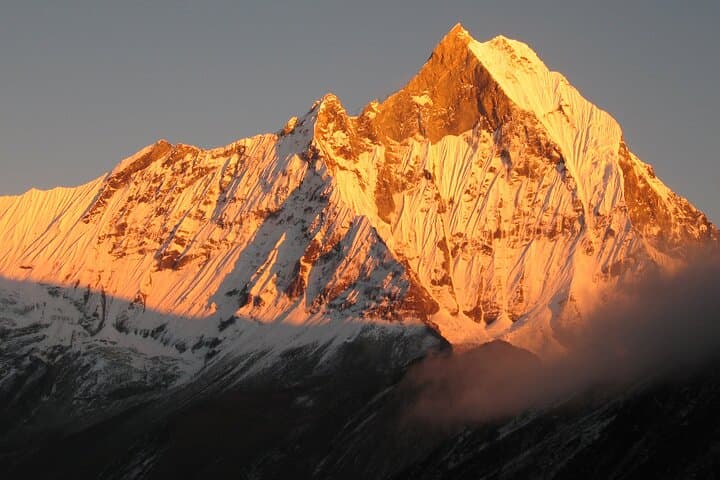
The Annapurna Sanctuary is both geological bowl and cultural cradle: glacial sculpting over millennia carved the amphitheater that holds Annapurna I, II, III and Machapuchare. Gurung villages like Chhomrong and Ghandruk sit on long-used trade and grazing routes, and local communities remain central to the trekking economy.
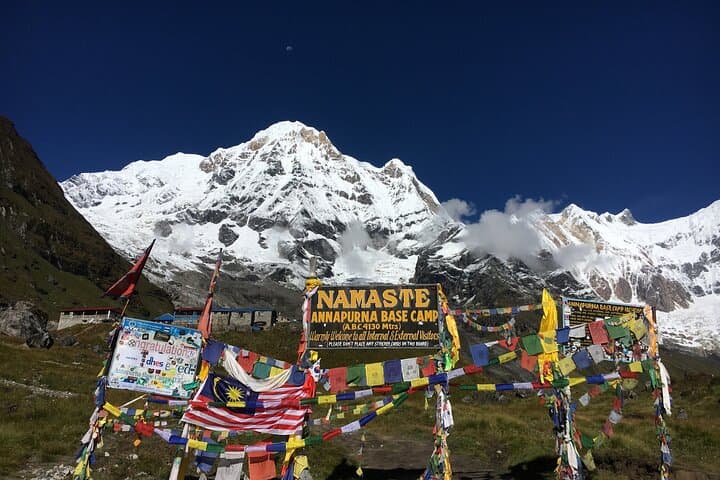
Expect a mix of steep stone staircases, bamboo and rhododendron forests, and open moraine near MBC and ABC. Tea houses provide basic lodging and recharge points; food is simple but warming. Weather can shift fast — sun can be strong by noon and bitter at elevation. The route is popular for its compressed itinerary: long walking days (4–7 hours between lodges) with a final ascent to 4,130 m that’s all about acclimatized paced climbing and rewarding panoramas.
Practical guidance: fly early to Pokhara, carry your TIMS and Annapurna Conservation Area permit, and plan for 5 days with a moderate fitness baseline. Layer for cold nights, hydrate to help altitude, and rely on a local guide for route choice and safety in avalanche-prone sections. Move steadily, respect the village schedules, and you’ll trade effort for a 360° Himalayan room with some of Nepal’s most immediate mountain views.
moderate.
5 days (4–7 hours walking per day).
Suitable for hikers with regular cardio and leg-strength training; prepare for long ascents and some steep sections
Yes—carry a TIMS card and an Annapurna Conservation Area Permit (ACAP); guides typically handle these before departure.
Yes—this 5-day itinerary compresses the route but includes long walking days; allow time for basic acclimatization and consider an extra day if possible.
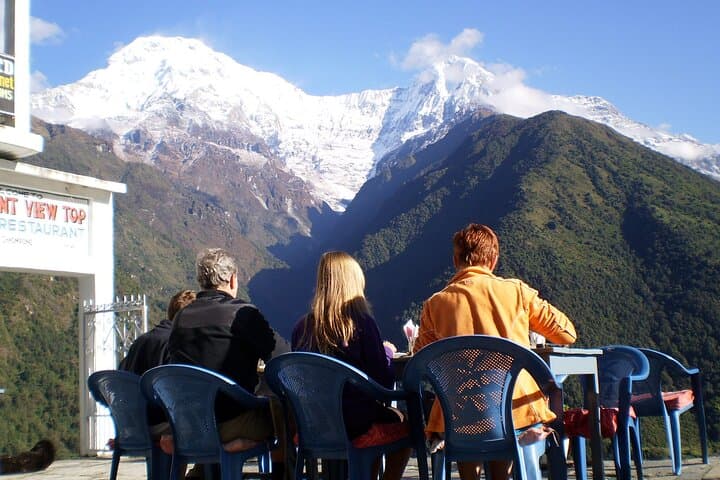
Teahouse lodges are basic: shared rooms or small private rooms, simple meals, and optional hot showers for a fee.
The highest point is about 4,130 m; AMS is possible—monitor symptoms, ascend slowly, hydrate, and descend if symptoms worsen.
The Annapurna Sanctuary has long been used by local Gurung communities for grazing and trade; trekking developed here in the 1970s and later led to the Annapurna Conservation Area.
The Annapurna Conservation Area Project (ACAP) manages permits and community-run conservation; stick to trails, pack out waste, and support local lodges to minimize impact.
Himalayan Mentor operates guided outdoor trips and adventures with an emphasis on safety, stewardship, and memorable experiences.
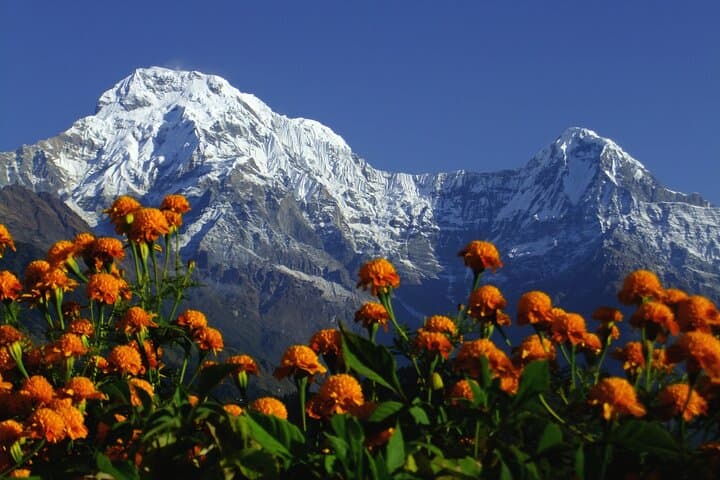
Dawn filters through rhododendron and oak as the trail climbs out of Ghandruk Phedi, steam from teahouses mixing with the thin, cold air. The Modi Khola below seems to pull the valley forward, chipping at the hills until the Annapurna massif rises into view — a compact arena of jagged ridges and snowfields that demand attention.
Dawn filters through rhododendron and oak as the trail climbs out of Ghandruk Phedi, steam from teahouses mixing with the thin, cold air. The Modi Khola below seems to pull the valley forward, chipping at the hills until the Annapurna massif rises into view — a compact arena of jagged ridges and snowfields that demand attention.
The Annapurna Sanctuary is both geological bowl and cultural cradle: glacial sculpting over millennia carved the amphitheater that holds Annapurna I, II, III and Machapuchare. Gurung villages like Chhomrong and Ghandruk sit on long-used trade and grazing routes, and local communities remain central to the trekking economy.
Expect a mix of steep stone staircases, bamboo and rhododendron forests, and open moraine near MBC and ABC. Tea houses provide basic lodging and recharge points; food is simple but warming. Weather can shift fast — sun can be strong by noon and bitter at elevation. The route is popular for its compressed itinerary: long walking days (4–7 hours between lodges) with a final ascent to 4,130 m that’s all about acclimatized paced climbing and rewarding panoramas.
Practical guidance: fly early to Pokhara, carry your TIMS and Annapurna Conservation Area permit, and plan for 5 days with a moderate fitness baseline. Layer for cold nights, hydrate to help altitude, and rely on a local guide for route choice and safety in avalanche-prone sections. Move steadily, respect the village schedules, and you’ll trade effort for a 360° Himalayan room with some of Nepal’s most immediate mountain views.