THE ADVENTURE COLLECTIVE® · Independent discovery and booking for outdoor travel

A five-day guided trek from Pokhara to Annapurna Base Camp that pairs high-altitude panoramas with village teahouse culture. Expect 4–7 hours of walking daily, simple lodgings, and a soak in Jhinu Danda hot springs on the final day.
A five-day guided trek from Pokhara to Annapurna Base Camp that pairs high-altitude panoramas with village teahouse culture. Expect 4–7 hours of walking daily, simple lodgings, and a soak in Jhinu Danda hot springs on the final day.
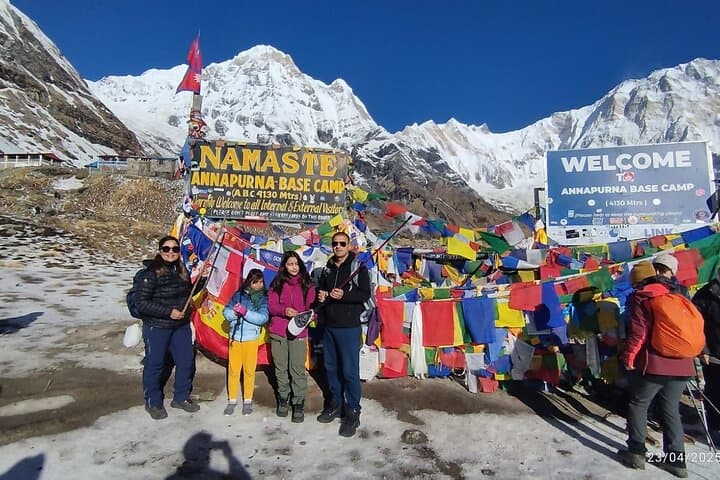
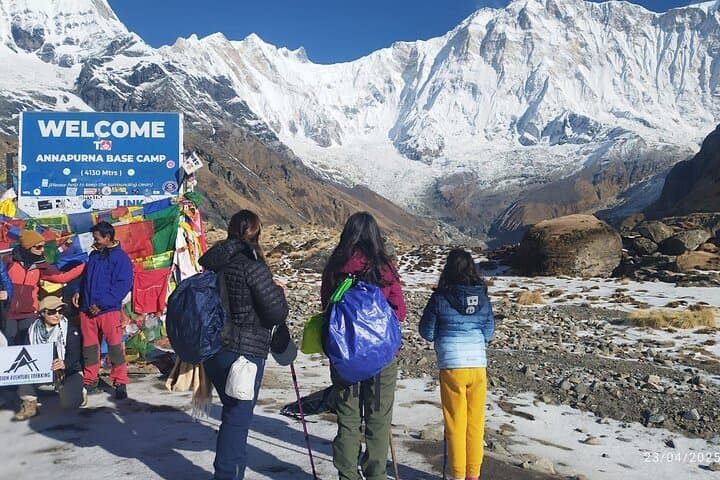
A cold dawn over Pokhara, headlamps bobbing as jeeps thread narrow roads toward Nayapul—this is where the trail begins. Within hours the lowlands give way to terraced rice fields, then rhododendron forests that hush to the crunch of boot soles. By day three the valley opens and Annapurna Base Camp sits like a natural amphitheater, peaks crowding the horizon and the air pulling at your lungs.
Verified experiences and guided adventures in the surrounding area.
Operated by In Nepal Treks · Pokhara, Gandaki Province
A cold dawn over Pokhara, headlamps bobbing as jeeps thread narrow roads toward Nayapul—this is where the trail begins. Within hours the lowlands give way to terraced rice fields, then rhododendron forests that hush to the crunch of boot soles. By day three the valley opens and Annapurna Base Camp sits like a natural amphitheater, peaks crowding the horizon and the air pulling at your lungs.
The route follows centuries-old mule trails used by Gurung and Magar communities; teahouse culture grew from those trade lines, offering warm rooms and simple dal bhat after each day’s climb. Geologically the sanctuary is carved by glacial valleys and moraines, with steep metamorphic ridgelines that frame views of Annapurna I (8,091 m) and Machapuchhare’s knife-edged flank.
Expect 4–7 hours of walking per day, reaching 4,130 m at ABC. Nights are in family-run teahouses—basic but hospitable—and a soak in Jhinu Danda’s hot springs eases tired calves on the descent.
Practical edge: carry layered clothing for cold nights, a water treatment method, and allow time to acclimatize—altitude is the real challenge. Your guide handles permits, logistics, and cultural introductions, but strong footwear, light packing, and steady pacing make the trek a success.
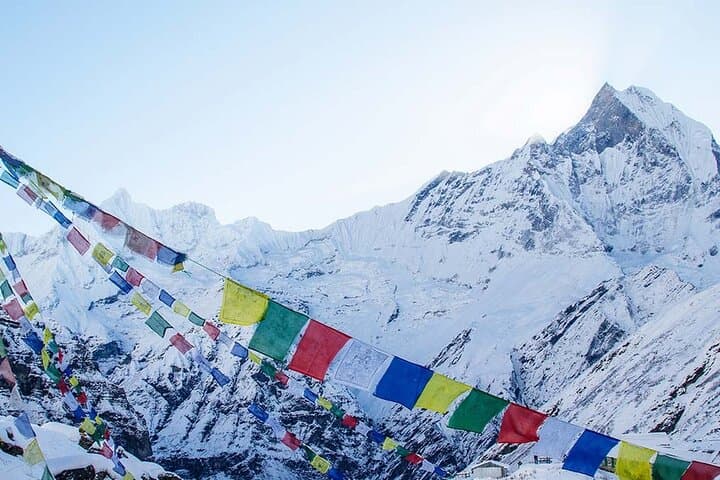
This itinerary blends Himalayan spectacle with living culture: villages, prayer flags, and a rhythm that’s as much about people as it is about peaks.
challenging.
5 days.
Suitable for hikers with good aerobic fitness who can handle consecutive days of uphill walking and moderate altitude exposure.
The route is non-technical but physically demanding due to sustained elevation gain; beginners with good fitness and proper pacing can complete it with a guide.
Most teahouses offer hot meals and boiling water for a small fee; electricity is intermittent and often via solar, so carry a headlamp and power bank.
Yes—ABC reaches 4,130 m; follow your guide’s advice, stay hydrated, avoid alcohol, and report symptoms early. Consider adding an acclimatization day if unsure.
This guided tour includes all necessary trekking permits and park fees as part of the package.
The Annapurna Sanctuary has long been a seasonal corridor for Gurung and Magar communities; modern trekking routes follow trade and pilgrimage tracks that developed into teahouse networks in the 20th century.
The area sits within Annapurna Conservation Area; practice Leave No Trace, minimize single-use plastics, and support local teahouses to sustain village economies.
In Nepal Treks operates guided outdoor trips and adventures with an emphasis on safety, stewardship, and memorable experiences.
A cold dawn over Pokhara, headlamps bobbing as jeeps thread narrow roads toward Nayapul—this is where the trail begins. Within hours the lowlands give way to terraced rice fields, then rhododendron forests that hush to the crunch of boot soles. By day three the valley opens and Annapurna Base Camp sits like a natural amphitheater, peaks crowding the horizon and the air pulling at your lungs.
A cold dawn over Pokhara, headlamps bobbing as jeeps thread narrow roads toward Nayapul—this is where the trail begins. Within hours the lowlands give way to terraced rice fields, then rhododendron forests that hush to the crunch of boot soles. By day three the valley opens and Annapurna Base Camp sits like a natural amphitheater, peaks crowding the horizon and the air pulling at your lungs.
The route follows centuries-old mule trails used by Gurung and Magar communities; teahouse culture grew from those trade lines, offering warm rooms and simple dal bhat after each day’s climb. Geologically the sanctuary is carved by glacial valleys and moraines, with steep metamorphic ridgelines that frame views of Annapurna I (8,091 m) and Machapuchhare’s knife-edged flank.
Expect 4–7 hours of walking per day, reaching 4,130 m at ABC. Nights are in family-run teahouses—basic but hospitable—and a soak in Jhinu Danda’s hot springs eases tired calves on the descent.
Practical edge: carry layered clothing for cold nights, a water treatment method, and allow time to acclimatize—altitude is the real challenge. Your guide handles permits, logistics, and cultural introductions, but strong footwear, light packing, and steady pacing make the trek a success.
This itinerary blends Himalayan spectacle with living culture: villages, prayer flags, and a rhythm that’s as much about people as it is about peaks.