THE ADVENTURE COLLECTIVE® · Independent discovery and booking for outdoor travel

Five days of private touring from Angkor Wat’s sunrise to the forested Kulen plateau and the floating villages of Tonle Sap. Expect carved lintels, tree-rooted ruins, and local markets with flexible pacing and air-conditioned transfers.
Five days of private touring from Angkor Wat’s sunrise to the forested Kulen plateau and the floating villages of Tonle Sap. Expect carved lintels, tree-rooted ruins, and local markets with flexible pacing and air-conditioned transfers.
Morning light slides across the causeway at Angkor Wat, and the silhouette of towers rises like a city reclaimed by the sky. Over five days this private itinerary moves from the monumental galleries of Angkor to jungle-clad ruins, a sacred mountain, and the slow breath of Tonle Sap Lake, offering sunrise, sunset, and quieter hours between the busiest circuits.
Verified experiences and guided adventures in the surrounding area.
Operated by Angkor Friendly tour · Siem Reap, Siem Reap Province
Morning light slides across the causeway at Angkor Wat, and the silhouette of towers rises like a city reclaimed by the sky. Over five days this private itinerary moves from the monumental galleries of Angkor to jungle-clad ruins, a sacred mountain, and the slow breath of Tonle Sap Lake, offering sunrise, sunset, and quieter hours between the busiest circuits.
Angkor sits on an alluvial plain shaped by seasonal flooding and ancient reservoirs called barays that once sustained a city of hundreds of thousands. The temples record a transition from Hindu kingship to Mahayana and Theravada Buddhism, carved in pink sandstone at Banteay Srei and hewn from laterite at Ta Prohm where roots press into masonry.
Culturally, the region still orients around rice cycles and water management; markets in Siem Reap showcase stone and silk crafts produced with skills centuries old. Tonle Sap’s flooded forests host migratory birds and floating communities whose livelihood follows the lake’s pulse.
Practical guidance: start tours very early to avoid heat and crowds, carry a three-day temple pass or longer depending on your plan, and wear clothing that covers shoulders and knees for temple entry. Expect uneven stone steps, muddy tracks at Kulen in wet months, and a mix of air-conditioned transfer and walking. Hydration, sun protection, and light layers matter—mornings are cool in the dry season, afternoons hot and humid. Discuss pacing with your guide if you prefer a slower route through the less-visited corners like Ta Nei or Beng Mealea. This is a culturally rich, low-technical trip best suited to travelers comfortable walking several hours a day.
moderate.
5 days.
Suitable for travelers who can walk several hours across uneven ground and climb temple steps; basic stamina required for consecutive full days.
Yes; international visitors must buy an Angkor pass (1, 3, or 7 days) at the official ticket center—carry passport or copy for purchase.
The itinerary is private and pace can be adjusted; many sites have uneven steps so mobility limitations should be discussed in advance.
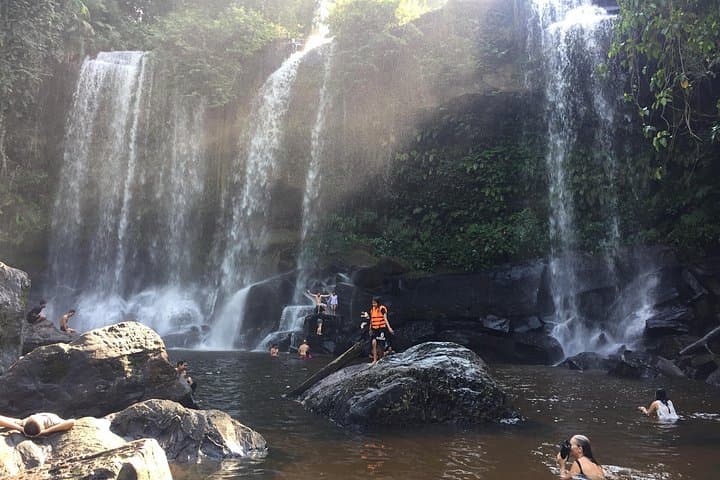
Yes, there are swimming pools below the falls, but water levels vary seasonally and caution is advised around currents and slippery rocks.
USD and Cambodian Riel are commonly used; Khmer is spoken locally but English is widely available in Siem Reap tourism services.
Angkor’s monuments reflect a Khmer civilization that engineered large reservoirs and canals to manage monsoon water and supported complex urban centers from the 9th to 15th centuries.
Visitor pressure and water-level changes challenge both temple conservation and Tonle Sap ecology; follow guide advice, avoid littering, and support local community enterprises.
Angkor Friendly tour operates guided outdoor trips and adventures with an emphasis on safety, stewardship, and memorable experiences.
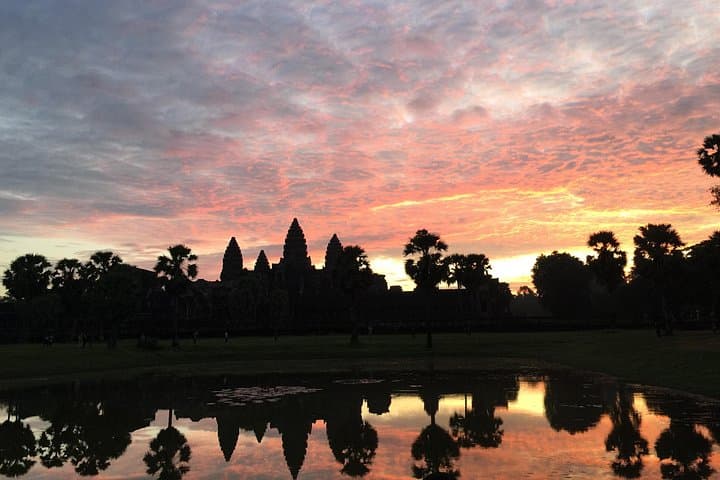
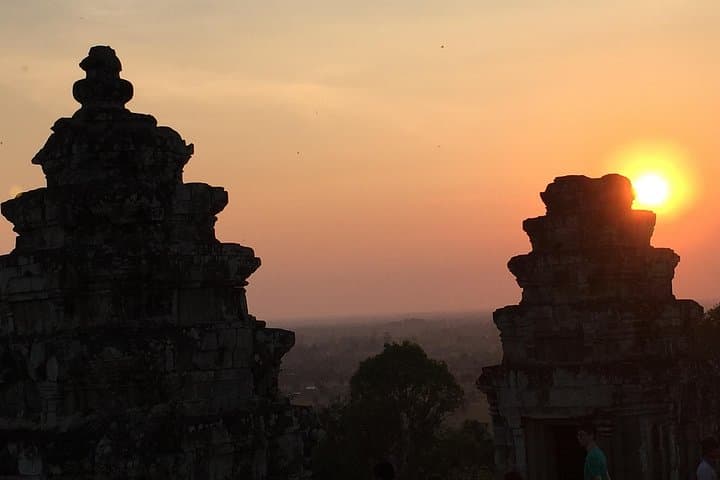
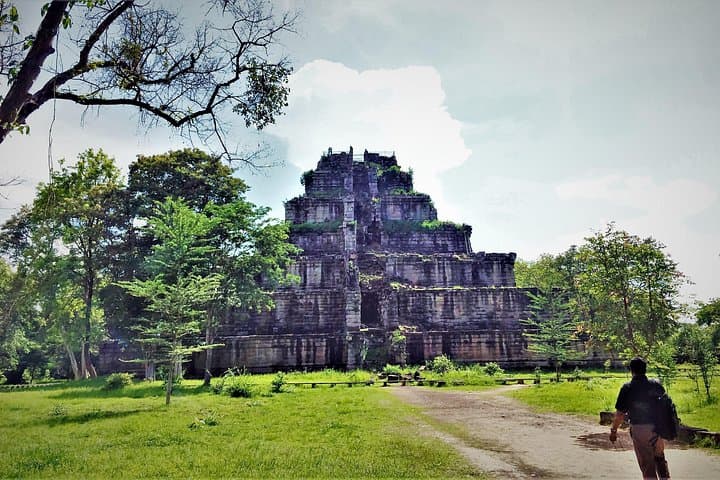
Morning light slides across the causeway at Angkor Wat, and the silhouette of towers rises like a city reclaimed by the sky. Over five days this private itinerary moves from the monumental galleries of Angkor to jungle-clad ruins, a sacred mountain, and the slow breath of Tonle Sap Lake, offering sunrise, sunset, and quieter hours between the busiest circuits.
Morning light slides across the causeway at Angkor Wat, and the silhouette of towers rises like a city reclaimed by the sky. Over five days this private itinerary moves from the monumental galleries of Angkor to jungle-clad ruins, a sacred mountain, and the slow breath of Tonle Sap Lake, offering sunrise, sunset, and quieter hours between the busiest circuits.
Angkor sits on an alluvial plain shaped by seasonal flooding and ancient reservoirs called barays that once sustained a city of hundreds of thousands. The temples record a transition from Hindu kingship to Mahayana and Theravada Buddhism, carved in pink sandstone at Banteay Srei and hewn from laterite at Ta Prohm where roots press into masonry.
Culturally, the region still orients around rice cycles and water management; markets in Siem Reap showcase stone and silk crafts produced with skills centuries old. Tonle Sap’s flooded forests host migratory birds and floating communities whose livelihood follows the lake’s pulse.
Practical guidance: start tours very early to avoid heat and crowds, carry a three-day temple pass or longer depending on your plan, and wear clothing that covers shoulders and knees for temple entry. Expect uneven stone steps, muddy tracks at Kulen in wet months, and a mix of air-conditioned transfer and walking. Hydration, sun protection, and light layers matter—mornings are cool in the dry season, afternoons hot and humid. Discuss pacing with your guide if you prefer a slower route through the less-visited corners like Ta Nei or Beng Mealea. This is a culturally rich, low-technical trip best suited to travelers comfortable walking several hours a day.