THE ADVENTURE COLLECTIVE® · Independent discovery and booking for outdoor travel

Explore Angkor’s big names and its quieter corners on a compact 5-day circuit. From Angkor Wat’s sunrise to Koh Ker’s remote temple-mountains and Kulen’s river-carved lingas, expect long days, memorable views, and cultural craft stops.
Explore Angkor’s big names and its quieter corners on a compact 5-day circuit. From Angkor Wat’s sunrise to Koh Ker’s remote temple-mountains and Kulen’s river-carved lingas, expect long days, memorable views, and cultural craft stops.
The van drops you on a hard-packed lane and the first light slices across bas-reliefs; elephant trunks and devatas stare back as the air warms. Over five days you move from the stone grandeur of Angkor Wat through quiet Rolous precincts to the wild, vine-choked ruins of Beng Mealea and the upland rivers of Kulen Mountain. The landscape feels alive: roots pry at lintels, the river at Kulen hurries and laughs beneath a carved bed of 1,000 lingas.
Verified experiences and guided adventures in the surrounding area.
Operated by Happy Angkor Tour · Siem Reap, Siem Reap Province
The van drops you on a hard-packed lane and the first light slices across bas-reliefs; elephant trunks and devatas stare back as the air warms. Over five days you move from the stone grandeur of Angkor Wat through quiet Rolous precincts to the wild, vine-choked ruins of Beng Mealea and the upland rivers of Kulen Mountain. The landscape feels alive: roots pry at lintels, the river at Kulen hurries and laughs beneath a carved bed of 1,000 lingas.
This corridor was the heart of the Khmer empire from the 9th to 13th centuries. Angkor’s sandstone and laterite tell a geological story of sediment uplifted and sculpted by monsoon-fed rivers; Koh Ker’s temple-mountains mark a short-lived capital with a distinctly stepped silhouette. Local craft towns around Siem Reap preserve stone- and wood-carving traditions that still supply the temples and markets.
Expect long but manageable days: sunrise at Angkor Wat, mid-day breaks at local restaurants, a full day’s drive northeast to Koh Ker and Beng Mealea, and a freshwater respite at Kulen’s falls. Wear breathable, respectful clothing for temple interiors; stepped platforms and jungle paths are uneven. Carry cash for temple passes and market purchases; the guide handles logistics and transfers.
Practical rhythm matters: start before dawn for cooler light, pace walking around ruined galleries, and treat the waterfall as an opportunity to cool down rather than a remote swim guarantee. With preparation, this itinerary balances archaeology, raw nature, and hands-on cultural encounters into an active, culturally rich five-day loop.
moderate.
5 days (6–10 hours/day).
Suitable for travelers who can walk several kilometers over uneven stone and climb stairs; overall moderate stamina required for multiple full days.
Your guide typically assists with buying the Angkor Pass on day one; you can also purchase it online ahead of time—carry the printed or mobile pass at all times.
Daily lunches at local restaurants are not included in the itinerary price; guides will recommend affordable options and most dishes run around USD 5–10.
Yes—pace can be adjusted and most visits are short walks, but expect early mornings, heat, and some stair climbs; notify the operator of mobility needs during booking.
Swimming is possible in designated pools at the waterfall, but conditions change by season—follow local guidance and avoid swimming after heavy rains when currents strengthen.
These sites span Khmer history—Angkor Wat (12th century) and Koh Ker (10th century capital) reflect different political centers and temple-building styles of the empire.
Visitor impact is managed via regulated temple access and local conservation efforts; stick to paths, avoid touching bas-reliefs, and support local craft workshops to benefit communities.
Happy Angkor Tour operates guided outdoor trips and adventures with an emphasis on safety, stewardship, and memorable experiences.
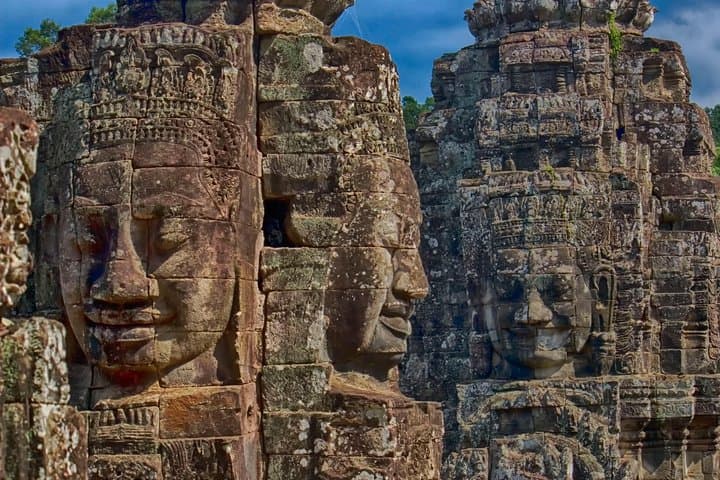
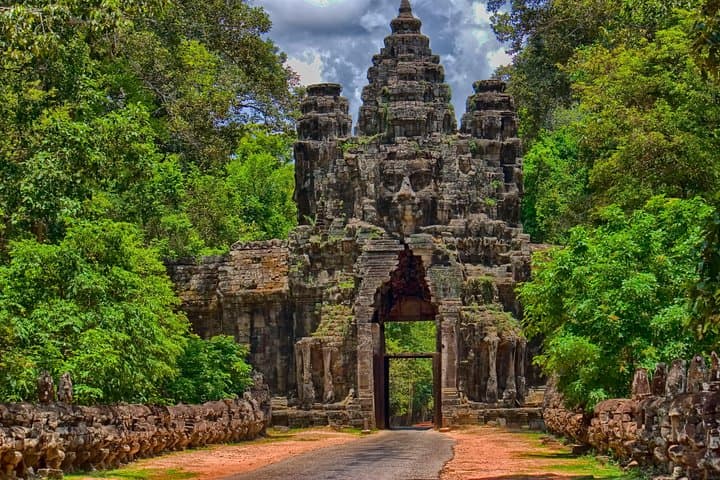
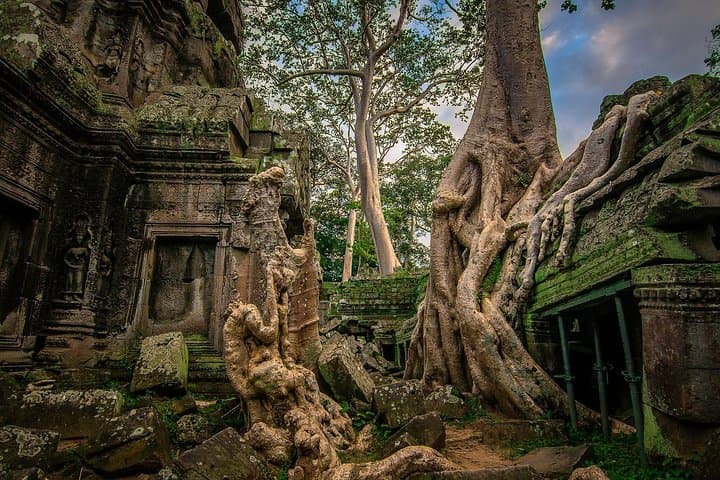
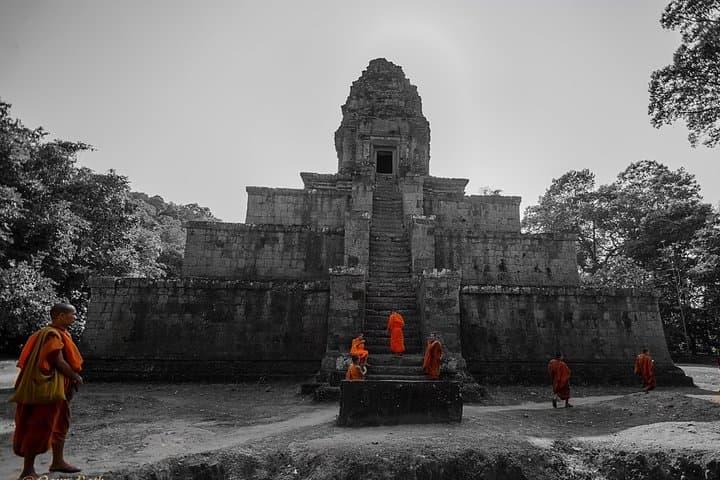
The van drops you on a hard-packed lane and the first light slices across bas-reliefs; elephant trunks and devatas stare back as the air warms. Over five days you move from the stone grandeur of Angkor Wat through quiet Rolous precincts to the wild, vine-choked ruins of Beng Mealea and the upland rivers of Kulen Mountain. The landscape feels alive: roots pry at lintels, the river at Kulen hurries and laughs beneath a carved bed of 1,000 lingas.
The van drops you on a hard-packed lane and the first light slices across bas-reliefs; elephant trunks and devatas stare back as the air warms. Over five days you move from the stone grandeur of Angkor Wat through quiet Rolous precincts to the wild, vine-choked ruins of Beng Mealea and the upland rivers of Kulen Mountain. The landscape feels alive: roots pry at lintels, the river at Kulen hurries and laughs beneath a carved bed of 1,000 lingas.
This corridor was the heart of the Khmer empire from the 9th to 13th centuries. Angkor’s sandstone and laterite tell a geological story of sediment uplifted and sculpted by monsoon-fed rivers; Koh Ker’s temple-mountains mark a short-lived capital with a distinctly stepped silhouette. Local craft towns around Siem Reap preserve stone- and wood-carving traditions that still supply the temples and markets.
Expect long but manageable days: sunrise at Angkor Wat, mid-day breaks at local restaurants, a full day’s drive northeast to Koh Ker and Beng Mealea, and a freshwater respite at Kulen’s falls. Wear breathable, respectful clothing for temple interiors; stepped platforms and jungle paths are uneven. Carry cash for temple passes and market purchases; the guide handles logistics and transfers.
Practical rhythm matters: start before dawn for cooler light, pace walking around ruined galleries, and treat the waterfall as an opportunity to cool down rather than a remote swim guarantee. With preparation, this itinerary balances archaeology, raw nature, and hands-on cultural encounters into an active, culturally rich five-day loop.