THE ADVENTURE COLLECTIVE® · Independent discovery and booking for outdoor travel

Ride a 4x4 most of the way up Acatenango, walk an hour to base camp for dramatic Fuego views, or keep climbing to the 3,976m summit for sunset. This full-day tour blends motorized access with high-altitude hiking and is ideal for fit travelers based in Antigua.
Ride a 4x4 most of the way up Acatenango, walk an hour to base camp for dramatic Fuego views, or keep climbing to the 3,976m summit for sunset. This full-day tour blends motorized access with high-altitude hiking and is ideal for fit travelers based in Antigua.
The morning begins before most of Antigua wakes: headlights carve through a low cloud that clings to coffee fields, and a convoy of 4x4s grinds up the volcanic road. Dust rises in sheets and then falls away, leaving a clean, highland smell—cold earth and pine. From the vehicle window the profile of Acatenango sharpens: terraces of dark lava, bouldered ridgelines and, always, the neighbor that steals the show—Fuego—hissing orange at its crater lip. The 4x4 does the heavy lifting, hauling you up roughly 80% of the volcano’s slope so the actual hike begins where the air is thin and the views are wide.
Verified experiences and guided adventures in the surrounding area.
Operated by Direct Adventure · Antigua Guatemala, Sacatepéquez
The morning begins before most of Antigua wakes: headlights carve through a low cloud that clings to coffee fields, and a convoy of 4x4s grinds up the volcanic road. Dust rises in sheets and then falls away, leaving a clean, highland smell—cold earth and pine. From the vehicle window the profile of Acatenango sharpens: terraces of dark lava, bouldered ridgelines and, always, the neighbor that steals the show—Fuego—hissing orange at its crater lip. The 4x4 does the heavy lifting, hauling you up roughly 80% of the volcano’s slope so the actual hike begins where the air is thin and the views are wide.
Acatenango is an old stratovolcano whose complex cone records cycles of fire and repose. It shares a saddle with Fuego, one of Central America’s most active volcanoes; together they form a dramatic pair visible from Antigua for miles. The landscape is young geologically—loose volcanic scree, ash fields and jagged lava flows—so trails can be steep and changeable. Culturally, the volcanoes have long been part of highland life: local Kaqchikel and K'iche' communities farm the lower slopes and have woven the peaks into weather lore and harvest cycles.
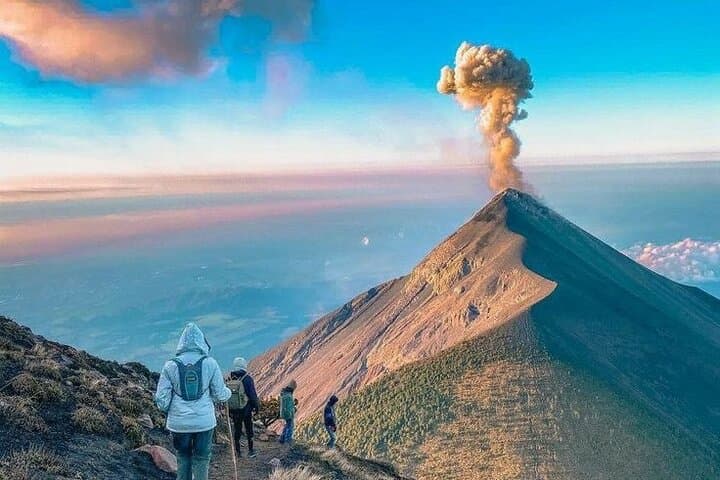
The experience on this tour breaks into two parts. The first is a short, bracing walk—about an hour—from the 4x4 drop-off to base camp. Expect roughly 200–400 vertical meters of quick gain over packed volcanic soil. Base camp is the payoff for most travelers: a panoramic shelf with prime views of Fuego’s eruptions and the sunset that paints the crater rim. For those chasing a harder day, guides offer the summit push: approximately four hours of steady ascent to 3,976 meters. From the summit the panorama opens to Guatemala’s highlands and the sinuous shadow of Fuego below.
Practicalities matter up here. The full tour runs about nine hours door-to-door from Antigua and is best tackled with high aerobic fitness and some prior acclimatization. Trails are non-technical but steep—expect loose rock, short scree sections and exposure to wind. Weather flips quickly: a warm morning can become freezing at dusk. Guides provide snacks and private transport; the operation does not recommend the trip for people with spinal, heart conditions or pregnancy.
Plan to carry a 2–3 liter water supply, layered clothing, sun protection and a headlamp if you’ll descend after sunset. Start early, respect pace and oxygen; the summit is optional, and turning back is a sensible decision if headaches or breathlessness set in. When you step off the 4x4 and into that thin, luminous air, the volcano will ask for effort—and repay it with a view and a memory that lasts long after the dust settles.
challenging.
9 hours.
Good aerobic fitness and experience with steep day hikes; ability to move steadily for 4+ hours at altitude.
You should have strong cardiovascular fitness and be comfortable hiking 4+ hours with steady elevation gain; the tour is not technical but is physically demanding.
No—summit attempts depend on weather, fitness and guide discretion; the operator prioritizes safety and may recommend staying at base camp.
Guides provide light snacks (bread and cured meat) and water stops but bring extra food if you plan the summit push.
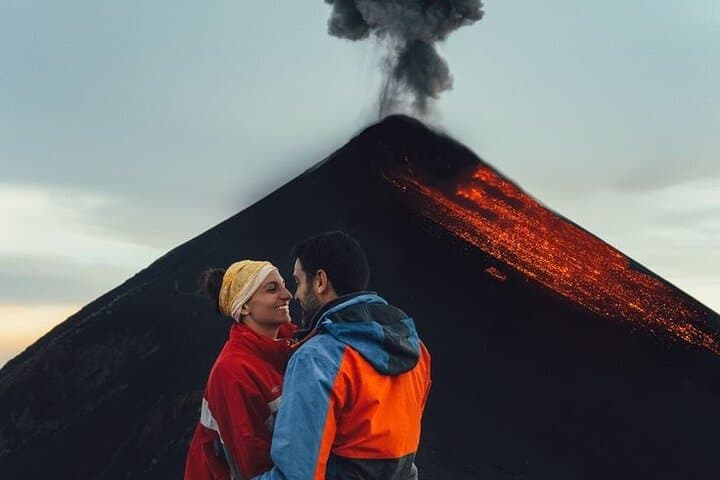
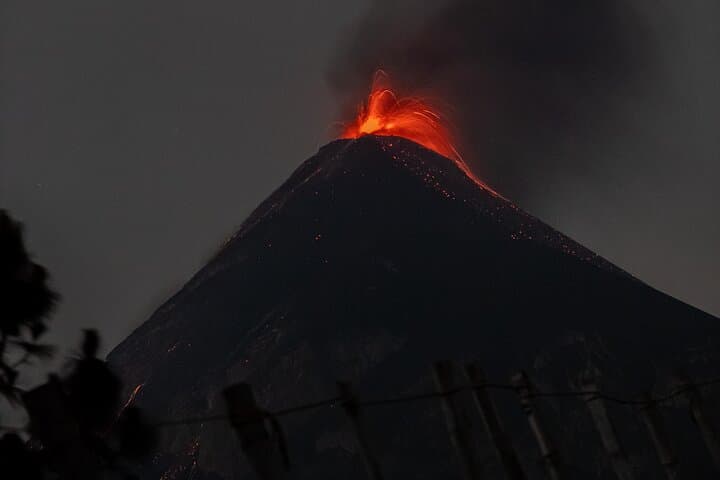
Yes—Fuego is frequently active; from base camp and the summit you can often see ash plumes and intermittent lava bursts at night or dusk.
The tour is recommended for physically fit adults; operators typically restrict participation based on age and fitness—check with the supplier before booking.
The operator may cancel for unsafe conditions; the booking policy states all sales are final but tours can be canceled if weather prevents safe operation.
Acatenango sits in a volcanic complex used by indigenous highland communities for centuries; its eruptions shaped local agriculture and settlement patterns around Antigua.
Trail erosion and litter are local concerns—use established paths, pack out waste, and support operators who practice leave-no-trace and local hiring.
Direct Adventure operates guided outdoor trips and adventures with an emphasis on safety, stewardship, and memorable experiences.
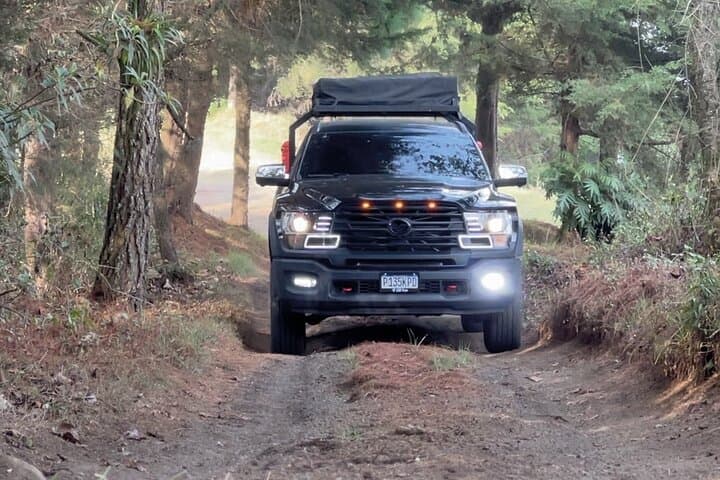
The morning begins before most of Antigua wakes: headlights carve through a low cloud that clings to coffee fields, and a convoy of 4x4s grinds up the volcanic road. Dust rises in sheets and then falls away, leaving a clean, highland smell—cold earth and pine. From the vehicle window the profile of Acatenango sharpens: terraces of dark lava, bouldered ridgelines and, always, the neighbor that steals the show—Fuego—hissing orange at its crater lip. The 4x4 does the heavy lifting, hauling you up roughly 80% of the volcano’s slope so the actual hike begins where the air is thin and the views are wide.
The morning begins before most of Antigua wakes: headlights carve through a low cloud that clings to coffee fields, and a convoy of 4x4s grinds up the volcanic road. Dust rises in sheets and then falls away, leaving a clean, highland smell—cold earth and pine. From the vehicle window the profile of Acatenango sharpens: terraces of dark lava, bouldered ridgelines and, always, the neighbor that steals the show—Fuego—hissing orange at its crater lip. The 4x4 does the heavy lifting, hauling you up roughly 80% of the volcano’s slope so the actual hike begins where the air is thin and the views are wide.
Acatenango is an old stratovolcano whose complex cone records cycles of fire and repose. It shares a saddle with Fuego, one of Central America’s most active volcanoes; together they form a dramatic pair visible from Antigua for miles. The landscape is young geologically—loose volcanic scree, ash fields and jagged lava flows—so trails can be steep and changeable. Culturally, the volcanoes have long been part of highland life: local Kaqchikel and K'iche' communities farm the lower slopes and have woven the peaks into weather lore and harvest cycles.
The experience on this tour breaks into two parts. The first is a short, bracing walk—about an hour—from the 4x4 drop-off to base camp. Expect roughly 200–400 vertical meters of quick gain over packed volcanic soil. Base camp is the payoff for most travelers: a panoramic shelf with prime views of Fuego’s eruptions and the sunset that paints the crater rim. For those chasing a harder day, guides offer the summit push: approximately four hours of steady ascent to 3,976 meters. From the summit the panorama opens to Guatemala’s highlands and the sinuous shadow of Fuego below.
Practicalities matter up here. The full tour runs about nine hours door-to-door from Antigua and is best tackled with high aerobic fitness and some prior acclimatization. Trails are non-technical but steep—expect loose rock, short scree sections and exposure to wind. Weather flips quickly: a warm morning can become freezing at dusk. Guides provide snacks and private transport; the operation does not recommend the trip for people with spinal, heart conditions or pregnancy.
Plan to carry a 2–3 liter water supply, layered clothing, sun protection and a headlamp if you’ll descend after sunset. Start early, respect pace and oxygen; the summit is optional, and turning back is a sensible decision if headaches or breathlessness set in. When you step off the 4x4 and into that thin, luminous air, the volcano will ask for effort—and repay it with a view and a memory that lasts long after the dust settles.