THE ADVENTURE COLLECTIVE® · Independent discovery and booking for outdoor travel

A single-day loop from Cancún linking Tulum’s cliffside temples, Cobá’s jungle pyramid, a freshwater cenote and Playa del Carmen’s Fifth Avenue. Expect a 12-hour day of walking, swimming and cultural highlights with local fees often paid on site.
A single-day loop from Cancún linking Tulum’s cliffside temples, Cobá’s jungle pyramid, a freshwater cenote and Playa del Carmen’s Fifth Avenue. Expect a 12-hour day of walking, swimming and cultural highlights with local fees often paid on site.
You step off the air-conditioned van and the Caribbean wind hits like a promise — blue sea to your right, limestone ruins to your left, and a strip of crushed coral underfoot that remembers centuries of footsteps. The Tulum archaeological zone opens with cliffside views where ancient Maya once watched trading canoes cross the reef; the ocean seems to dare you to keep moving.
Verified experiences and guided adventures in the surrounding area.
Operated by CP · Tulum, Quintana Roo
You step off the air-conditioned van and the Caribbean wind hits like a promise — blue sea to your right, limestone ruins to your left, and a strip of crushed coral underfoot that remembers centuries of footsteps. The Tulum archaeological zone opens with cliffside views where ancient Maya once watched trading canoes cross the reef; the ocean seems to dare you to keep moving.
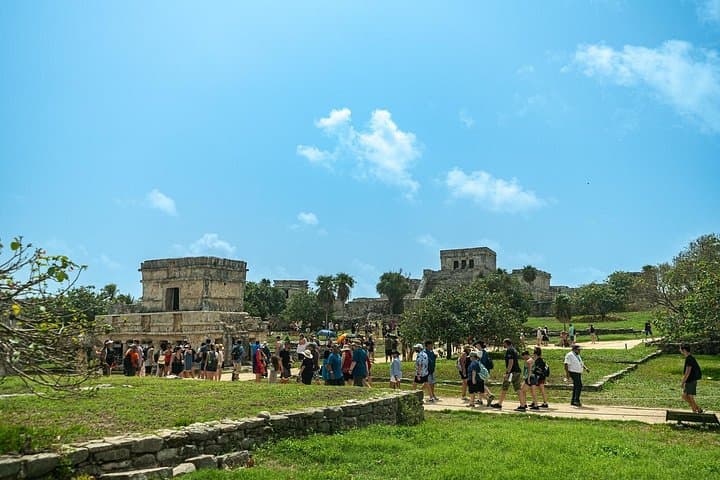
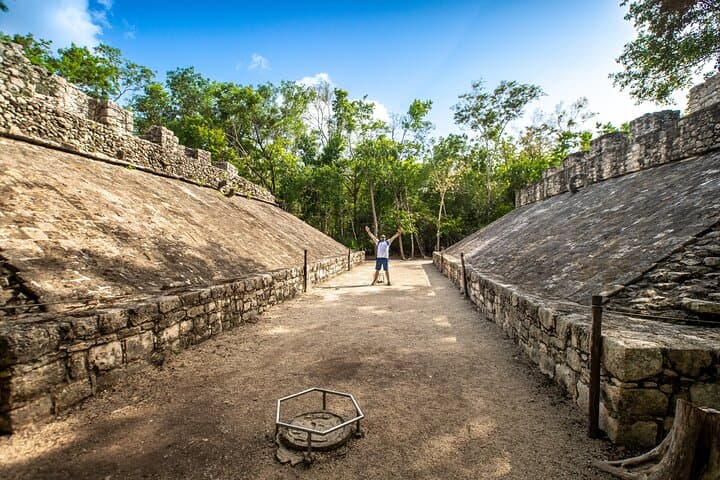
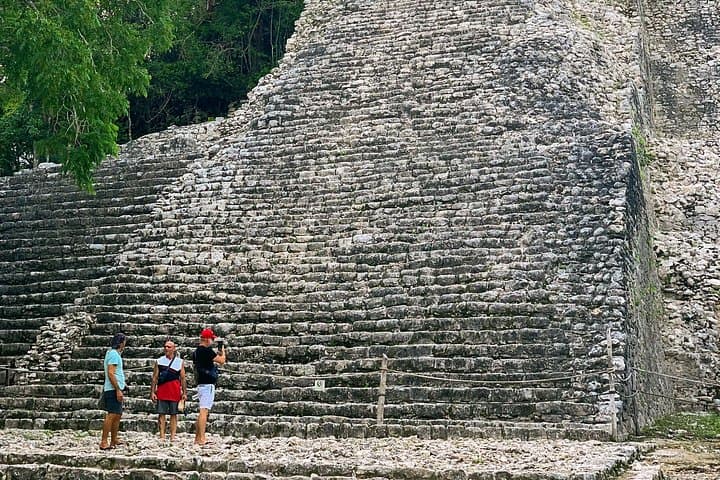
The day threads together three distinct landscapes: the coastal temples of Tulum, the lowland forest and spread-out pyramids of Cobá, and the underground waters of a cenote — all finished with the cosmopolitan hum of Playa del Carmen’s Fifth Avenue. Geologically, the Yucatán is a porous limestone plateau carved by groundwater; cenotes are collapse points where freshwater collects, cool and inviting. Culturally, Tulum functioned as a fortified port during Late Postclassic Maya times, while Cobá is notable for Nohoch Mul, the region’s tallest pyramid, rising from jungle floor. Local vendors and small eateries along the route offer cochinita pibil, fresh fruit and cold aguas that feel essential after time in the sun.
Practical guide: this is a full-day, 12-hour itinerary with transfers included but admissions and some meals paid locally. Bring reef-safe sunscreen, a refillable water bottle, swimwear for the cenote and sturdy walking shoes for uneven stone and jungle paths. Start early to beat the heat and crowds at Tulum; carry small bills for entrance fees, locker rentals and tips. Respect signage at ruins and cenotes — fragile sites need quiet, careful visitors.
moderate.
12 hours.
Moderate fitness recommended: you'll walk on uneven terrain, climb steps and be on your feet for several hours with short swims.
Some admissions are handled locally and require an additional payment (the tour lists Tulum, Cobá and cenote fees as extra); confirm at booking what’s included.
The meeting point is inside Starbucks at Plaza La Isla in the Cancún Hotel Zone; most tours return to the same point.
Access policies change; historically visitors could climb Nohoch Mul, but check current site rules and your guide’s instructions before attempting any climb.
The tour is family-friendly but involves walking on uneven ground and some steps; it’s not recommended for those with serious spinal, heart issues or late pregnancy.
Tulum was a key Late Postclassic Maya trading port on the Caribbean; Cobá grew as a nearby inland hub linked by raised causeways (sacbeob).
Cenotes are sensitive freshwater systems—use biodegradable products, avoid sunscreen before swimming and follow site rules to reduce human impact.
CP operates guided outdoor trips and adventures with an emphasis on safety, stewardship, and memorable experiences.
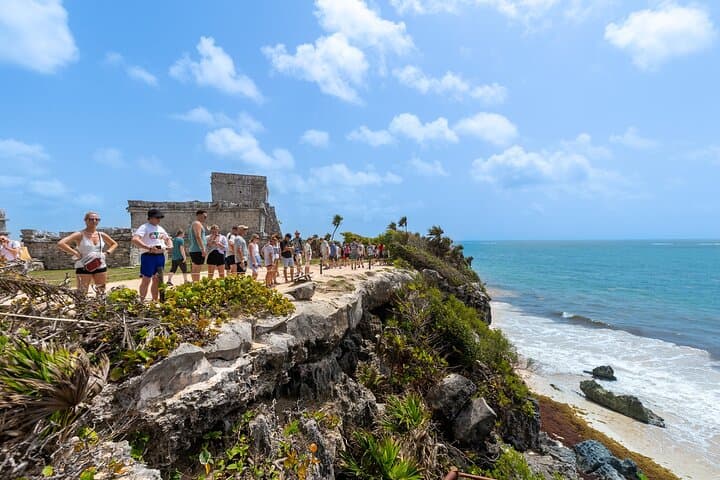
You step off the air-conditioned van and the Caribbean wind hits like a promise — blue sea to your right, limestone ruins to your left, and a strip of crushed coral underfoot that remembers centuries of footsteps. The Tulum archaeological zone opens with cliffside views where ancient Maya once watched trading canoes cross the reef; the ocean seems to dare you to keep moving.
You step off the air-conditioned van and the Caribbean wind hits like a promise — blue sea to your right, limestone ruins to your left, and a strip of crushed coral underfoot that remembers centuries of footsteps. The Tulum archaeological zone opens with cliffside views where ancient Maya once watched trading canoes cross the reef; the ocean seems to dare you to keep moving.
The day threads together three distinct landscapes: the coastal temples of Tulum, the lowland forest and spread-out pyramids of Cobá, and the underground waters of a cenote — all finished with the cosmopolitan hum of Playa del Carmen’s Fifth Avenue. Geologically, the Yucatán is a porous limestone plateau carved by groundwater; cenotes are collapse points where freshwater collects, cool and inviting. Culturally, Tulum functioned as a fortified port during Late Postclassic Maya times, while Cobá is notable for Nohoch Mul, the region’s tallest pyramid, rising from jungle floor. Local vendors and small eateries along the route offer cochinita pibil, fresh fruit and cold aguas that feel essential after time in the sun.
Practical guide: this is a full-day, 12-hour itinerary with transfers included but admissions and some meals paid locally. Bring reef-safe sunscreen, a refillable water bottle, swimwear for the cenote and sturdy walking shoes for uneven stone and jungle paths. Start early to beat the heat and crowds at Tulum; carry small bills for entrance fees, locker rentals and tips. Respect signage at ruins and cenotes — fragile sites need quiet, careful visitors.