THE ADVENTURE COLLECTIVE® · Independent discovery and booking for outdoor travel

A full-day 4WD loop from Muscat that pairs Nizwa’s historic fort and souq with the high ridgelines of Jebel Shams and the mountain village of Misfat. Expect dramatic canyon views, short walks, and insights into Oman’s mountain farming and silvercraft.
A full-day 4WD loop from Muscat that pairs Nizwa’s historic fort and souq with the high ridgelines of Jebel Shams and the mountain village of Misfat. Expect dramatic canyon views, short walks, and insights into Oman’s mountain farming and silvercraft.
You step into the dry morning air outside Muscat and the highway peels away into the Hajar—rock faces folding like pages, switchbacks etching the skyline. The 4WD hums as the city gives way to palm groves, and by midmorning you’re standing beneath Nizwa Fort’s squat circular tower, its stone walls still holding stories of caravan routes and silver traders.
Verified experiences and guided adventures in the surrounding area.
Operated by Arabian Travel Service · Nizwa, Ad Dakhiliyah
You step into the dry morning air outside Muscat and the highway peels away into the Hajar—rock faces folding like pages, switchbacks etching the skyline. The 4WD hums as the city gives way to palm groves, and by midmorning you’re standing beneath Nizwa Fort’s squat circular tower, its stone walls still holding stories of caravan routes and silver traders.
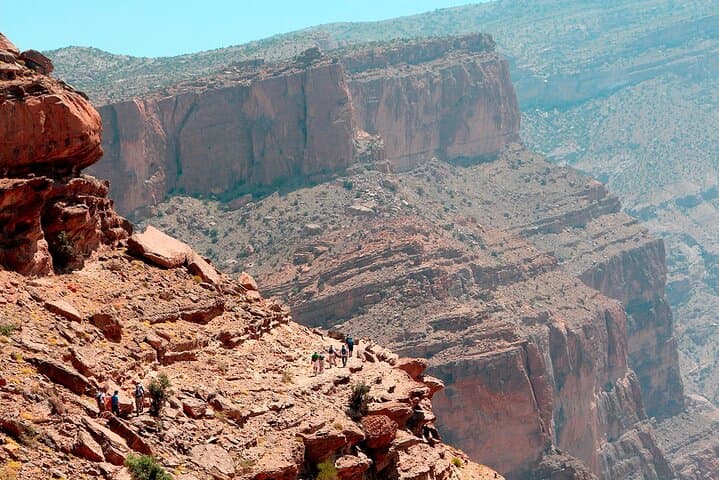
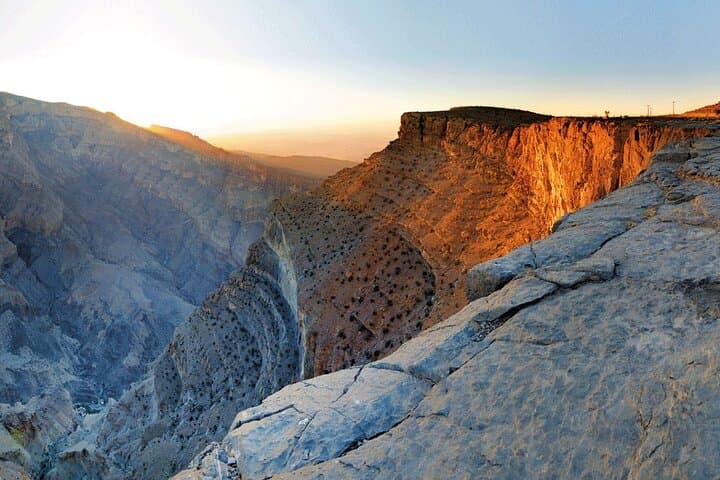
This loop stitches together Oman's human history and high-country geology: Nizwa's market sits on an old oasis plain where falaj irrigation fed date palms; Al Hajar's limestone and ophiolite ranges were thrust up by tectonic collision, and Jebel Shams (about 3,000 m) throws a deep shadow over Wadi Ghul—the arid canyon that locals call the Grand Canyon of Oman. Misfat al Abriyeen perches on terraces carved into the mountain, a living example of mountain agriculture and vernacular stone homes.
Expect short walks and lookout stops rather than long summit treks: gravel lanes, occasional loose scree near viewpoints, and steep roadside drops at Jebel Shams viewpoints. Weather shifts fast at altitude—sun in the valley can mean biting wind on the rim.
Practical tips: bring 2–3 liters of water, sun protection, closed-toe shoes with grip, and layered clothing for wind at higher elevations. Leave extra time for photos at the Nizwa souq and the Misfat terraces; local vendors sell silverwork and dates if you want to support small artisans. The route is a compact, full-day way to sample Oman's wild geology and living mountain culture without technical climbing or multi-day logistics.
moderate.
7 hours.
Suitable for people with basic fitness—short walks and standing at viewpoints; not strenuous but expect uneven terrain.
The full day trip runs about seven hours door-to-door; travel time depends on traffic but plan roughly 1.5–2 hours to Nizwa and additional time ascending to Jebel Shams.
No technical hikes are required—stops include short walks and viewpoints; the terrain is mostly easy to moderate walking on uneven surfaces.
Light refreshments like coffee/tea and bottled water are included; bring snacks if you prefer more substantial food between stops.
The itinerary is family-friendly with mostly short walks, but infants should sit on laps and travelers with limited mobility may find some viewpoints challenging due to uneven ground.
Nizwa was a strategic hub on inland caravan routes; its 17th-century fort sits over older foundations and dominated trade and local governance for centuries.
The Hajar environment is water-scarce—stick to marked paths, avoid disturbing terraces, and buy local handicrafts to support village economies rather than leaving waste.
Arabian Travel Service operates guided outdoor trips and adventures with an emphasis on safety, stewardship, and memorable experiences.
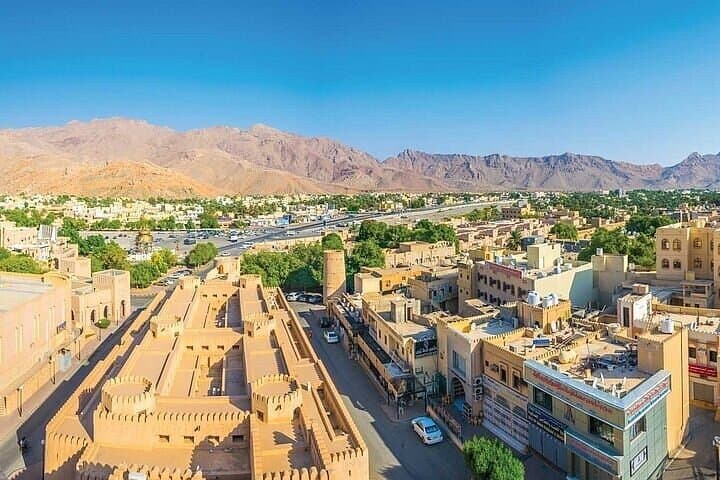
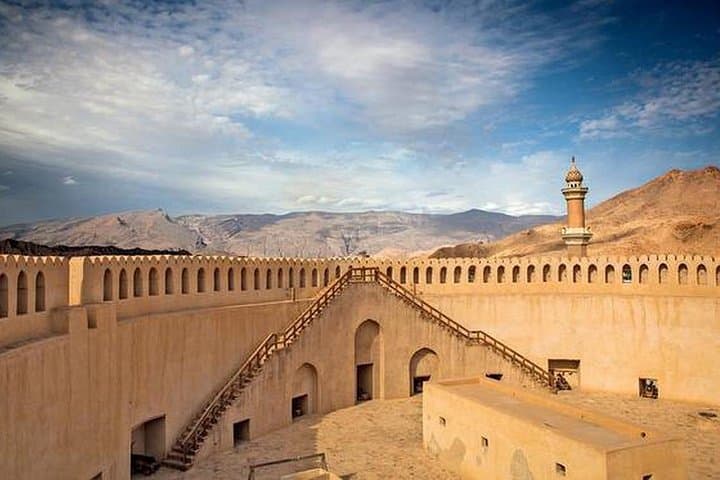
You step into the dry morning air outside Muscat and the highway peels away into the Hajar—rock faces folding like pages, switchbacks etching the skyline. The 4WD hums as the city gives way to palm groves, and by midmorning you’re standing beneath Nizwa Fort’s squat circular tower, its stone walls still holding stories of caravan routes and silver traders.
You step into the dry morning air outside Muscat and the highway peels away into the Hajar—rock faces folding like pages, switchbacks etching the skyline. The 4WD hums as the city gives way to palm groves, and by midmorning you’re standing beneath Nizwa Fort’s squat circular tower, its stone walls still holding stories of caravan routes and silver traders.
This loop stitches together Oman's human history and high-country geology: Nizwa's market sits on an old oasis plain where falaj irrigation fed date palms; Al Hajar's limestone and ophiolite ranges were thrust up by tectonic collision, and Jebel Shams (about 3,000 m) throws a deep shadow over Wadi Ghul—the arid canyon that locals call the Grand Canyon of Oman. Misfat al Abriyeen perches on terraces carved into the mountain, a living example of mountain agriculture and vernacular stone homes.
Expect short walks and lookout stops rather than long summit treks: gravel lanes, occasional loose scree near viewpoints, and steep roadside drops at Jebel Shams viewpoints. Weather shifts fast at altitude—sun in the valley can mean biting wind on the rim.
Practical tips: bring 2–3 liters of water, sun protection, closed-toe shoes with grip, and layered clothing for wind at higher elevations. Leave extra time for photos at the Nizwa souq and the Misfat terraces; local vendors sell silverwork and dates if you want to support small artisans. The route is a compact, full-day way to sample Oman's wild geology and living mountain culture without technical climbing or multi-day logistics.