THE ADVENTURE COLLECTIVE® · Independent discovery and booking for outdoor travel

A concentrated 48‑hour expedition from Grand Rivière into Martinique’s tropical forest and up Mount Pelée. Expect steep trails, a black‑sand bivouac, and 42 km of hiking with 2,500 m of ascent over two days.
A concentrated 48‑hour expedition from Grand Rivière into Martinique’s tropical forest and up Mount Pelée. Expect steep trails, a black‑sand bivouac, and 42 km of hiking with 2,500 m of ascent over two days.
You step off the small fishing boat into sugar-black sand, the Caribbean sea hissing at your boots as the evening light thins—this is Grand Rivière, the northern edge where the rainforest meets the sea. Over the next 48 hours you’ll move through dense tropical canopy, across steep ridgelines and up to the volcanic flanks of Mount Pelée, finishing each day with the simple ritual of a beach bivouac and a shared BBQ.
Verified experiences and guided adventures in the surrounding area.
Operated by Explore Martinique · Grand Rivière, Martinique
You step off the small fishing boat into sugar-black sand, the Caribbean sea hissing at your boots as the evening light thins—this is Grand Rivière, the northern edge where the rainforest meets the sea. Over the next 48 hours you’ll move through dense tropical canopy, across steep ridgelines and up to the volcanic flanks of Mount Pelée, finishing each day with the simple ritual of a beach bivouac and a shared BBQ.
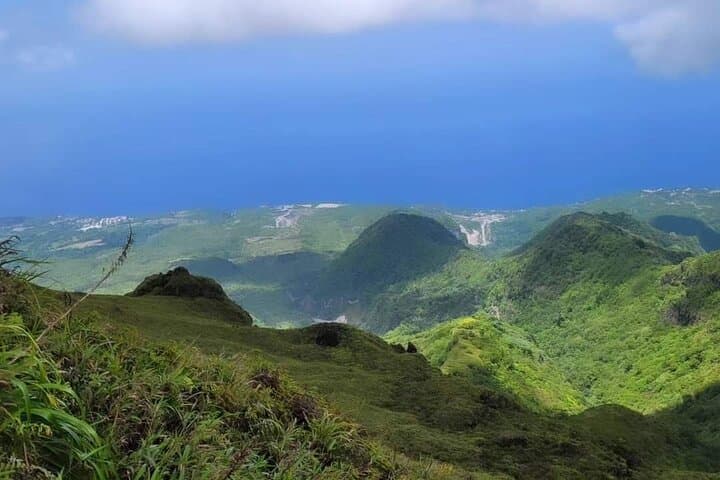
The route follows old footpaths and volcanic terrain shaped by centuries of eruptions and erosion; Mount Pelée’s pumice and basalt give the island its dramatic cliffs and fertile soils. Grand Rivière and nearby Saint-Pierre have fishing and colonial histories—you’ll pass ruins, coastal terraces and small villages that still rely on traditional fishing and rum-making.
Wildlife here is direct: iguanas sun on rocks, hermit crabs patrol the strand, and the forest can reveal lizards and the occasional wild pig. Geologically dynamic and culturally modest, the area rewards patient observers more than flash photography.
Practically: the program covers about 42 km and 2,500 m of cumulative elevation gain over two days (day one ≈19 km/1,000 m; day two ≈23 km/1,500 m, summit at ~1,395 m). Expect hot, humid conditions, steep climbs, rocky trails and a return by fishing boat after day one. Guides provide tents, sleeping bags and a headlamp; come with durable hiking boots, a filled hydration system, sun protection and layered rain gear. Pace conservatively, prioritize hydration and electrolytes, and be ready for sustained uphill effort—this is a demanding, unforgettable island traverse.
challenging.
2 days (≈48 hours).
High level of cardiovascular fitness and experience with long, sustained uphill hiking; comfortable carrying a daypack and moving on uneven volcanic terrain.
You should have a high fitness level and experience with long days on steep trails; the itinerary includes about 42 km and 2,500 m of ascent over two days.
Yes—guides provide tents, sleeping bags and a headlamp as part of the inclusions, but bring your own liners or preferred sleeping items if you have sensitivities.
Expect iguanas, lizards, hermit crabs on the beach and occasional sightings of wild pigs in the interior; large predators are not typical.
Mount Pelée is an active volcano with historical eruptions; the route uses established trails and guides monitor conditions, but check local advisories before travel.
The north coast bears marks of colonial fishing settlements and the 1902 eruption history of Mount Pelée; Saint‑Pierre was once the island’s main port before the eruption reshaped the region.
Stick to marked trails and pack out all waste; coastal bivouacs are sensitive—use established fire/BBQ spots and minimize single‑use plastics to protect reef and forest habitats.
Explore Martinique operates guided outdoor trips and adventures with an emphasis on safety, stewardship, and memorable experiences.
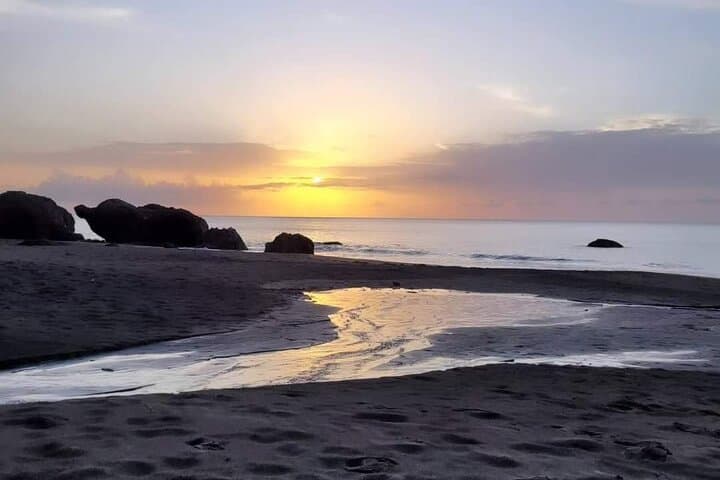
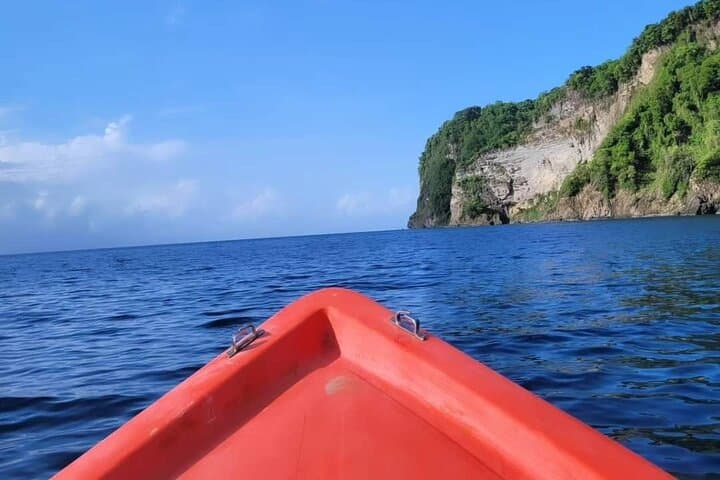
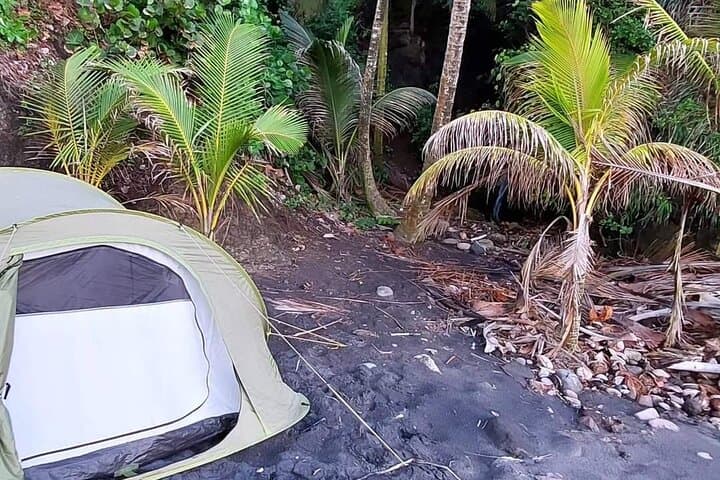
You step off the small fishing boat into sugar-black sand, the Caribbean sea hissing at your boots as the evening light thins—this is Grand Rivière, the northern edge where the rainforest meets the sea. Over the next 48 hours you’ll move through dense tropical canopy, across steep ridgelines and up to the volcanic flanks of Mount Pelée, finishing each day with the simple ritual of a beach bivouac and a shared BBQ.
You step off the small fishing boat into sugar-black sand, the Caribbean sea hissing at your boots as the evening light thins—this is Grand Rivière, the northern edge where the rainforest meets the sea. Over the next 48 hours you’ll move through dense tropical canopy, across steep ridgelines and up to the volcanic flanks of Mount Pelée, finishing each day with the simple ritual of a beach bivouac and a shared BBQ.
The route follows old footpaths and volcanic terrain shaped by centuries of eruptions and erosion; Mount Pelée’s pumice and basalt give the island its dramatic cliffs and fertile soils. Grand Rivière and nearby Saint-Pierre have fishing and colonial histories—you’ll pass ruins, coastal terraces and small villages that still rely on traditional fishing and rum-making.
Wildlife here is direct: iguanas sun on rocks, hermit crabs patrol the strand, and the forest can reveal lizards and the occasional wild pig. Geologically dynamic and culturally modest, the area rewards patient observers more than flash photography.
Practically: the program covers about 42 km and 2,500 m of cumulative elevation gain over two days (day one ≈19 km/1,000 m; day two ≈23 km/1,500 m, summit at ~1,395 m). Expect hot, humid conditions, steep climbs, rocky trails and a return by fishing boat after day one. Guides provide tents, sleeping bags and a headlamp; come with durable hiking boots, a filled hydration system, sun protection and layered rain gear. Pace conservatively, prioritize hydration and electrolytes, and be ready for sustained uphill effort—this is a demanding, unforgettable island traverse.