THE ADVENTURE COLLECTIVE® · Independent discovery and booking for outdoor travel

Two days that compress millennia: walk the marble avenues of Ephesus on day one and wade the snow-white travertines of Pamukkale on day two. This private tour pairs guided history with easy-to-reach geology for travelers on a tight schedule.
Two days that compress millennia: walk the marble avenues of Ephesus on day one and wade the snow-white travertines of Pamukkale on day two. This private tour pairs guided history with easy-to-reach geology for travelers on a tight schedule.
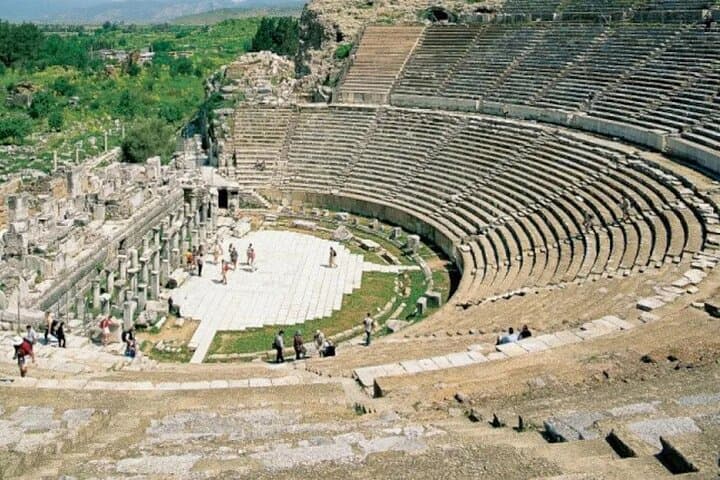
You step out of the coach into the dust-sweet air of Anatolia and a ribbon of white unfurls in the distance — first the marble streets of Ephesus, then the calcium terraces of Pamukkale a day later. The first day moves through stone avenues and a theatre that once held 25,000 voices; the second climbs the travertine slopes where warm springs continue to paint the hillside.
Verified experiences and guided adventures in the surrounding area.
Operated by TRAVELIUM · Selçuk, Izmir Province
You step out of the coach into the dust-sweet air of Anatolia and a ribbon of white unfurls in the distance — first the marble streets of Ephesus, then the calcium terraces of Pamukkale a day later. The first day moves through stone avenues and a theatre that once held 25,000 voices; the second climbs the travertine slopes where warm springs continue to paint the hillside.
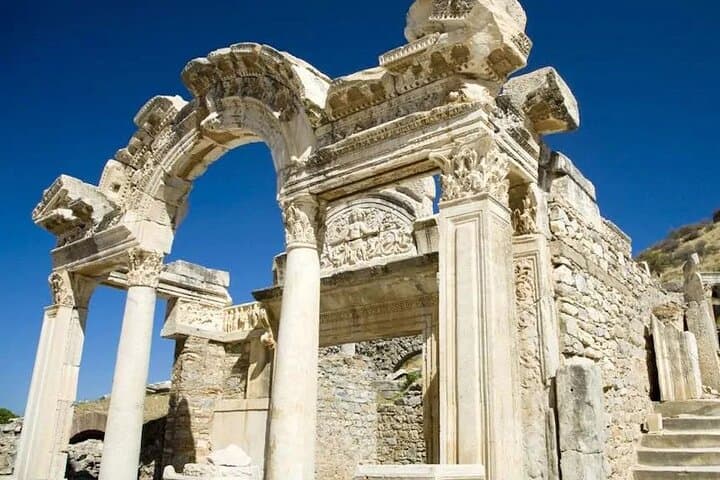
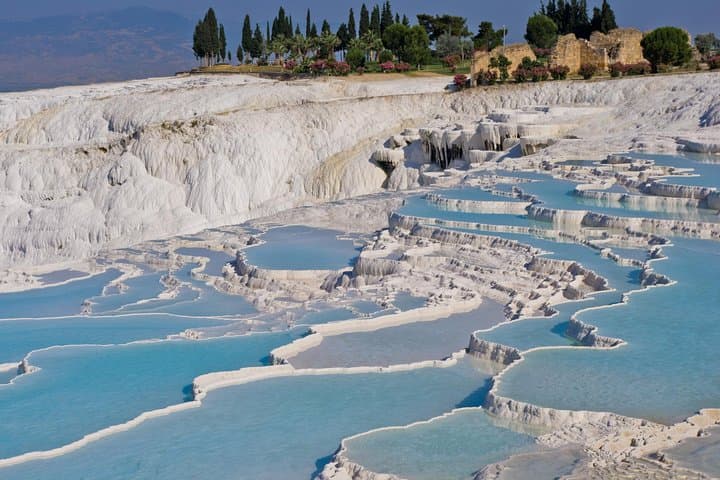
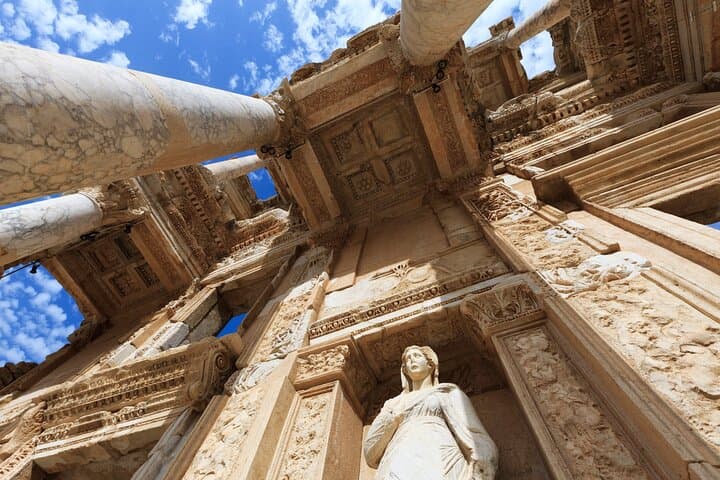
Ephesus was one of the Roman world’s great cities: the Celsus Library once housed some 12,000 scrolls, Curetes Street still shows the pockmarked edges of chariot traffic, and the Temple of Hadrian preserves finely carved reliefs. Pamukkale/Hierapolis sits above thermal springs that deposited white calcium over millennia, creating terraces and pools visitors wade beside today. Aphrodisias, included on many routes, highlights regional marble-working traditions and an extraordinary sculptural school.
The program usually covers coach transfer from Istanbul, a local guide, and one overnight at a local 4-star hotel, with site walks on uneven ancient paving and short uphill sections at the travertines. Expect walking on cobbles, occasional loose gravel, and outdoor exposure; moderate fitness and sensible footwear make the days pleasant.
Practical tips: start early to avoid heat and crowds, carry water and sunscreen, and follow site rules at Pamukkale (bare feet on the terraces). The experience balances archaeology and geology—ruined civic centers that map ancient daily life, and a landscape still being shaped by thermal water. Plan for two full but manageable days.
moderate.
2 days.
Moderate fitness—able to walk several hours on uneven stone, climb stairs, and manage short uphill sections.
Most organized tours charge separately for site entrance fees; confirm at booking—this itinerary notes admission at sites is typically not included.
Yes—this program is offered as a private tour, so itineraries and pickup points can usually be customized when you book.
Public access to natural terraces is regulated to protect the formations; some tours include optional visits to thermal pools or the Antique Pool (often for an extra fee). Follow local rules and signage.
Plan on several hours of walking on uneven surfaces each day with frequent stops—comfortable shoes and a basic level of mobility are recommended.
Ephesus was a major Roman port and civic center—its Celsus Library and great theatre highlight urban life under Roman rule; Pamukkale/Hierapolis has attracted visitors to its thermal springs since classical antiquity.
Site managers restrict access to fragile travertines and ancient floors—stay on marked paths, avoid soaps or lotions in thermal waters, and respect local preservation rules.
TRAVELIUM operates guided outdoor trips and adventures with an emphasis on safety, stewardship, and memorable experiences.
You step out of the coach into the dust-sweet air of Anatolia and a ribbon of white unfurls in the distance — first the marble streets of Ephesus, then the calcium terraces of Pamukkale a day later. The first day moves through stone avenues and a theatre that once held 25,000 voices; the second climbs the travertine slopes where warm springs continue to paint the hillside.
You step out of the coach into the dust-sweet air of Anatolia and a ribbon of white unfurls in the distance — first the marble streets of Ephesus, then the calcium terraces of Pamukkale a day later. The first day moves through stone avenues and a theatre that once held 25,000 voices; the second climbs the travertine slopes where warm springs continue to paint the hillside.
Ephesus was one of the Roman world’s great cities: the Celsus Library once housed some 12,000 scrolls, Curetes Street still shows the pockmarked edges of chariot traffic, and the Temple of Hadrian preserves finely carved reliefs. Pamukkale/Hierapolis sits above thermal springs that deposited white calcium over millennia, creating terraces and pools visitors wade beside today. Aphrodisias, included on many routes, highlights regional marble-working traditions and an extraordinary sculptural school.
The program usually covers coach transfer from Istanbul, a local guide, and one overnight at a local 4-star hotel, with site walks on uneven ancient paving and short uphill sections at the travertines. Expect walking on cobbles, occasional loose gravel, and outdoor exposure; moderate fitness and sensible footwear make the days pleasant.
Practical tips: start early to avoid heat and crowds, carry water and sunscreen, and follow site rules at Pamukkale (bare feet on the terraces). The experience balances archaeology and geology—ruined civic centers that map ancient daily life, and a landscape still being shaped by thermal water. Plan for two full but manageable days.