THE ADVENTURE COLLECTIVE® · Independent discovery and booking for outdoor travel

Spend two focused days in Cairo visiting the Giza Pyramids, Sphinx and the Egyptian Museum on a private tour that balances big landmarks with practical logistics. Ideal for travelers who want historical depth plus manageable pacing.
Spend two focused days in Cairo visiting the Giza Pyramids, Sphinx and the Egyptian Museum on a private tour that balances big landmarks with practical logistics. Ideal for travelers who want historical depth plus manageable pacing.
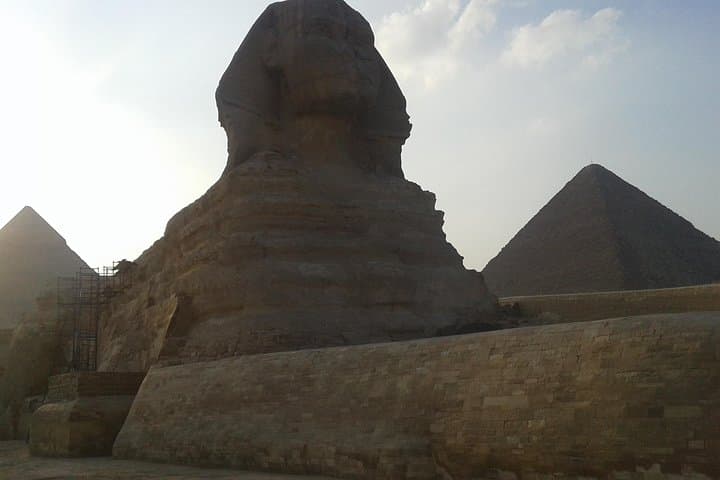
You step off the air-conditioned vehicle and the desert greets you: a cool, grainy wind rolling over the plateaus where the Great Pyramid looms, its limestone faces catching the sun like an ancient compass.
Verified experiences and guided adventures in the surrounding area.
Operated by Khaled ElSaid · Cairo, Cairo Governorate
You step off the air-conditioned vehicle and the desert greets you: a cool, grainy wind rolling over the plateaus where the Great Pyramid looms, its limestone faces catching the sun like an ancient compass.
Across two days this private Cairo loop moves at a human pace—first the Giza Plateau with its monumental geometry and the Sphinx’s half-hidden profile, then the dense galleries of the Egyptian Museum where the Tutankhamun gold collection draws a crowd. Between sites you’ll cut through Cairo’s layered history: Pharaonic engineering, Roman streets, Coptic churches, and Islamic citadels all pressed into a single, noisy metropolis.
Geologically the plateau is Upper Cretaceous limestone quarried in situ; wind and tourists shape the experience as much as time. Culturally expect a direct, tactile encounter—local guides narrate labor, burial rites, and the modern politics of heritage conservation while you sample an oriental lunch of familiar, boldly spiced dishes.
Practical edge: start early to miss heat and crowds at Giza, carry a hat and 1–2 liters of water, and bring comfortable shoes for uneven stone and museum floors. Security checkpoints are standard; keep ID and ticket copies handy. The tour is wheelchair-accessible in many parts but some archaeological surfaces remain rough—check transfer and accessibility notes when you book.
This is a trip that balances spectacle and context: you’ll witness one of human history’s largest stone projects and then stand before artifacts that made it into the historical record—close, explainable, and still impressively real.
moderate.
1–2 days.
Moderate fitness: able to walk several miles over mixed surfaces and stand through museum tours.
This private itinerary runs roughly two days (about 48 hours total) to cover Giza, the Egyptian Museum and time for city transit and meals.
The tour description notes an oriental lunch is included; confirm whether entrance fees are covered when booking as policies vary by operator.
Transportation and many museum areas are wheelchair-accessible, but some archaeological surfaces on the plateau are uneven—ask the operator about specific accessibility needs.
Early morning or late afternoon are best for cooler temperatures, softer light for photos, and smaller crowds.
The Giza pyramids date to Egypt’s Fourth Dynasty (c. 26th century BCE) and sit within a long sequence of Pharaonic, Roman, Coptic and Islamic occupation across the Nile Valley.
High visitor numbers and urban pollution stress these sites; local conservation programs and the new Grand Egyptian Museum aim to centralize fragile collections and reduce wear on original structures.
Khaled ElSaid operates guided outdoor trips and adventures with an emphasis on safety, stewardship, and memorable experiences.

You step off the air-conditioned vehicle and the desert greets you: a cool, grainy wind rolling over the plateaus where the Great Pyramid looms, its limestone faces catching the sun like an ancient compass.
You step off the air-conditioned vehicle and the desert greets you: a cool, grainy wind rolling over the plateaus where the Great Pyramid looms, its limestone faces catching the sun like an ancient compass.
Across two days this private Cairo loop moves at a human pace—first the Giza Plateau with its monumental geometry and the Sphinx’s half-hidden profile, then the dense galleries of the Egyptian Museum where the Tutankhamun gold collection draws a crowd. Between sites you’ll cut through Cairo’s layered history: Pharaonic engineering, Roman streets, Coptic churches, and Islamic citadels all pressed into a single, noisy metropolis.
Geologically the plateau is Upper Cretaceous limestone quarried in situ; wind and tourists shape the experience as much as time. Culturally expect a direct, tactile encounter—local guides narrate labor, burial rites, and the modern politics of heritage conservation while you sample an oriental lunch of familiar, boldly spiced dishes.
Practical edge: start early to miss heat and crowds at Giza, carry a hat and 1–2 liters of water, and bring comfortable shoes for uneven stone and museum floors. Security checkpoints are standard; keep ID and ticket copies handy. The tour is wheelchair-accessible in many parts but some archaeological surfaces remain rough—check transfer and accessibility notes when you book.
This is a trip that balances spectacle and context: you’ll witness one of human history’s largest stone projects and then stand before artifacts that made it into the historical record—close, explainable, and still impressively real.