THE ADVENTURE COLLECTIVE® · Independent discovery and booking for outdoor travel

A 47-day technical expedition following the classic South Col route from Lukla to the summit of Mount Everest. This guide outlines the terrain, key elevations and practical prep — from acclimatization strategy to essential gear and local insights.
A 47-day technical expedition following the classic South Col route from Lukla to the summit of Mount Everest. This guide outlines the terrain, key elevations and practical prep — from acclimatization strategy to essential gear and local insights.
The wind scours the glacier and a line of colorful tents dots the grey moraine; you can hear the crampon taps before the breath does its shallow work. This is the Khumbu — a living worksite where glaciers move, ladders span crevasses and Sherpa teams choreograph a route through the Khumbu Icefall.
Verified experiences and guided adventures in the surrounding area.
Operated by Osho world Adventure · Lukla, Province No. 1
The wind scours the glacier and a line of colorful tents dots the grey moraine; you can hear the crampon taps before the breath does its shallow work. This is the Khumbu — a living worksite where glaciers move, ladders span crevasses and Sherpa teams choreograph a route through the Khumbu Icefall.
Geology and history are immediate: Everest’s limestone and gneiss rise from folded Himalayan thrusts born 50 million years ago when India collided with Asia. The South Col route carries a century of climbing lore — from early reconnaissance to Sir Edmund Hillary and Tenzing Norgay’s 1953 summit — and the villages below still practice Tibetan-influenced Buddhism and age-old yak-herding traditions.
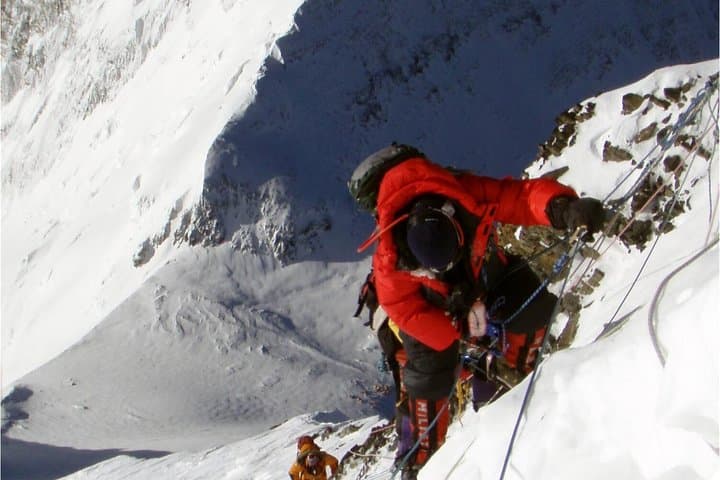
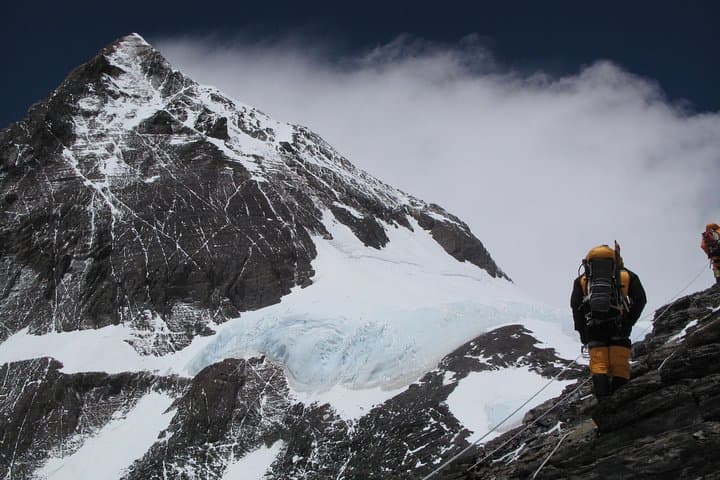
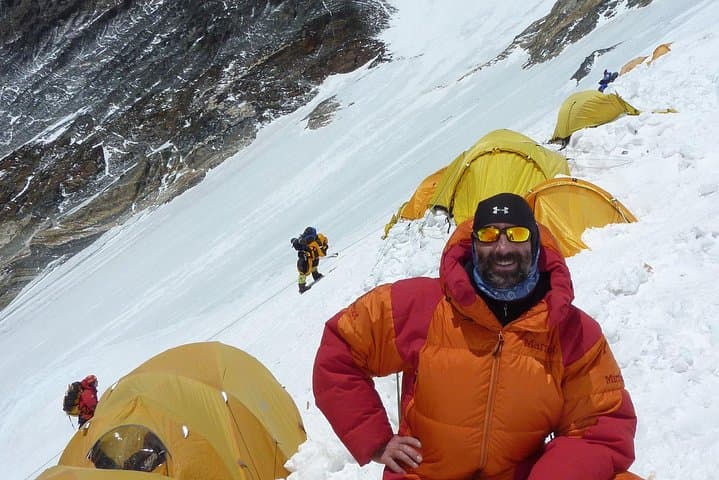
The itinerary moves quickly: Kathmandu (1,350m) to Lukla (2,860m) by plane, a week of steady trekking to Namche Bazaar (3,440m) and higher acclimatization stops via Tengboche, Pheriche and Lobuche to Gorak Shep (5,180m) and Base Camp (~5,360m). Expect rocky moraines, glacier travel, fixed ropes, ladder crossings and sustained exposure above 7,000m on the Lhotse Face and South Col before the summit bid to 8,848m.
Practical guidance: train on long aerobic days with loaded packs, practice cramponing and jumaring, and plan for 6–8 weeks including acclimatization. Hydrate relentlessly, layer for alpine extremes, and prepare to use supplemental oxygen above Camp III/IV. Weather windows are narrow — spring (April–May) is the standard summit season. Respect local permits, pack out waste, and listen to Sherpa and liaison officers: on Everest, experience and patience are as crucial as technical skill.
expert.
6–8 weeks (approx 47 days).
Very high aerobic endurance, strength for long carries, and proven high-altitude tolerance; multiple prior 6,000–7,000m ascents recommended.
Yes — operators require substantial prior high-altitude experience (multiple 6,000–7,000m climbs) plus technical rope and ice skills for safety and team efficiency.
Spring (April–May) is the primary window due to more favorable jet stream shifts and established logistics; occasional autumn windows exist but are less reliable.
Khumbu Icefall ladder crossings, crevasses, serac collapse, altitude sickness, high winds on the Lhotse Face and objective avalanche risk; disciplined risk management is essential.
Yes — the itinerary includes Everest expedition permits, Khumbu Icefall route fees and a government liaison officer as part of the package.
The South Col route carries a long climbing heritage; the 1953 Hillary–Tenzing ascent put Everest into the global climbing narrative and Sherpa communities remain central to all expeditions.
Khumbu National Park requires permits and fees that support local conservation; modern expeditions emphasize waste pack-out, proper human waste systems and hiring local staff to benefit resident communities.
Osho world Adventure operates guided outdoor trips and adventures with an emphasis on safety, stewardship, and memorable experiences.
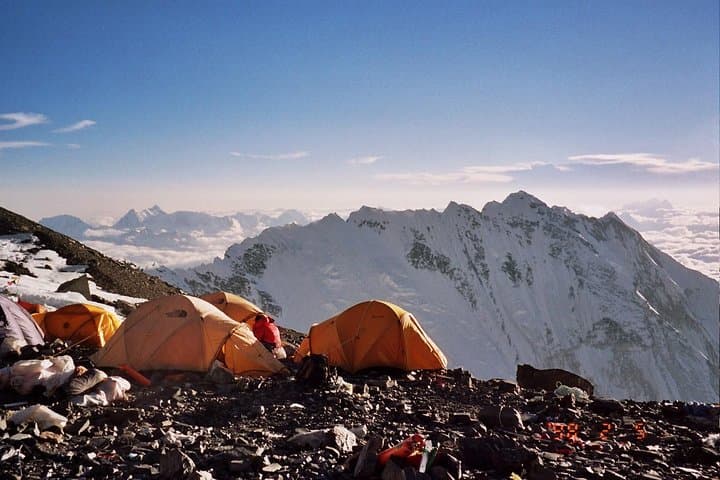
The wind scours the glacier and a line of colorful tents dots the grey moraine; you can hear the crampon taps before the breath does its shallow work. This is the Khumbu — a living worksite where glaciers move, ladders span crevasses and Sherpa teams choreograph a route through the Khumbu Icefall.
The wind scours the glacier and a line of colorful tents dots the grey moraine; you can hear the crampon taps before the breath does its shallow work. This is the Khumbu — a living worksite where glaciers move, ladders span crevasses and Sherpa teams choreograph a route through the Khumbu Icefall.
Geology and history are immediate: Everest’s limestone and gneiss rise from folded Himalayan thrusts born 50 million years ago when India collided with Asia. The South Col route carries a century of climbing lore — from early reconnaissance to Sir Edmund Hillary and Tenzing Norgay’s 1953 summit — and the villages below still practice Tibetan-influenced Buddhism and age-old yak-herding traditions.
The itinerary moves quickly: Kathmandu (1,350m) to Lukla (2,860m) by plane, a week of steady trekking to Namche Bazaar (3,440m) and higher acclimatization stops via Tengboche, Pheriche and Lobuche to Gorak Shep (5,180m) and Base Camp (~5,360m). Expect rocky moraines, glacier travel, fixed ropes, ladder crossings and sustained exposure above 7,000m on the Lhotse Face and South Col before the summit bid to 8,848m.
Practical guidance: train on long aerobic days with loaded packs, practice cramponing and jumaring, and plan for 6–8 weeks including acclimatization. Hydrate relentlessly, layer for alpine extremes, and prepare to use supplemental oxygen above Camp III/IV. Weather windows are narrow — spring (April–May) is the standard summit season. Respect local permits, pack out waste, and listen to Sherpa and liaison officers: on Everest, experience and patience are as crucial as technical skill.