THE ADVENTURE COLLECTIVE® · Independent discovery and booking for outdoor travel

A compact 45-minute sightseeing flight from Skaftafell that sweeps over black sand plains and the broad Skeiðarárjökull outlet glacier. Ideal for photographers and anyone wanting a dramatic aerial view of Vatnajökull’s southern edge.
A compact 45-minute sightseeing flight from Skaftafell that sweeps over black sand plains and the broad Skeiðarárjökull outlet glacier. Ideal for photographers and anyone wanting a dramatic aerial view of Vatnajökull’s southern edge.
The plane lifts from a compact Skaftafell airstrip and the world drops away into a palette of black and ice. Below, Skeiðarársandur spreads like a braided river of coal and ash where countless channels dare the wind to rearrange them each season. Ahead, Skeiðarárjökull — a broad outlet of Vatnajökull — pushes a blue-white mass toward the coast, crevassed and stubborn, sculpting the plain beneath.
Verified experiences and guided adventures in the surrounding area.
Operated by Atlantsflug/Flightseeing · Skaftafell, South Iceland
The plane lifts from a compact Skaftafell airstrip and the world drops away into a palette of black and ice. Below, Skeiðarársandur spreads like a braided river of coal and ash where countless channels dare the wind to rearrange them each season. Ahead, Skeiðarárjökull — a broad outlet of Vatnajökull — pushes a blue-white mass toward the coast, crevassed and stubborn, sculpting the plain beneath.
Geology here is immediate: glaciers grind bedrock into black sand, volcanic eruptions have layered ash over centuries, and periodic jökulhlaups (glacial outburst floods) have carved the riverbed mazes you’ll see from the air. Culturally, the southeast coast has been both a lifeline and a hazard to Icelanders — routes and farms shifted by floods and eruptions, stories recorded in local sagas and modern travel guides alike.
Practically, the 45-minute sightseeing flight departs from Skaftafell Terminal; expect a preflight briefing at the strip and a small-group cabin with large windows. Weight limits and lap seating for infants apply. Weather governs departures: visibility can change quickly, and flights are routinely rescheduled in high winds or low ceilings. For photographers, mid-morning light reduces harsh contrasts, while late evening in summer stretches the golden tones across the sand.
Bring windproof layers, keep camera settings ready for fast-changing scenes, and allow extra time for travel on the Hringveg — the ring road — which can be slow in poor conditions. From the air, the landscape feels alive: the glacier pushes, the rivers braid, and the coastline waits for the tide’s next story.
easy.
45 minutes.
No special fitness required; suitable for most travelers who can board a small aircraft.
The scheduled flight time is 45 minutes from takeoff to landing, including the scenic loop over the black sand plains and glacier.
Yes — infants may fly but must sit on an adult’s lap; check the operator’s age and weight restrictions when booking.
Flights are often canceled or rescheduled for high winds or low visibility; operators refund or rebook if canceled at least 24 hours before departure per their policy.
Yes — bookings collect passenger weights for load and balance; disclose accurate weights during booking and check-in.
Skeiðarársandur is shaped by centuries of volcanic ash and glacial outburst floods (jökulhlaups); the barrage of sediment created the sprawling black plains separating glacier from sea.
Vatnajökull’s glaciers are sensitive to climate change and heavy off-road travel; stay on designated roads and support low-impact operators to reduce local disturbance.
Atlantsflug/Flightseeing operates guided outdoor trips and adventures with an emphasis on safety, stewardship, and memorable experiences.
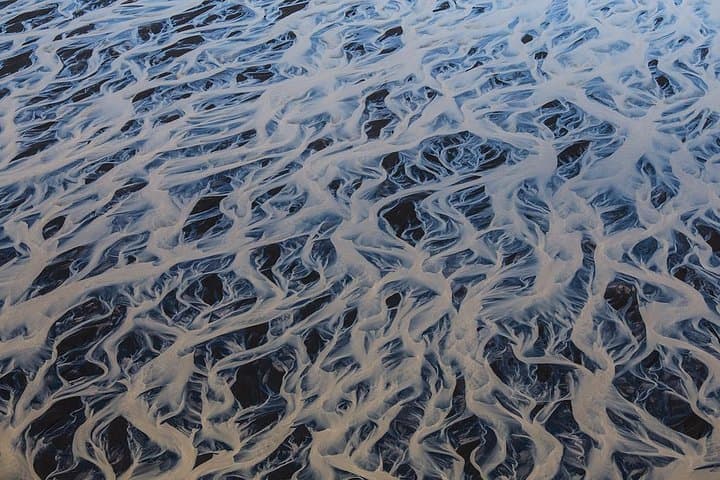


The plane lifts from a compact Skaftafell airstrip and the world drops away into a palette of black and ice. Below, Skeiðarársandur spreads like a braided river of coal and ash where countless channels dare the wind to rearrange them each season. Ahead, Skeiðarárjökull — a broad outlet of Vatnajökull — pushes a blue-white mass toward the coast, crevassed and stubborn, sculpting the plain beneath.
The plane lifts from a compact Skaftafell airstrip and the world drops away into a palette of black and ice. Below, Skeiðarársandur spreads like a braided river of coal and ash where countless channels dare the wind to rearrange them each season. Ahead, Skeiðarárjökull — a broad outlet of Vatnajökull — pushes a blue-white mass toward the coast, crevassed and stubborn, sculpting the plain beneath.
Geology here is immediate: glaciers grind bedrock into black sand, volcanic eruptions have layered ash over centuries, and periodic jökulhlaups (glacial outburst floods) have carved the riverbed mazes you’ll see from the air. Culturally, the southeast coast has been both a lifeline and a hazard to Icelanders — routes and farms shifted by floods and eruptions, stories recorded in local sagas and modern travel guides alike.
Practically, the 45-minute sightseeing flight departs from Skaftafell Terminal; expect a preflight briefing at the strip and a small-group cabin with large windows. Weight limits and lap seating for infants apply. Weather governs departures: visibility can change quickly, and flights are routinely rescheduled in high winds or low ceilings. For photographers, mid-morning light reduces harsh contrasts, while late evening in summer stretches the golden tones across the sand.
Bring windproof layers, keep camera settings ready for fast-changing scenes, and allow extra time for travel on the Hringveg — the ring road — which can be slow in poor conditions. From the air, the landscape feels alive: the glacier pushes, the rivers braid, and the coastline waits for the tide’s next story.