THE ADVENTURE COLLECTIVE® · Independent discovery and booking for outdoor travel

Glide a canoe along the Rapti River for 45 minutes through Chitwan National Park, where quiet channels reveal gharials, kingfishers, and the occasional rhino on the floodplain. Early morning or late afternoon floats offer the best wildlife encounters with English-speaking guides and included park entry.
Glide a canoe along the Rapti River for 45 minutes through Chitwan National Park, where quiet channels reveal gharials, kingfishers, and the occasional rhino on the floodplain. Early morning or late afternoon floats offer the best wildlife encounters with English-speaking guides and included park entry.
The Rapti slips by with a steady, deliberate current, carrying a single canoe past tall grass and low riverbanks where birds perch like watchful sentries. Paddle strokes mark time—short, efficient pulls that move you under a bright Nepalese sky—while kingfishers flash and crocodiles lie in sunlit stillness, barely more than shapes at the waterline.
Verified experiences and guided adventures in the surrounding area.
Operated by Arpan Nepal · Sauraha, Chitwan District
The Rapti slips by with a steady, deliberate current, carrying a single canoe past tall grass and low riverbanks where birds perch like watchful sentries. Paddle strokes mark time—short, efficient pulls that move you under a bright Nepalese sky—while kingfishers flash and crocodiles lie in sunlit stillness, barely more than shapes at the waterline.
Chitwan National Park was Nepal’s first national park, established in 1973 to protect lowland Terai ecosystems and the greater one-horned rhinoceros. The Rapti River has shaped this flat, alluvial plain, depositing silt and carving seasonal channels that feed braided wetlands. Culturally, Sauraha serves as the gateway village—small lodges and Tharu communities that welcome visitors and interpret local wildlife traditions.
On a 45-minute canoe float you shouldn’t expect long-distance exploration but rather intimate, wildlife-focused viewing. Guides steer quiet wooden canoes close to river bends at dawn and late afternoon—the best windows for spotting gharial and horned rhinos grazing near the floodplain. The guide’s local knowledge is your advantage: they read bird calls and recognize fresh tracks on muddy banks.
Practically, wear fast-drying layers, bring binoculars and a dry bag for electronics, and choose early morning or late afternoon to avoid heat and to maximize sightings. The experience is low-impact and suitable for most fitness levels, but stay seated, follow the guide’s instructions, and keep noise to a minimum to respect wildlife. Park entry and boat fees are handled by the provider; expect hotel pickup and a short drive to the launch point.
easy.
45 minutes.
Suitable for most fitness levels; minimal exertion required aside from brief paddling or steady seating balance
The scheduled on-water time is approximately 45 minutes, with additional time for pickup, drop-off, and transfers to the launch site.
Wildlife sightings are common but not guaranteed; guides maximize chances by choosing the best time and quiet approaches, and crocodiles/gharial are often seen basking on banks.
Yes—this experience is rated easy and accessible for most ages; it’s wheelchair-friendly for parts of the operation but check with the operator about specific mobility needs.
Yes—national park entry fees for the canoeing activity are included with the booking, and hotel pickup/drop-off is typically provided.
Chitwan was declared Nepal’s first national park in 1973 to protect Terai lowland habitats and species like rhinos and tigers; the Rapti has long supported local communities through fishing and transport.
Park management balances tourism with wildlife protection—stay on permitted routes, avoid feeding animals, and follow guides to minimize disturbance to sensitive riverine habitats.
Arpan Nepal operates guided outdoor trips and adventures with an emphasis on safety, stewardship, and memorable experiences.
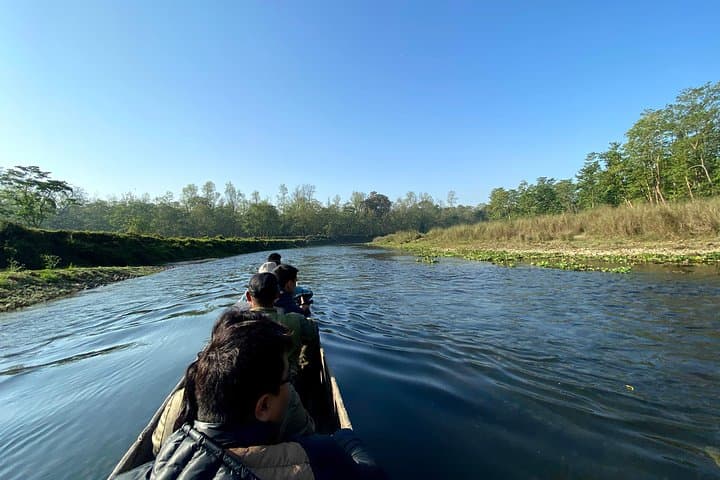


The Rapti slips by with a steady, deliberate current, carrying a single canoe past tall grass and low riverbanks where birds perch like watchful sentries. Paddle strokes mark time—short, efficient pulls that move you under a bright Nepalese sky—while kingfishers flash and crocodiles lie in sunlit stillness, barely more than shapes at the waterline.
The Rapti slips by with a steady, deliberate current, carrying a single canoe past tall grass and low riverbanks where birds perch like watchful sentries. Paddle strokes mark time—short, efficient pulls that move you under a bright Nepalese sky—while kingfishers flash and crocodiles lie in sunlit stillness, barely more than shapes at the waterline.
Chitwan National Park was Nepal’s first national park, established in 1973 to protect lowland Terai ecosystems and the greater one-horned rhinoceros. The Rapti River has shaped this flat, alluvial plain, depositing silt and carving seasonal channels that feed braided wetlands. Culturally, Sauraha serves as the gateway village—small lodges and Tharu communities that welcome visitors and interpret local wildlife traditions.
On a 45-minute canoe float you shouldn’t expect long-distance exploration but rather intimate, wildlife-focused viewing. Guides steer quiet wooden canoes close to river bends at dawn and late afternoon—the best windows for spotting gharial and horned rhinos grazing near the floodplain. The guide’s local knowledge is your advantage: they read bird calls and recognize fresh tracks on muddy banks.
Practically, wear fast-drying layers, bring binoculars and a dry bag for electronics, and choose early morning or late afternoon to avoid heat and to maximize sightings. The experience is low-impact and suitable for most fitness levels, but stay seated, follow the guide’s instructions, and keep noise to a minimum to respect wildlife. Park entry and boat fees are handled by the provider; expect hotel pickup and a short drive to the launch point.