THE ADVENTURE COLLECTIVE® · Independent discovery and booking for outdoor travel

Float between the great temples of ancient Thebes and the island shrines of Aswan on a four-night Nile cruise. This guided voyage pairs comfortable onboard living with shore excursions to Karnak, the Valley of the Kings, Edfu, Kom Ombo and Philae.
Float between the great temples of ancient Thebes and the island shrines of Aswan on a four-night Nile cruise. This guided voyage pairs comfortable onboard living with shore excursions to Karnak, the Valley of the Kings, Edfu, Kom Ombo and Philae.
You step onto the teak deck as the Nile slides past in slow, steady sheets of bronze; the river seems to dare you to slow down and listen. By day the cruise threads between palm-fringed banks and mudbrick villages, by night floodlit pylons and temple facades rise like chapters from a living history book.
Verified experiences and guided adventures in the surrounding area.
Operated by Get Nile Cruise · Luxor, Luxor Governorate
You step onto the teak deck as the Nile slides past in slow, steady sheets of bronze; the river seems to dare you to slow down and listen. By day the cruise threads between palm-fringed banks and mudbrick villages, by night floodlit pylons and temple facades rise like chapters from a living history book.
This 4-night Luxor–Aswan voyage follows a route shaped by millennia: Pharaonic temples on the east and west banks, Ptolemaic stonework at Edfu and Kom Ombo, and the modern monumentality of the Aswan High Dam. Geologically the Nile corridor cuts through alluvial plains that built ancient Thebes and fed the civilization that carved tombs in limestone cliffs at the Valley of the Kings. Culturally, expect layered histories — Egyptian, Ptolemaic and Roman inscriptions, funerary art and ongoing local river life.
Shore visits include Karnak and Luxor Temples, the Valley of the Kings, Hatshepsut’s mortuary temple, Edfu’s well-preserved Ptolemaic sanctuary, Kom Ombo’s dual shrines and Philae Island. Guides typically explain hieroglyphic scenes and practical visitor etiquette — modest dress and calm voices in holy spaces.
Practical guidance: bring sun protection and sturdy walking shoes for uneven temple steps, a light scarf for shade and respectful coverage, and a small daypack for water and camera gear. Expect short coach transfers, guided museum stops, and the gentle motion of a well-appointed riverboat for four nights. Book morning visits early to avoid the strongest heat and carry small Egyptian pounds for local vendors and tips.
easy.
4 nights (5 days).
Suitable for most travelers; should be able to walk moderate distances, climb stairs and board small boats
Some bookings include entrance fees if that option is selected; confirm at booking and carry extra cash for tickets and optional sites.
Yes — the itinerary is listed as suitable for all fitness levels, though shore walks and temple staircases require mobility and supervision for young children.
Pickup and drop-off by air-conditioned vehicle are typically included; provide flight details at booking so transfers can be arranged.
Tipping is customary for guides, crew and drivers; small notes in Egyptian pounds are practical and appreciated.
The Nile corridor sustained ancient Thebes and later Ptolemaic centers; many temples here were adapted across dynasties, leaving layered inscriptions and architecture.
Tour operators emphasize limiting plastic and staying on designated paths to protect fragile ruins and the Nile’s shoreline; use reef-safe sunscreen around island temples.
Get Nile Cruise operates guided outdoor trips and adventures with an emphasis on safety, stewardship, and memorable experiences.
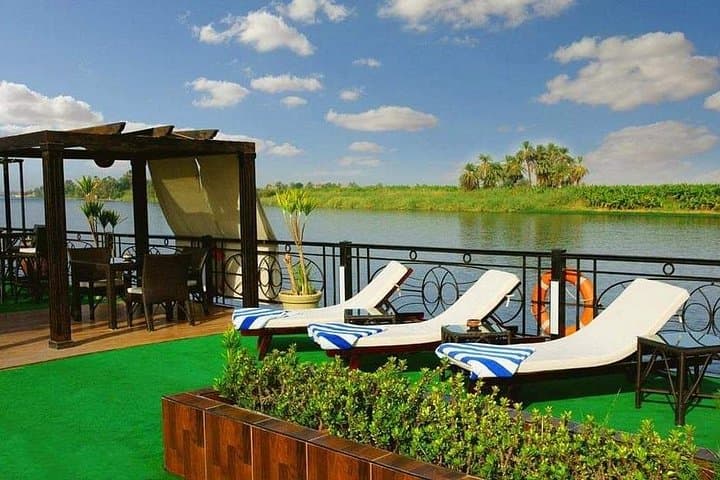
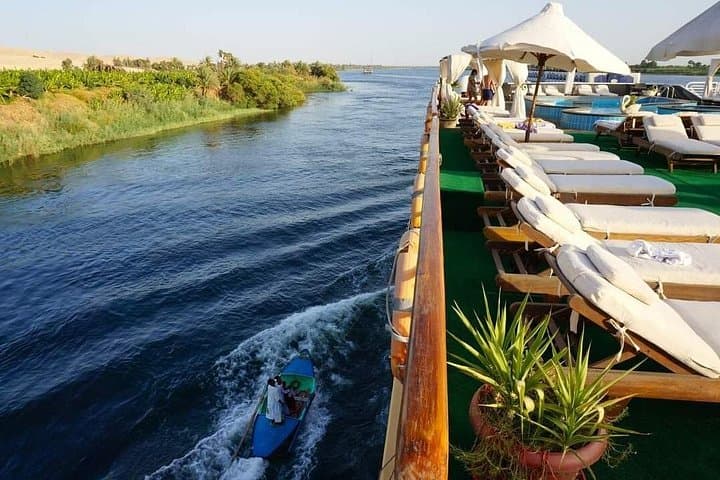
You step onto the teak deck as the Nile slides past in slow, steady sheets of bronze; the river seems to dare you to slow down and listen. By day the cruise threads between palm-fringed banks and mudbrick villages, by night floodlit pylons and temple facades rise like chapters from a living history book.
You step onto the teak deck as the Nile slides past in slow, steady sheets of bronze; the river seems to dare you to slow down and listen. By day the cruise threads between palm-fringed banks and mudbrick villages, by night floodlit pylons and temple facades rise like chapters from a living history book.
This 4-night Luxor–Aswan voyage follows a route shaped by millennia: Pharaonic temples on the east and west banks, Ptolemaic stonework at Edfu and Kom Ombo, and the modern monumentality of the Aswan High Dam. Geologically the Nile corridor cuts through alluvial plains that built ancient Thebes and fed the civilization that carved tombs in limestone cliffs at the Valley of the Kings. Culturally, expect layered histories — Egyptian, Ptolemaic and Roman inscriptions, funerary art and ongoing local river life.
Shore visits include Karnak and Luxor Temples, the Valley of the Kings, Hatshepsut’s mortuary temple, Edfu’s well-preserved Ptolemaic sanctuary, Kom Ombo’s dual shrines and Philae Island. Guides typically explain hieroglyphic scenes and practical visitor etiquette — modest dress and calm voices in holy spaces.
Practical guidance: bring sun protection and sturdy walking shoes for uneven temple steps, a light scarf for shade and respectful coverage, and a small daypack for water and camera gear. Expect short coach transfers, guided museum stops, and the gentle motion of a well-appointed riverboat for four nights. Book morning visits early to avoid the strongest heat and carry small Egyptian pounds for local vendors and tips.