THE ADVENTURE COLLECTIVE® · Independent discovery and booking for outdoor travel

Travel south from Cairo by overnight train to Luxor, Aswan and Abu Simbel on a four-night route that pairs major pharaonic sites with Nubian culture. First-class train travel, guided temple visits and door-to-door transfers keep the focus on history and the Nile itself.
Travel south from Cairo by overnight train to Luxor, Aswan and Abu Simbel on a four-night route that pairs major pharaonic sites with Nubian culture. First-class train travel, guided temple visits and door-to-door transfers keep the focus on history and the Nile itself.
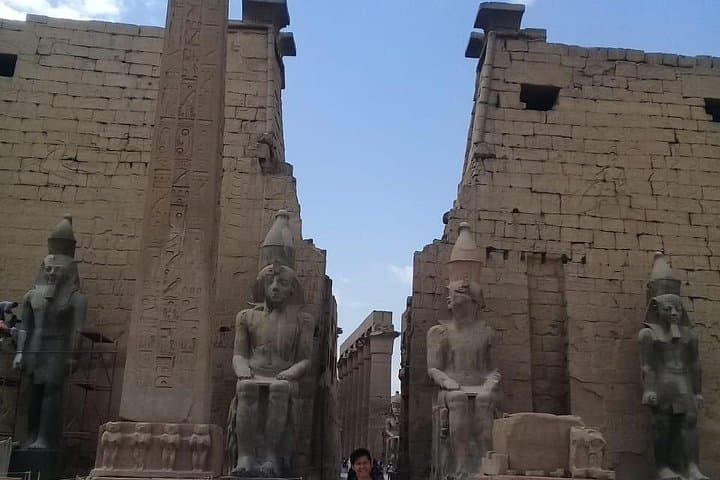
The train whistle fades and the desert rearranges itself in long, ochre bands as you slide south from Cairo toward the Nile’s widening arms. By night the carriage rocks, by day the river pulls you into a landscape carved by thousands of years of flood and faith: pharaonic façades, temple pylons, and the low, brightly painted houses of Nubian islands.
Verified experiences and guided adventures in the surrounding area.
Operated by Here Egypt Tours · Cairo, Cairo Governorate
The train whistle fades and the desert rearranges itself in long, ochre bands as you slide south from Cairo toward the Nile’s widening arms. By night the carriage rocks, by day the river pulls you into a landscape carved by thousands of years of flood and faith: pharaonic façades, temple pylons, and the low, brightly painted houses of Nubian islands.
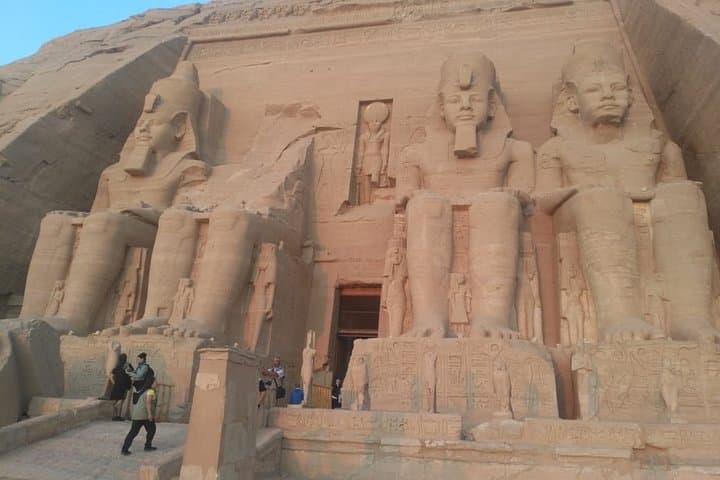
This compact four-night itinerary stitches together Egypt’s Upper Nile highlights. Luxor’s east and west banks host the Valley of the Kings, Hatshepsut’s rock-cut temple and the monumental Karnak complex—structures hewn from local sandstone and limestone that record dynasties, ritual, and astronomical alignments. Aswan, quieter and greener, centers on the engineering of the High Dam, the island shrine of Philae and traditional Nubian culture; Abu Simbel, farther south, is a relocated pair of colossal Ramesside temples that frame sun and politics in stone.
Expect guided walks through tomb corridors, guided explanations of hieroglyphs, short motorboat crossings and a pre-dawn transfer for Abu Simbel. Accommodation ranges from a Nubian guest house on the Aswan shore to a Nile-view hotel in Luxor; first-class a/c train tickets and local transfers simplify logistics.
Practical edge: carry a reusable water bottle, sun protection and sturdy walking shoes for uneven temple flooring. Time visits for morning light and cooler hours; interior tombs are narrow and can be humid. Respect site rules—no flash photography in most tombs—and tip your local guide; their context turns carved stone into narrative. This is archaeology in motion: a blend of landscape, labor and living culture along the world’s long river.
moderate.
4 nights (approx. 48–72 hours of guided touring within a 5-day span).
Suitable for travelers able to walk short distances on uneven ground, climb stairs and manage early starts; no special fitness required.
The tour description indicates that visits to the listed sites are included; confirm at booking which specific entrance tickets are covered and whether any optional tombs require extra fees.
Most visitors require a visa to enter Egypt; check your nationality’s requirements and obtain a tourist visa in advance or on arrival where available.
The package uses a/c first-class seated or sleeper train options—expect basic but reliable long-distance rail with included tickets and station transfers.
The operator collects special requirements at booking; request single-room occupancy and dietary restrictions in advance to confirm availability.
Luxor and Aswan sit on the Nile’s Upper Egypt corridor where pharaohs built temples and tombs to harness the river’s calendar—many structures date from the New Kingdom (c. 1550–1070 BCE) and earlier.
Visitor pressure and humidity threaten painted tombs and reliefs; follow site rules, avoid flash photography in tombs and support local conservation by using licensed guides and staying in community-run accommodations.
Here Egypt Tours operates guided outdoor trips and adventures with an emphasis on safety, stewardship, and memorable experiences.

The train whistle fades and the desert rearranges itself in long, ochre bands as you slide south from Cairo toward the Nile’s widening arms. By night the carriage rocks, by day the river pulls you into a landscape carved by thousands of years of flood and faith: pharaonic façades, temple pylons, and the low, brightly painted houses of Nubian islands.
The train whistle fades and the desert rearranges itself in long, ochre bands as you slide south from Cairo toward the Nile’s widening arms. By night the carriage rocks, by day the river pulls you into a landscape carved by thousands of years of flood and faith: pharaonic façades, temple pylons, and the low, brightly painted houses of Nubian islands.
This compact four-night itinerary stitches together Egypt’s Upper Nile highlights. Luxor’s east and west banks host the Valley of the Kings, Hatshepsut’s rock-cut temple and the monumental Karnak complex—structures hewn from local sandstone and limestone that record dynasties, ritual, and astronomical alignments. Aswan, quieter and greener, centers on the engineering of the High Dam, the island shrine of Philae and traditional Nubian culture; Abu Simbel, farther south, is a relocated pair of colossal Ramesside temples that frame sun and politics in stone.
Expect guided walks through tomb corridors, guided explanations of hieroglyphs, short motorboat crossings and a pre-dawn transfer for Abu Simbel. Accommodation ranges from a Nubian guest house on the Aswan shore to a Nile-view hotel in Luxor; first-class a/c train tickets and local transfers simplify logistics.
Practical edge: carry a reusable water bottle, sun protection and sturdy walking shoes for uneven temple flooring. Time visits for morning light and cooler hours; interior tombs are narrow and can be humid. Respect site rules—no flash photography in most tombs—and tip your local guide; their context turns carved stone into narrative. This is archaeology in motion: a blend of landscape, labor and living culture along the world’s long river.