THE ADVENTURE COLLECTIVE® · Independent discovery and booking for outdoor travel

Cover Nabatean temples, Lawrence's Spring, Khazali Canyon and golden sand dunes on a four-hour private Jeep circuit through Wadi Rum. Expect short climbs on warm sand, rock-carved inscriptions, and sweeping desert panoramas — ideal for a compact, active desert introduction.
Cover Nabatean temples, Lawrence's Spring, Khazali Canyon and golden sand dunes on a four-hour private Jeep circuit through Wadi Rum. Expect short climbs on warm sand, rock-carved inscriptions, and sweeping desert panoramas — ideal for a compact, active desert introduction.
You slide out of Rum Village into a light-baked fold of sandstone and shadow, the Jeep's tires whispering over compacted tracks as wind scours the ridgelines. Within minutes the desert begins to act like a living map — a Nabatean temple tucked against a cliff face, a small spring cupped by stone, and dunes that dare you to climb them for a view that feels like the planet's edge.
Verified experiences and guided adventures in the surrounding area.
Operated by Jordan Horizon Tours · Wadi Rum Village, Aqaba Governorate
You slide out of Rum Village into a light-baked fold of sandstone and shadow, the Jeep's tires whispering over compacted tracks as wind scours the ridgelines. Within minutes the desert begins to act like a living map — a Nabatean temple tucked against a cliff face, a small spring cupped by stone, and dunes that dare you to climb them for a view that feels like the planet's edge.
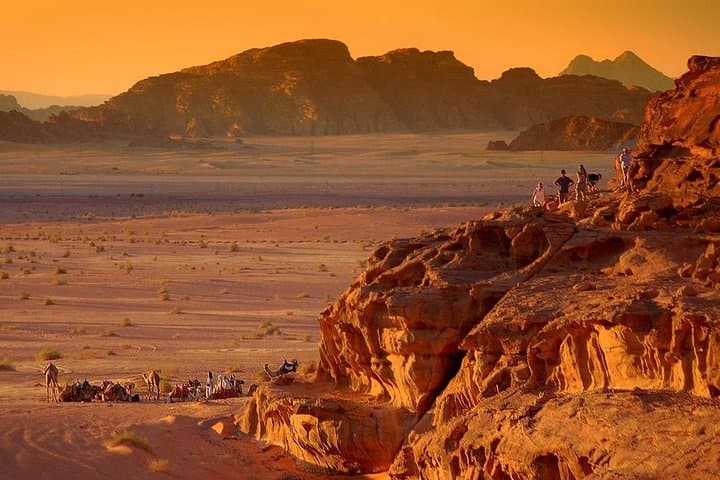
Wadi Rum's landscape was carved from Cambrian sandstone and granite; its canyons and arches carry millennia of human marks, from Nabatean inscriptions to Ottoman-era Bedouin trails. The area also bears the modern myth of Lawrence of Arabia — his name attached to springs and a modest house where travelers still climb the back rock to find balancing stones and wide panoramas.
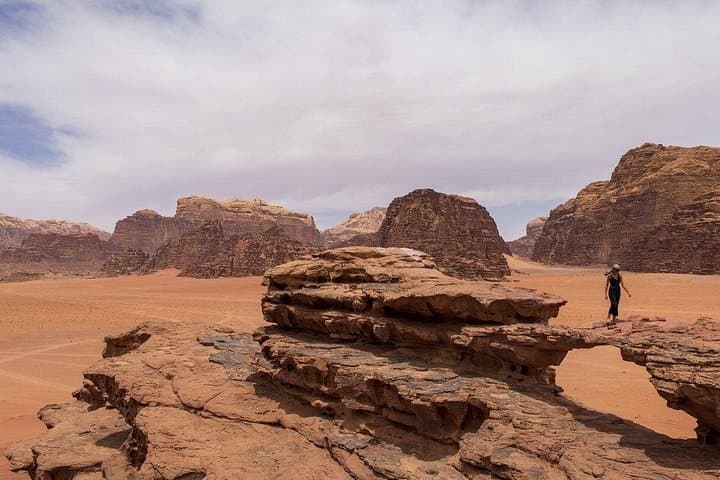
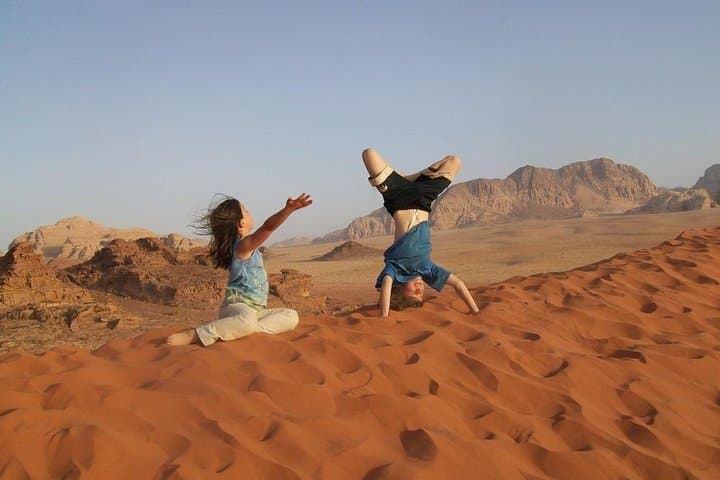
On a four-hour private Jeep circuit expect short, steep scrambles up warm sand (no technical climbing), a narrow walk through Khazali Canyon to study Nabatean petroglyphs, and stops at the Little Bridge and Lawrence's Spring. Terrain alternates between hard-packed desert tracks, soft dunes and rocky ledges; elevation change is modest but walking on sand increases effort.
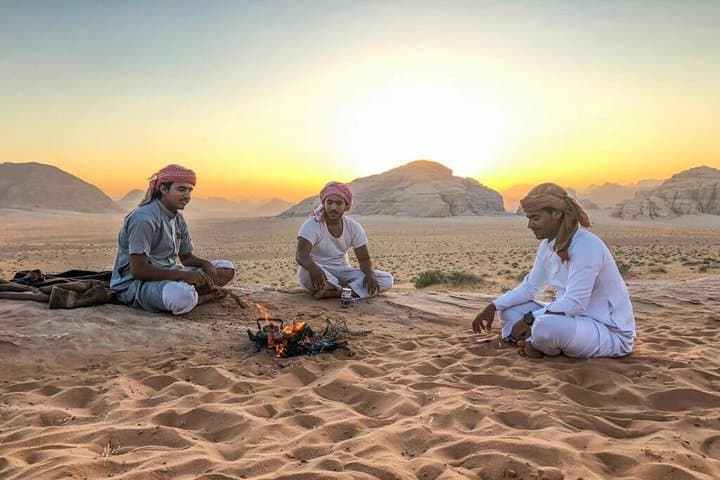
Practical notes: start early or late afternoon to avoid peak heat, bring sun protection and at least 1–2 liters of water, and wear closed shoes with good grip for dune climbs and canyon footing. The tour typically includes bottled water and Bedouin tea; drivers guide the route and offer local context. Respect inscriptions, stay on tracks where requested, and plan transfers from Aqaba or Wadi Rum Village — roads are sandy and best handled by experienced drivers.
moderate.
4 hours.
Suitable for travelers with moderate fitness; expect short steep sand climbs and uneven footing.
Most tours start from Rum Village; travelers commonly transfer from Aqaba (about 1–1.5 hours) or arrange pickup directly from local camps and hotels.
Yes if they have moderate mobility; dune climbs are optional and drivers can adjust pacing — disclose limitations when booking.
Facilities are limited; plan for basic stops at Rum Village or camp facilities before or after the tour and use wipes as needed in the field.
Yes — Khazali Canyon contains visible Nabatean petroglyphs and inscriptions, but guides will advise on safe distances and preservation etiquette.
Wadi Rum preserves Nabatean rock inscriptions and later gained fame through T.E. Lawrence’s writings and 20th-century Bedouin culture.
The desert’s thin soils and rare springs are vulnerable — stick to tracks, avoid disturbing inscriptions, and pack out trash to minimize impact.
Jordan Horizon Tours operates guided outdoor trips and adventures with an emphasis on safety, stewardship, and memorable experiences.
You slide out of Rum Village into a light-baked fold of sandstone and shadow, the Jeep's tires whispering over compacted tracks as wind scours the ridgelines. Within minutes the desert begins to act like a living map — a Nabatean temple tucked against a cliff face, a small spring cupped by stone, and dunes that dare you to climb them for a view that feels like the planet's edge.
You slide out of Rum Village into a light-baked fold of sandstone and shadow, the Jeep's tires whispering over compacted tracks as wind scours the ridgelines. Within minutes the desert begins to act like a living map — a Nabatean temple tucked against a cliff face, a small spring cupped by stone, and dunes that dare you to climb them for a view that feels like the planet's edge.
Wadi Rum's landscape was carved from Cambrian sandstone and granite; its canyons and arches carry millennia of human marks, from Nabatean inscriptions to Ottoman-era Bedouin trails. The area also bears the modern myth of Lawrence of Arabia — his name attached to springs and a modest house where travelers still climb the back rock to find balancing stones and wide panoramas.
On a four-hour private Jeep circuit expect short, steep scrambles up warm sand (no technical climbing), a narrow walk through Khazali Canyon to study Nabatean petroglyphs, and stops at the Little Bridge and Lawrence's Spring. Terrain alternates between hard-packed desert tracks, soft dunes and rocky ledges; elevation change is modest but walking on sand increases effort.
Practical notes: start early or late afternoon to avoid peak heat, bring sun protection and at least 1–2 liters of water, and wear closed shoes with good grip for dune climbs and canyon footing. The tour typically includes bottled water and Bedouin tea; drivers guide the route and offer local context. Respect inscriptions, stay on tracks where requested, and plan transfers from Aqaba or Wadi Rum Village — roads are sandy and best handled by experienced drivers.