THE ADVENTURE COLLECTIVE® · Independent discovery and booking for outdoor travel

See the Great Pyramid, the Sphinx, and ride a camel on a compact 4–5 hour tour from Cairo. This private trip blends hands-on history with practical logistics—hotel pickup, guided viewpoints, and a local koshary lunch.
See the Great Pyramid, the Sphinx, and ride a camel on a compact 4–5 hour tour from Cairo. This private trip blends hands-on history with practical logistics—hotel pickup, guided viewpoints, and a local koshary lunch.
Morning light spills across a windswept limestone plateau as the three great pyramids throw long, clean shadows—this is the first image many travelers carry away from Giza. Step off the air-conditioned vehicle into dry heat, the sand whispering underfoot, and the Great Pyramid of Khufu towers ahead; a camel exhales behind you, impatient and calm all at once.
Verified experiences and guided adventures in the surrounding area.
Operated by Egypt Travel Square · Giza, Giza Governorate
Morning light spills across a windswept limestone plateau as the three great pyramids throw long, clean shadows—this is the first image many travelers carry away from Giza. Step off the air-conditioned vehicle into dry heat, the sand whispering underfoot, and the Great Pyramid of Khufu towers ahead; a camel exhales behind you, impatient and calm all at once.
These monuments date to roughly 4,500 years ago, raised by ancient Egyptian labor and engineering on a natural bedrock ridge. The plateau’s geology—layered limestone and remnants of ancient quarries—gives the Sphinx its weathered face and the pyramids their monumental base. Local guides, often trained Egyptologists, stitch this physical backdrop to stories of pharaohs, funerary rites, and the logistics of ancient stone-moving. Nearby, vendors and camel handlers reflect modern Giza’s economy: tourism, small-scale trade, and regional hospitality—lunch of koshary is an everyday cultural note.
Practicalities are straightforward: expect 4–5 hours including hotel pickup, a 15-minute camel ride, and time at the panoramic overlook where all three pyramids align. Walking is short but over uneven rock and compacted sand; sun and heat dominate the experience. Cameras are essential; early morning or late afternoon offers cooler temperatures and better light. Bring water, wear breathable layers and closed shoes for uneven surfaces, and be prepared to negotiate modest fees for photos with handlers. Respect restricted areas, follow your guide’s route, and allow time to absorb the scale—you’re walking in living history, where stone still seems to watch and wait.
easy.
4–5 hours.
Suitable for most fitness levels; requires short walks on uneven ground and mounting a camel for ~15 minutes.
Yes—this tour includes admission fees for the Giza plateau and the Sphinx area as part of the booking.
The camel ride included is approximately 15 minutes, typically at the panoramic area for photos and a short loop.
Yes—private hotel pickup and drop-off by air-conditioned vehicle from Cairo or Giza is included.
The tour is listed as wheelchair accessible for some areas, but terrain around the plateau can be uneven; check specifics with the operator if full mobility is required.
The Giza pyramids were built during Egypt’s Fourth Dynasty (around 2600–2500 BCE) as royal tombs; the Sphinx is carved from a single limestone outcrop and likely dates to the reign of Khafre.
High visitor numbers stress the site’s fragile stone and ancient mortar; follow pathways and avoid touching carved surfaces. Support local guides who practice responsible tourism and discourage monument climbing.
Egypt Travel Square operates guided outdoor trips and adventures with an emphasis on safety, stewardship, and memorable experiences.

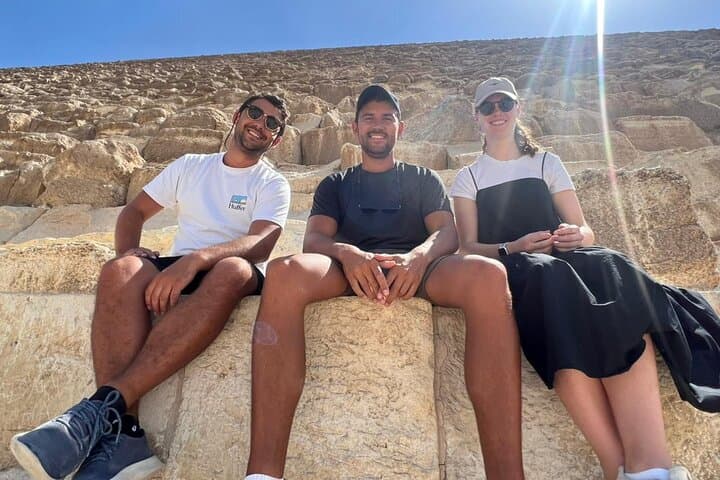


Morning light spills across a windswept limestone plateau as the three great pyramids throw long, clean shadows—this is the first image many travelers carry away from Giza. Step off the air-conditioned vehicle into dry heat, the sand whispering underfoot, and the Great Pyramid of Khufu towers ahead; a camel exhales behind you, impatient and calm all at once.
Morning light spills across a windswept limestone plateau as the three great pyramids throw long, clean shadows—this is the first image many travelers carry away from Giza. Step off the air-conditioned vehicle into dry heat, the sand whispering underfoot, and the Great Pyramid of Khufu towers ahead; a camel exhales behind you, impatient and calm all at once.
These monuments date to roughly 4,500 years ago, raised by ancient Egyptian labor and engineering on a natural bedrock ridge. The plateau’s geology—layered limestone and remnants of ancient quarries—gives the Sphinx its weathered face and the pyramids their monumental base. Local guides, often trained Egyptologists, stitch this physical backdrop to stories of pharaohs, funerary rites, and the logistics of ancient stone-moving. Nearby, vendors and camel handlers reflect modern Giza’s economy: tourism, small-scale trade, and regional hospitality—lunch of koshary is an everyday cultural note.
Practicalities are straightforward: expect 4–5 hours including hotel pickup, a 15-minute camel ride, and time at the panoramic overlook where all three pyramids align. Walking is short but over uneven rock and compacted sand; sun and heat dominate the experience. Cameras are essential; early morning or late afternoon offers cooler temperatures and better light. Bring water, wear breathable layers and closed shoes for uneven surfaces, and be prepared to negotiate modest fees for photos with handlers. Respect restricted areas, follow your guide’s route, and allow time to absorb the scale—you’re walking in living history, where stone still seems to watch and wait.