THE ADVENTURE COLLECTIVE® · Independent discovery and booking for outdoor travel

Ride electric-assist through Yakushima’s ancient cedar forests and coastal roads on a four-hour guided loop. Expect village stops, a waterfall visit, wildlife sightings and manageable climbs on mixed pavement and gravel.
Ride electric-assist through Yakushima’s ancient cedar forests and coastal roads on a four-hour guided loop. Expect village stops, a waterfall visit, wildlife sightings and manageable climbs on mixed pavement and gravel.
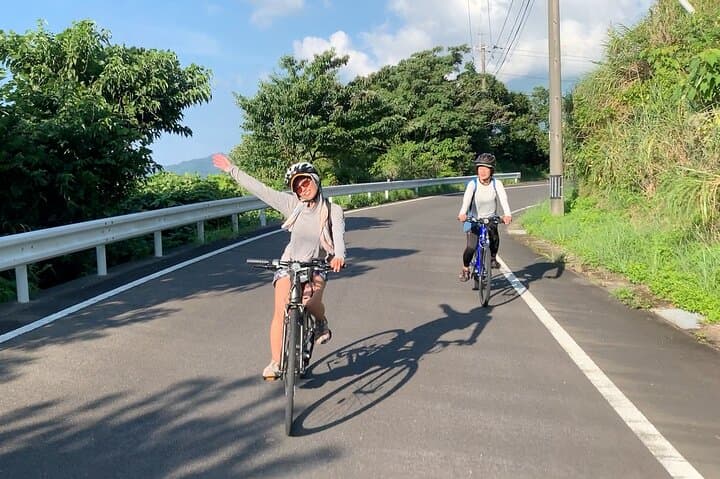
A salt wind from the East China Sea lifts across the road as riders clip into e-bikes and roll out of a quiet Kurio village. Fern-lined lanes close in, moss and buttressed cedar roots sliding past—trees here thread their own slow history, and the machines hum beneath you like a second heartbeat.
Verified experiences and guided adventures in the surrounding area.
Operated by Lotus Cycle Japan · Miyanoura, Kagoshima Prefecture
A salt wind from the East China Sea lifts across the road as riders clip into e-bikes and roll out of a quiet Kurio village. Fern-lined lanes close in, moss and buttressed cedar roots sliding past—trees here thread their own slow history, and the machines hum beneath you like a second heartbeat.
Yakushima’s island geology is ancient granite carved by heavy rainfall and time; steep ridgelines give way to broad coastal flats where fishermen’s paths meet mountain water. The island’s human story folds through logging, Shinto reverence for old trees, and a UNESCO designation that protects groves of Yakusugi cedar stretching uphill toward cloud forests. Local culture is small-scale and serviceable: village teahouses, roadside snack stands, and guides who read both the weather and wildlife.
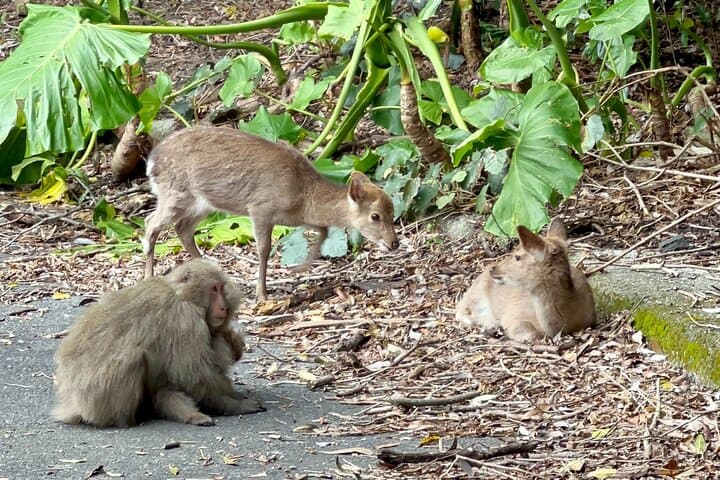
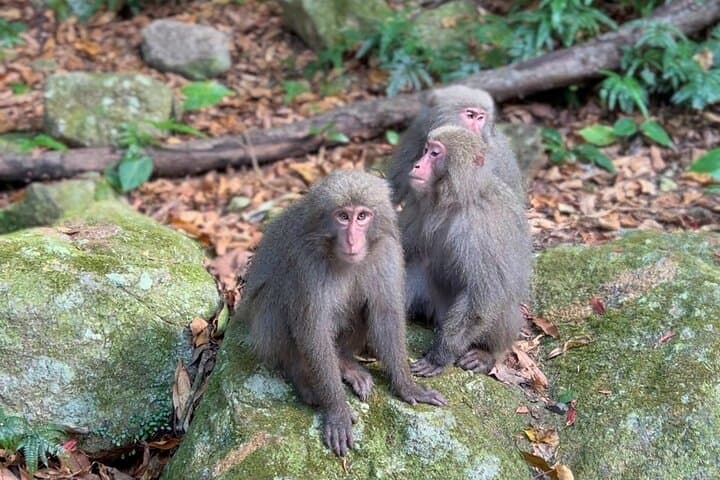
This guided four-hour loop uses e-bikes to bridge uneven asphalt, short gravel spurs and gentle climbs—expect roughly 20–30 km of riding with intermittent stops: shrine gates, village viewpoints and Oko no Taki waterfall. Elevation gain is modest by mountain standards (a few hundred metres), but sudden rain is common; routes can be slick with leaf litter. Wildlife like Yakushima macaques and Sika deer often watch from the roadside, and guides time the outing to maximize light and minimize traffic.
Practical edge: wear close-toed shoes, a lightweight rain shell, and bring a refillable bottle—the guide supplies helmets, local tea and snacks. Start mid-morning to avoid coastal fog and pack a light layer for wind on exposed ridges. The tour suits riders who want nature close, not a race—readable trails, steady pacing, and long, patient views.
moderate.
4 hours.
Suitable for riders with basic fitness; e-bike assist reduces sustained exertion but expect short climbs and some standing pedaling
Yes—e-bikes are provided and offer pedal-assist suited for rolling hills and short climbs; guides brief riders on settings before departure.
No advanced experience is needed—basic bike-handling skills suffice and guides adapt pace for mixed abilities.
Expect roughly 20–30 km and a few hundred metres of cumulative climbing, paced with regular stops for viewpoints and a waterfall visit.
Shuttle between Yakushima Airport and Kurio village is offered as part of the inclusions, but travelers should confirm pickup details at booking.
Logging and shrine culture shaped local settlements; the island’s old-growth cedars were later protected, leading to the UNESCO designation for its temperate montane forests.
Yakushima manages visitor impact through guided routes and protected zones—stay on roads and follow guide instructions to reduce erosion and disturbance.
Lotus Cycle Japan operates guided outdoor trips and adventures with an emphasis on safety, stewardship, and memorable experiences.

A salt wind from the East China Sea lifts across the road as riders clip into e-bikes and roll out of a quiet Kurio village. Fern-lined lanes close in, moss and buttressed cedar roots sliding past—trees here thread their own slow history, and the machines hum beneath you like a second heartbeat.
A salt wind from the East China Sea lifts across the road as riders clip into e-bikes and roll out of a quiet Kurio village. Fern-lined lanes close in, moss and buttressed cedar roots sliding past—trees here thread their own slow history, and the machines hum beneath you like a second heartbeat.
Yakushima’s island geology is ancient granite carved by heavy rainfall and time; steep ridgelines give way to broad coastal flats where fishermen’s paths meet mountain water. The island’s human story folds through logging, Shinto reverence for old trees, and a UNESCO designation that protects groves of Yakusugi cedar stretching uphill toward cloud forests. Local culture is small-scale and serviceable: village teahouses, roadside snack stands, and guides who read both the weather and wildlife.
This guided four-hour loop uses e-bikes to bridge uneven asphalt, short gravel spurs and gentle climbs—expect roughly 20–30 km of riding with intermittent stops: shrine gates, village viewpoints and Oko no Taki waterfall. Elevation gain is modest by mountain standards (a few hundred metres), but sudden rain is common; routes can be slick with leaf litter. Wildlife like Yakushima macaques and Sika deer often watch from the roadside, and guides time the outing to maximize light and minimize traffic.
Practical edge: wear close-toed shoes, a lightweight rain shell, and bring a refillable bottle—the guide supplies helmets, local tea and snacks. Start mid-morning to avoid coastal fog and pack a light layer for wind on exposed ridges. The tour suits riders who want nature close, not a race—readable trails, steady pacing, and long, patient views.