THE ADVENTURE COLLECTIVE® · Independent discovery and booking for outdoor travel

A four-day private overland route from Java to Bali that pairs thundering Tumpaksewu, the sunrise spectacle at Bromo and the midnight sulphur trek to Ijen. Expect steep trails, early starts and a ferry transfer to Bali.
A four-day private overland route from Java to Bali that pairs thundering Tumpaksewu, the sunrise spectacle at Bromo and the midnight sulphur trek to Ijen. Expect steep trails, early starts and a ferry transfer to Bali.
A predawn hush hangs over Cemoro Lawang as headlights cut through volcanic dust and a cold wind dares travelers to keep moving. Over the next four days the route threads steep jungle stairs, lunar sand seas and a sulfurous crater rim—each landscape pushing the pace in a different way.
Verified experiences and guided adventures in the surrounding area.
Operated by Journeast Indonesia Tour and Travel · Malang, East Java
A predawn hush hangs over Cemoro Lawang as headlights cut through volcanic dust and a cold wind dares travelers to keep moving. Over the next four days the route threads steep jungle stairs, lunar sand seas and a sulfurous crater rim—each landscape pushing the pace in a different way.
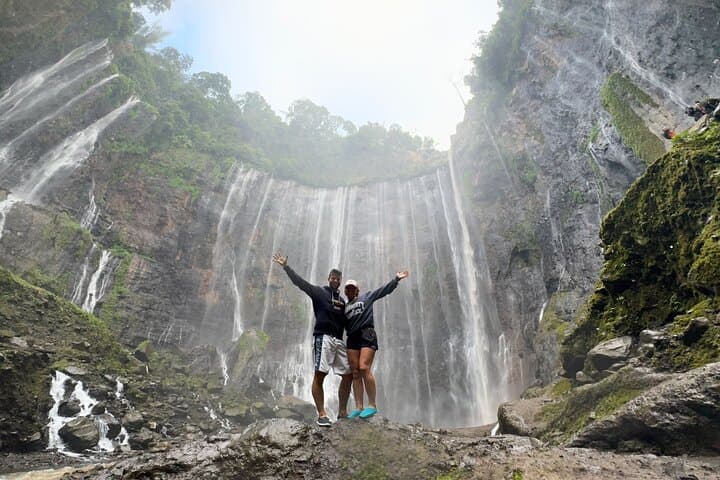
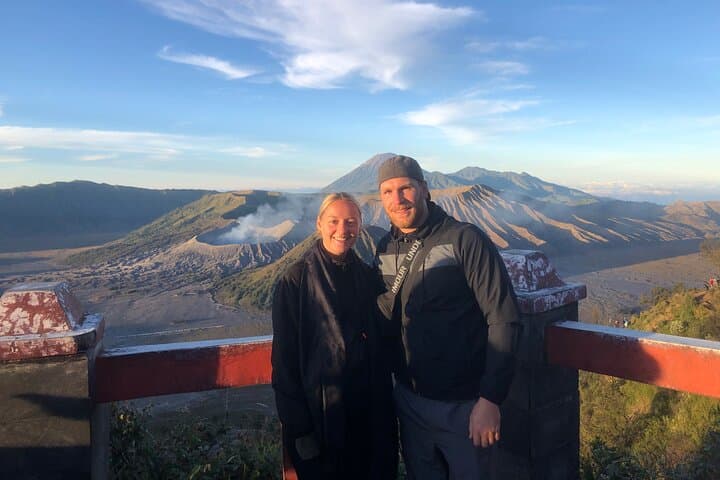
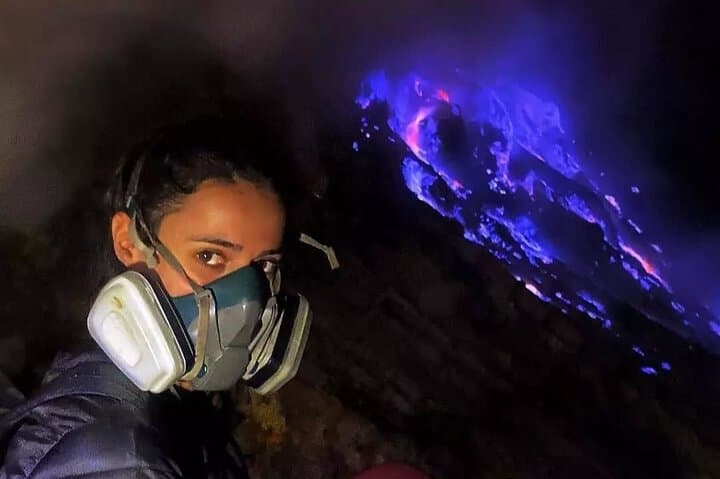
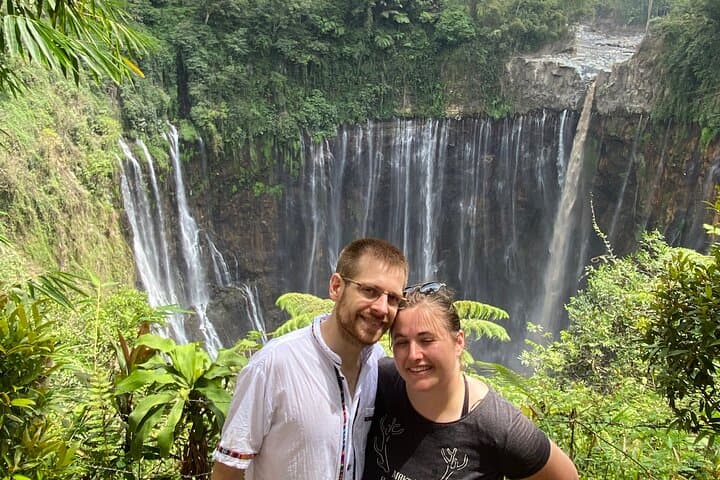
Tumpaksewu waterfall drops in a curtain-like sheet over a 100–120m cliff, fed by the flanks of Java’s central highlands. Bromo’s smoking cone sits inside a larger caldera known as the Sea of Sand, a wind-swept expanse of volcanic ash that reveals the island’s restless geology. Ijen, farther east, is famous for its turquoise crater lake and the night phenomenon of “blue fire,” caused by sulfuric gas igniting where it exits vents.
Culturally the corridor links Javanese villages, coffee terraces and smallholders whose daily rhythms have adapted to ash and altitude; local guides add context at each stop. Expect forested descents at Tumpaksewu, short steep stair climbs on Bromo (roughly 245 steps to Bromo rim), and a 1.5–2 hour predawn trek to Ijen’s rim with 300–400m elevation change from parking to crater edge.
Practically: travel is mostly by private van with ferry transfer to Bali included; accommodations are standard hotels with private rooms. Bring a reliable headlamp for Ijen, layer for sub-5°C predawn temperatures at higher elevation, and footwear with good grip for muddy trails. The blue fire is a natural event and cannot be guaranteed—plan with flexibility and a mindset for early mornings, cold winds and unforgettable views.
challenging.
4 days.
Moderate to good fitness required—able to manage steep descents, stair climbs and 1.5–2 hour predawn hikes.
No—blue fire is a natural phenomenon and depends on volcanic activity and weather; guides maximize chances by timing the trek for optimal conditions.
The climb involves a short walk across the Sea of Sand and about 245 stone steps to the crater rim—fit hikers can complete it in 20–45 minutes depending on pace.
Yes—local guides, national park entrance fees, and trekking equipment like gas masks and headlamps are included in the package.
Yes—solo travelers receive a private room rather than a shared room, as noted in the booking details.
The Bromo-Tengger region is home to the Tenggerese people, who maintain Hindu-Balinese traditions and hold annual ceremonies on the volcanic plain.
These ecosystems are fragile—stay on established trails, avoid collecting rocks or plants, and follow local guide instructions to minimize impact.
Journeast Indonesia Tour and Travel operates guided outdoor trips and adventures with an emphasis on safety, stewardship, and memorable experiences.
A predawn hush hangs over Cemoro Lawang as headlights cut through volcanic dust and a cold wind dares travelers to keep moving. Over the next four days the route threads steep jungle stairs, lunar sand seas and a sulfurous crater rim—each landscape pushing the pace in a different way.
A predawn hush hangs over Cemoro Lawang as headlights cut through volcanic dust and a cold wind dares travelers to keep moving. Over the next four days the route threads steep jungle stairs, lunar sand seas and a sulfurous crater rim—each landscape pushing the pace in a different way.
Tumpaksewu waterfall drops in a curtain-like sheet over a 100–120m cliff, fed by the flanks of Java’s central highlands. Bromo’s smoking cone sits inside a larger caldera known as the Sea of Sand, a wind-swept expanse of volcanic ash that reveals the island’s restless geology. Ijen, farther east, is famous for its turquoise crater lake and the night phenomenon of “blue fire,” caused by sulfuric gas igniting where it exits vents.
Culturally the corridor links Javanese villages, coffee terraces and smallholders whose daily rhythms have adapted to ash and altitude; local guides add context at each stop. Expect forested descents at Tumpaksewu, short steep stair climbs on Bromo (roughly 245 steps to Bromo rim), and a 1.5–2 hour predawn trek to Ijen’s rim with 300–400m elevation change from parking to crater edge.
Practically: travel is mostly by private van with ferry transfer to Bali included; accommodations are standard hotels with private rooms. Bring a reliable headlamp for Ijen, layer for sub-5°C predawn temperatures at higher elevation, and footwear with good grip for muddy trails. The blue fire is a natural event and cannot be guaranteed—plan with flexibility and a mindset for early mornings, cold winds and unforgettable views.