THE ADVENTURE COLLECTIVE® · Independent discovery and booking for outdoor travel

Trade Cusco’s high trails for humid nights and river mornings on this four‑day Tambopata itinerary. Explore Sandoval Lake, paddle to Monkey Island, watch parrots at clay licks, and visit an Ese Eja family while learning jungle rhythms and practical tips for the trip.
Trade Cusco’s high trails for humid nights and river mornings on this four‑day Tambopata itinerary. Explore Sandoval Lake, paddle to Monkey Island, watch parrots at clay licks, and visit an Ese Eja family while learning jungle rhythms and practical tips for the trip.
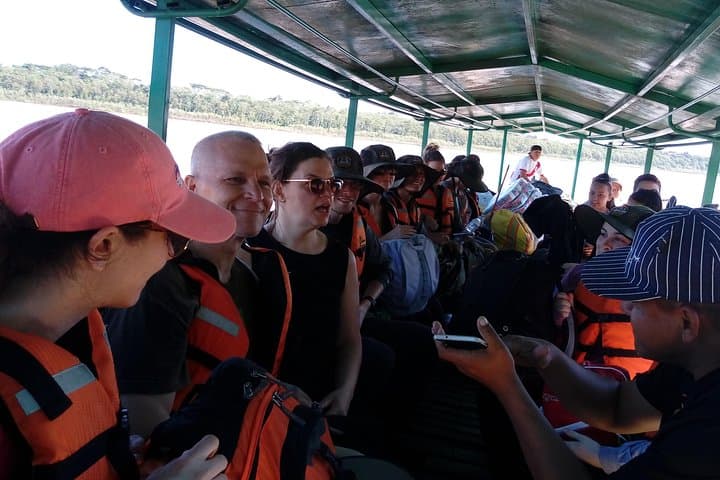
You step off a slow overnight bus into humid air: the Madre de Dios River gleams like a moving highway, and a motorboat pushes you upriver with the sound of insects pulsing in the background. In four days this corner of southeastern Peru will strip away altitude and crowds, replacing them with close encounters—giant otters slicing through Sandoval Lake, parakeets squabbling at a clay lick, and the low voices of Ese Eja hosts showing ancestral crafts.
Verified experiences and guided adventures in the surrounding area.
Operated by Quechuas Expeditions · Puerto Maldonado, Madre de Dios
You step off a slow overnight bus into humid air: the Madre de Dios River gleams like a moving highway, and a motorboat pushes you upriver with the sound of insects pulsing in the background. In four days this corner of southeastern Peru will strip away altitude and crowds, replacing them with close encounters—giant otters slicing through Sandoval Lake, parakeets squabbling at a clay lick, and the low voices of Ese Eja hosts showing ancestral crafts.
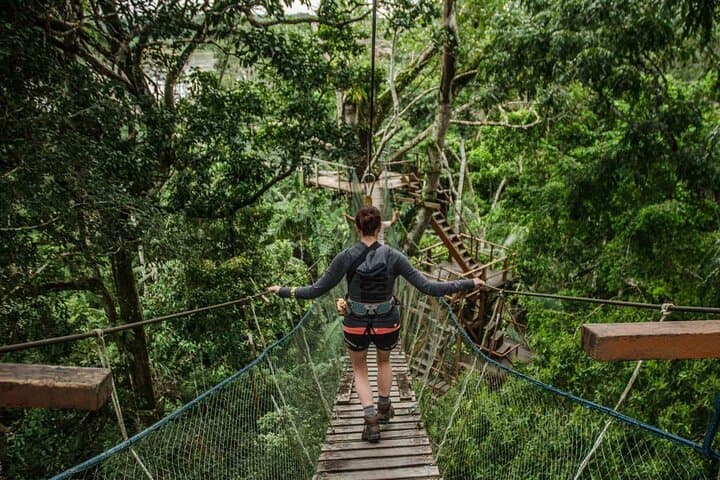
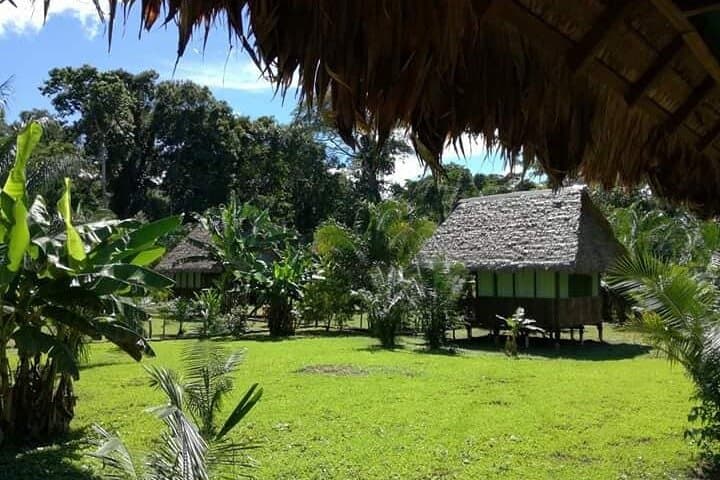
Geology here is recent alluvial plain: wide rivers, oxbow lakes carved by changing currents, and nutrient-rich clay walls that parrots flock to each dawn. Culturally the region is a crossroads—indigenous Ese Eja communities, rubber-era history upriver, and lodges that balance hospitality with small-scale conservation. Trails are short but uneven (expect muddy stretches, roots, and boardwalks); water travel is the constant connector.
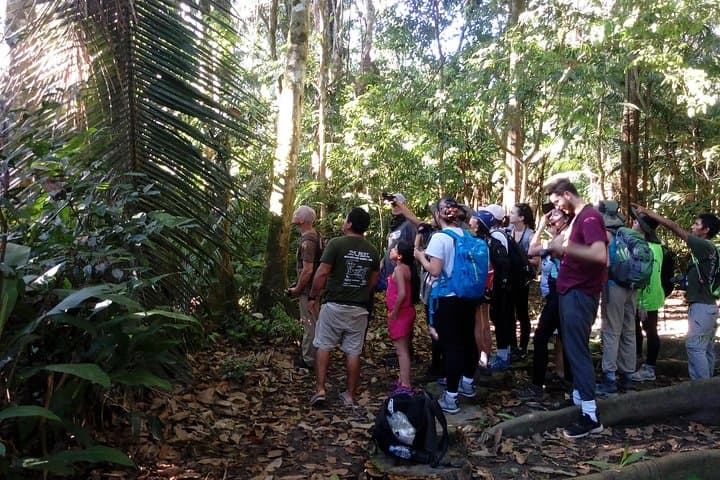
Practical guidance: the itinerary includes a 1.5‑hour jungle walk to Sandoval Lake, boat transfers of 30–90 minutes, short kayak rides to Monkey Island, and evening caiman searches by lantern. Bring high‑DEET repellent, a headlamp with spare batteries, quick‑dry long sleeves and pants for sun and insects, and comfortable boots with good tread. Expect early starts for clay‑lick viewing and quiet, patient wildlife watching—opt for binoculars and a small waterproof pack.
Physically the trip is moderate: not technical, but requires stamina for several hours of low‑impact walking and boat transfers. Weather is unpredictable; plan for heavy rain in the wet season and hot, sticky days in the dry months. Respect local guides, limit single‑use plastics, and follow established trails to keep the reserve wild.
moderate.
4 days.
Moderate fitness—able to walk 1–3 hours on uneven, sometimes muddy trails and handle multiple boat transfers.
Pickup in Cusco involves an overnight bus to Puerto Maldonado; guides meet you at the bus station and continue by motorboat to the lodge the following morning.
Yellow fever is recommended for the region and some lodges request proof; up‑to‑date tetanus is also advised—carry vaccination copies.
Families and older travelers can join if mobile; night walks and boat transfers require caution—inform operators of any mobility or health issues in advance.
Wildlife sightings are frequent but not guaranteed; clay licks, Sandoval Lake, and night searches offer high odds for parrots, otters, caimans, and diverse birds when guided by locals.
The Madre de Dios basin grew in importance during the rubber boom and later as a conservation focus; indigenous Ese Eja communities have long managed riverine resources here.
Tambopata is managed as a mix of protected areas and communal lands—visitors are urged to minimize waste, avoid single‑use plastics, and follow guide instructions to protect fragile habitats.
Quechuas Expeditions operates guided outdoor trips and adventures with an emphasis on safety, stewardship, and memorable experiences.
You step off a slow overnight bus into humid air: the Madre de Dios River gleams like a moving highway, and a motorboat pushes you upriver with the sound of insects pulsing in the background. In four days this corner of southeastern Peru will strip away altitude and crowds, replacing them with close encounters—giant otters slicing through Sandoval Lake, parakeets squabbling at a clay lick, and the low voices of Ese Eja hosts showing ancestral crafts.
You step off a slow overnight bus into humid air: the Madre de Dios River gleams like a moving highway, and a motorboat pushes you upriver with the sound of insects pulsing in the background. In four days this corner of southeastern Peru will strip away altitude and crowds, replacing them with close encounters—giant otters slicing through Sandoval Lake, parakeets squabbling at a clay lick, and the low voices of Ese Eja hosts showing ancestral crafts.
Geology here is recent alluvial plain: wide rivers, oxbow lakes carved by changing currents, and nutrient-rich clay walls that parrots flock to each dawn. Culturally the region is a crossroads—indigenous Ese Eja communities, rubber-era history upriver, and lodges that balance hospitality with small-scale conservation. Trails are short but uneven (expect muddy stretches, roots, and boardwalks); water travel is the constant connector.
Practical guidance: the itinerary includes a 1.5‑hour jungle walk to Sandoval Lake, boat transfers of 30–90 minutes, short kayak rides to Monkey Island, and evening caiman searches by lantern. Bring high‑DEET repellent, a headlamp with spare batteries, quick‑dry long sleeves and pants for sun and insects, and comfortable boots with good tread. Expect early starts for clay‑lick viewing and quiet, patient wildlife watching—opt for binoculars and a small waterproof pack.
Physically the trip is moderate: not technical, but requires stamina for several hours of low‑impact walking and boat transfers. Weather is unpredictable; plan for heavy rain in the wet season and hot, sticky days in the dry months. Respect local guides, limit single‑use plastics, and follow established trails to keep the reserve wild.