THE ADVENTURE COLLECTIVE® · Independent discovery and booking for outdoor travel

Cross the High Atlas and follow the Road of 1,000 Kasbahs to Ait Benhaddou, Dades and Todra gorges, and the shifting dunes of Merzouga. This private four-day loop from Marrakech mixes dramatic geology, living Berber culture, and a night in an Erg Chebbi tent camp.
Cross the High Atlas and follow the Road of 1,000 Kasbahs to Ait Benhaddou, Dades and Todra gorges, and the shifting dunes of Merzouga. This private four-day loop from Marrakech mixes dramatic geology, living Berber culture, and a night in an Erg Chebbi tent camp.
The minibus slips out of Marrakech before dawn, the city’s ochre walls shrinking as the High Atlas pushes up like an advance guard. By the time the convoy reaches Tizi-n-Tichka, the road has climbed to 2,260 meters and the air tastes sharp; pine and juniper stand like compact guards over hairpin turns. From here the landscape loosens into a stitched patchwork of palm oases, rammed-earth kasbahs, and river-carved gorges whose colors change with the sun.
Verified experiences and guided adventures in the surrounding area.
Operated by Ausflug Reisen Marokko · Marrakech, Marrakech-Safi
The minibus slips out of Marrakech before dawn, the city’s ochre walls shrinking as the High Atlas pushes up like an advance guard. By the time the convoy reaches Tizi-n-Tichka, the road has climbed to 2,260 meters and the air tastes sharp; pine and juniper stand like compact guards over hairpin turns. From here the landscape loosens into a stitched patchwork of palm oases, rammed-earth kasbahs, and river-carved gorges whose colors change with the sun.
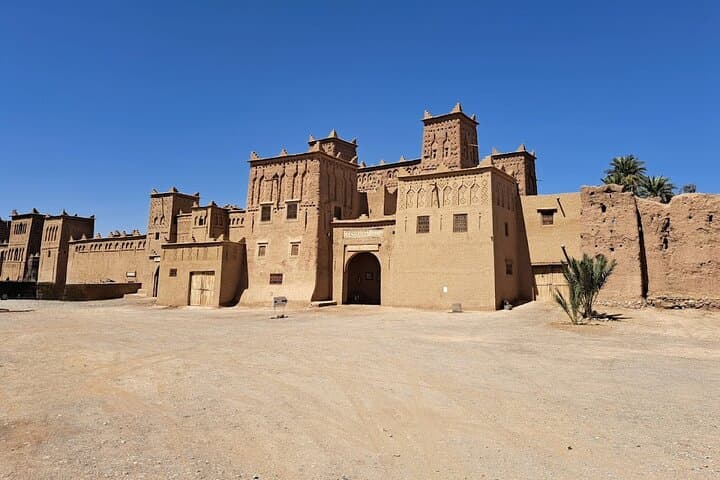
This four-day loop across southern Morocco is a study in contrasts — an engineered highway one moment, an ancient caravan corridor the next. Ait Benhaddou, the UNESCO-listed ksar, reads like a centuries-old fortress of sunbaked clay, its towers and granaries tuned to both defense and desert climate. The Road of 1,000 Kasbahs is no exaggeration: red-brown walls and fortified villages mark former trade arteries that connected Saharan caravans to the Atlas and beyond.
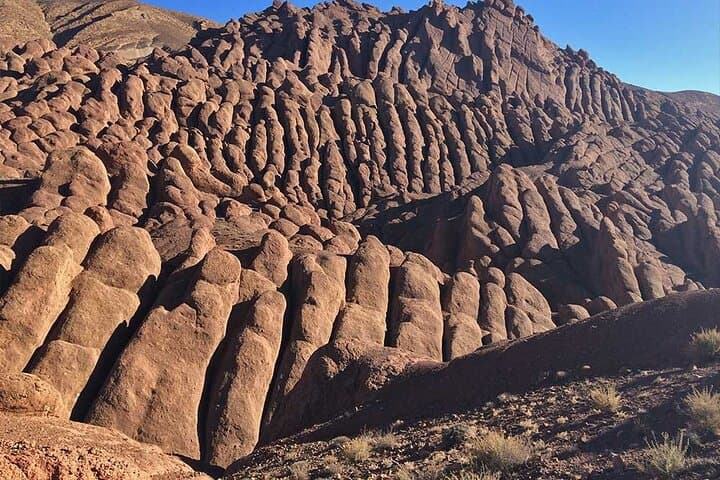
Geology here is a conversation between wind and water. The Todra Gorge cuts a knife through the High Atlas, cliffs rising nearly 300 meters and collecting light like mirrors, while the Dades Valley fans into a green ribbon of palms and cultivated terraces. Then the land opens fast toward Erg Chebbi—Merzouga’s dunes—where sand becomes a mobile architecture; a 50-minute dromedary ride leads to a tented camp and a horizon rearranged by wind each night.
Culture and hospitality thread through the journey. In Kalaa M’Gouna rose farmers still harvest in spring for distilled oils and waters; in Tamgroute the zaouia library preserves centuries of manuscript culture. Accommodations alternate between family-run kasbah hotels with roof terraces and comfort tents in the desert, where communal dinners and shared music under the stars are part of the itinerary.
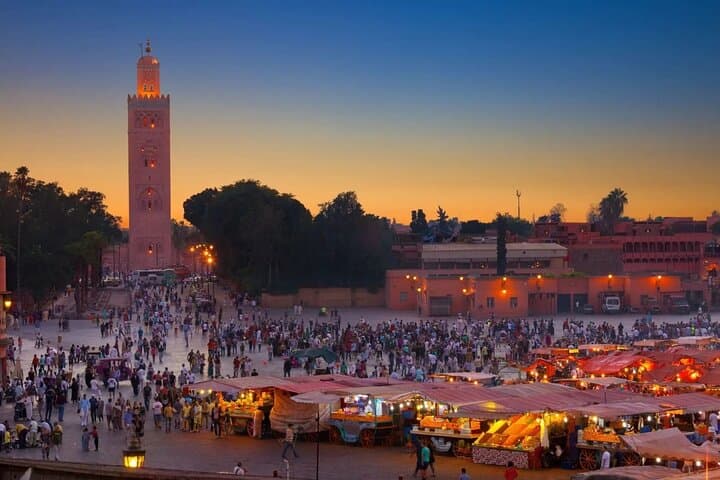
Practical edge: expect long driving days—roughly 270 km on several legs—and short walks and hikes ranging from flat oasis trails to narrow gorge paths. Pack breathable layers for big diurnal swings: cold at high passes, hot at the dunes. Footwear that grips sand and rocky trails matters more than fashion. For photographers, sunrise at the dunes and late-afternoon light in the gorges deliver the best drama; for solitude, rise early to watch camel caravans cross cooling sand.
Logistics are straightforward: private, air-conditioned minibus transfers from Marrakech, three nights’ dinner and breakfast included, and an overnight in a desert camp. Mobility-friendly options exist for many segments, but the itinerary still involves crossing uneven surfaces and short river fords. In short, this is a touring route for travelers who want cultural depth, geological spectacle, and one night spent truly off-grid under a broad Saharan sky.
moderate.
4 days.
Moderate fitness recommended—able to manage several short hikes, climb uneven steps in kasbahs, and endure a long day of driving.
No prior desert experience is required. The itinerary includes a guided dromedary ride and an optional jeep transfer to the camp; staff will orient you before dune activities.
Expect short to moderate walks—oasis hikes of around 1–2 hours and strolls into the Todra Gorge; no technical climbing is required.
Dinner and breakfast are included for three nights; some lunches and drinks are typically at your own expense.
Temperatures can drop significantly—especially at higher elevations and in the desert after sunset—so plan for a warm layer and a hat.
Yes. The operator can pick up from Marrakech airport or central hotels; provide flight details at booking so pickup can be arranged.
Tents are described as comfort tents with electricity and sinks for two people, though facilities are basic compared to hotels; private auberge options are available on request.
The Road of 1,000 Kasbahs follows former caravan routes; Ait Benhaddou’s clay architecture reflects centuries of Saharan trade and fortified settlement patterns.
Water management is critical—oasis agriculture relies on traditional khettara systems; when visiting camps choose operators practicing waste control and responsible water use.
Ausflug Reisen Marokko operates guided outdoor trips and adventures with an emphasis on safety, stewardship, and memorable experiences.
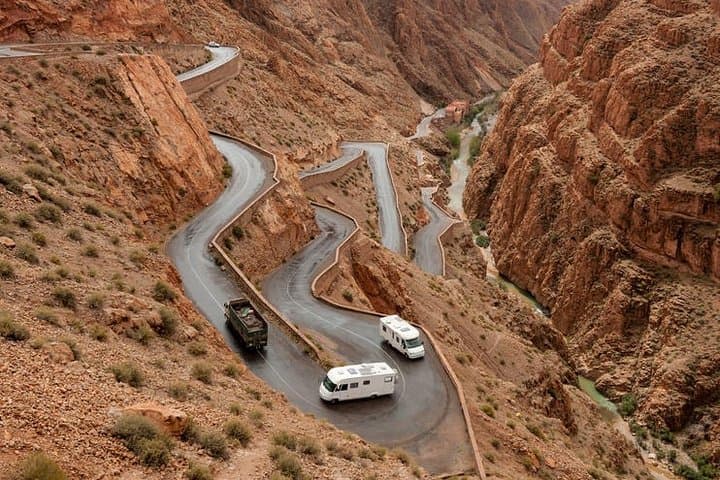
The minibus slips out of Marrakech before dawn, the city’s ochre walls shrinking as the High Atlas pushes up like an advance guard. By the time the convoy reaches Tizi-n-Tichka, the road has climbed to 2,260 meters and the air tastes sharp; pine and juniper stand like compact guards over hairpin turns. From here the landscape loosens into a stitched patchwork of palm oases, rammed-earth kasbahs, and river-carved gorges whose colors change with the sun.
The minibus slips out of Marrakech before dawn, the city’s ochre walls shrinking as the High Atlas pushes up like an advance guard. By the time the convoy reaches Tizi-n-Tichka, the road has climbed to 2,260 meters and the air tastes sharp; pine and juniper stand like compact guards over hairpin turns. From here the landscape loosens into a stitched patchwork of palm oases, rammed-earth kasbahs, and river-carved gorges whose colors change with the sun.
This four-day loop across southern Morocco is a study in contrasts — an engineered highway one moment, an ancient caravan corridor the next. Ait Benhaddou, the UNESCO-listed ksar, reads like a centuries-old fortress of sunbaked clay, its towers and granaries tuned to both defense and desert climate. The Road of 1,000 Kasbahs is no exaggeration: red-brown walls and fortified villages mark former trade arteries that connected Saharan caravans to the Atlas and beyond.
Geology here is a conversation between wind and water. The Todra Gorge cuts a knife through the High Atlas, cliffs rising nearly 300 meters and collecting light like mirrors, while the Dades Valley fans into a green ribbon of palms and cultivated terraces. Then the land opens fast toward Erg Chebbi—Merzouga’s dunes—where sand becomes a mobile architecture; a 50-minute dromedary ride leads to a tented camp and a horizon rearranged by wind each night.
Culture and hospitality thread through the journey. In Kalaa M’Gouna rose farmers still harvest in spring for distilled oils and waters; in Tamgroute the zaouia library preserves centuries of manuscript culture. Accommodations alternate between family-run kasbah hotels with roof terraces and comfort tents in the desert, where communal dinners and shared music under the stars are part of the itinerary.
Practical edge: expect long driving days—roughly 270 km on several legs—and short walks and hikes ranging from flat oasis trails to narrow gorge paths. Pack breathable layers for big diurnal swings: cold at high passes, hot at the dunes. Footwear that grips sand and rocky trails matters more than fashion. For photographers, sunrise at the dunes and late-afternoon light in the gorges deliver the best drama; for solitude, rise early to watch camel caravans cross cooling sand.
Logistics are straightforward: private, air-conditioned minibus transfers from Marrakech, three nights’ dinner and breakfast included, and an overnight in a desert camp. Mobility-friendly options exist for many segments, but the itinerary still involves crossing uneven surfaces and short river fords. In short, this is a touring route for travelers who want cultural depth, geological spectacle, and one night spent truly off-grid under a broad Saharan sky.