THE ADVENTURE COLLECTIVE® · Independent discovery and booking for outdoor travel

From Kirkjufell’s arrowhead profile to the thunder of Gullfoss and the blue silence of Jökulsárlón, this four-day tour covers Iceland’s high points—geologic, historic and cinematic—while including a guided glacier hike and hotel nights along the way.
From Kirkjufell’s arrowhead profile to the thunder of Gullfoss and the blue silence of Jökulsárlón, this four-day tour covers Iceland’s high points—geologic, historic and cinematic—while including a guided glacier hike and hotel nights along the way.
The bus hums out of Reykjavik before dawn and the landscape rearranges itself: low urban roofs give way to lava fields that still seem to be cooling. By mid-morning the driver pulls up beneath a pyramid of basalt—Kirkjufell—its flanks carved by ice and time. Guides move like translators between tourist maps and geology, pointing out cliff-side puffin colonies one moment and the striations of ancient glaciers the next.
Verified experiences and guided adventures in the surrounding area.
Operated by Marina Travel · Reykjavik, Capital Region
The bus hums out of Reykjavik before dawn and the landscape rearranges itself: low urban roofs give way to lava fields that still seem to be cooling. By mid-morning the driver pulls up beneath a pyramid of basalt—Kirkjufell—its flanks carved by ice and time. Guides move like translators between tourist maps and geology, pointing out cliff-side puffin colonies one moment and the striations of ancient glaciers the next.
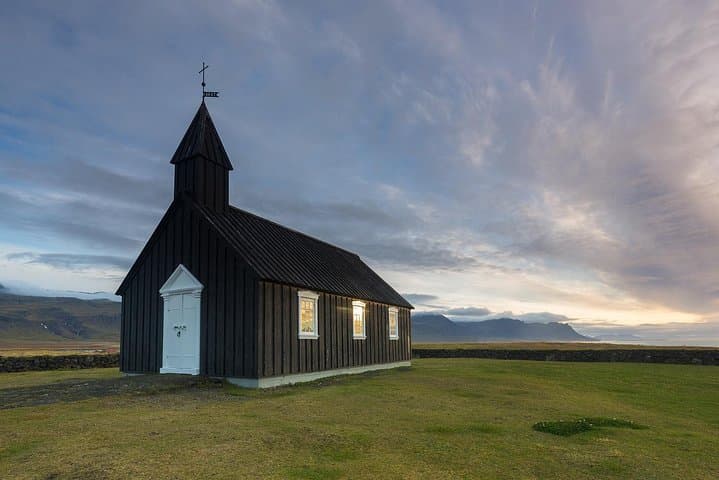
Over four days this tour stitches together three of Iceland’s most elemental chapters: the volcanic peninsulas of Snæfellsnes, the geothermal theatre of the Golden Circle, and the raw coastal drama of the South Coast. Snæfellsnes announces itself in black beaches, moss-muffled lava fields and the ice-capped silhouette of Snæfellsjökull, once mythologized as “the center of the earth.” On Day Two, Thingvellir opens the tectonic ledger—here the North American and Eurasian plates drift apart while the Alþingi site reminds travelers that Icelandic democracy convened here in 930 AD. The Geysir field and Gullfoss pair geothermal spectacle with glacial melt; Strokkur erupts every few minutes, a punctual reminder of subterranean pressure.
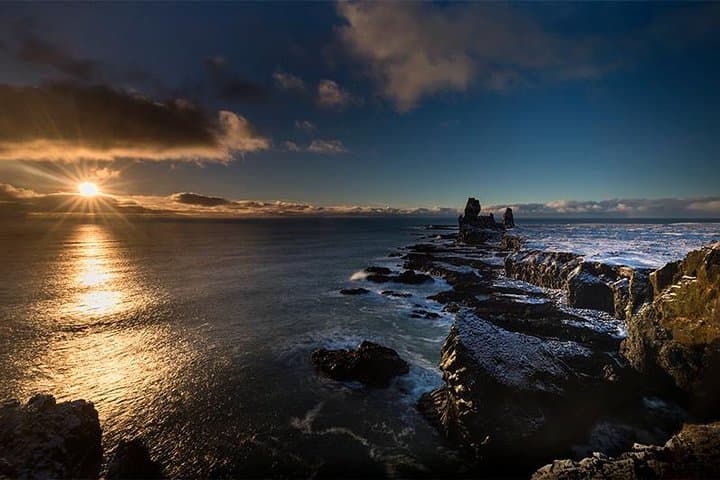
The trip’s pulse quickens on the South Coast. Seljalandsfoss and Skógafoss offer vantage points both gentle and theatrical—the former allows visitors to walk behind its curtain of water, the latter to climb a stair that rewards with a tabletop view. The itinerary culminates at Vatnajökull’s outlets: Skaftafell’s glacier hiking is managed by certified guides who fit crampons, helmets and harnesses before leading a 90-minute ice traverse. In summer a boat slips between icebergs at Jökulsárlón; in winter the lagoon’s silence and the blue ice caves feel otherworldly.
Practical note: the tour is paced with hotel nights and three included breakfasts, but expect long drives—some days include several hours on the road between highlights. Weather changes fast; layers are the first line of defense. Guides provide glacier equipment and instruction, but participants should be steady on their feet and comfortable with exposed, uneven terrain. Respect local warnings—Reynisfjara’s sneaker waves are powerful and unpredictable.
For photographers, plan for early light at Kirkjufell and late light at Jökulsárlón; mid-day overcast is actually kind to waterfalls and basalt cliffs. Bring waterproof boots, windproof outer layers, and a small daypack for snacks, extra batteries and a reusable water bottle. With grounded guidance and a firm pair of boots, this four-day route delivers Iceland’s geology, history and coastal intensity in a compact, unforgettable package.
moderate.
4 days.
Moderate—participants should be comfortable walking 1–3 hours across uneven terrain and able to climb short staircases at waterfalls
Daily stops include short walks (15–90 minutes). The glacier hike is about 1.5 hours on ice; expect stair climbs at some waterfalls.
Yes—helmets, harnesses, crampons and ice axes are provided and glacier sections are led by certified guides.
Multiple pickup points across Reykjavik are available, including BSÍ Bus Terminal and several central hotel stops—select your pickup on booking.
In winter the itinerary may include access to blue ice caves where conditions permit; cave access is seasonal and guided for safety.
The tour is broadly accessible, but the glacier hike and some uneven coastal terrain are not recommended for those with serious mobility limits; check restrictions for children on glacier sections.
Bring a weather-sealed camera or protective cover, spare batteries/power bank, and a wide-angle lens for landscapes plus a telephoto for wildlife and distant details.
Thingvellir hosted the Alþingi, Iceland’s parliament, from 930 AD and is both a cultural and tectonic landmark.
Glaciers here are retreating; visitors are urged to stay on marked paths, avoid touching fragile formations and follow guide instructions to minimize impact.
Marina Travel operates guided outdoor trips and adventures with an emphasis on safety, stewardship, and memorable experiences.
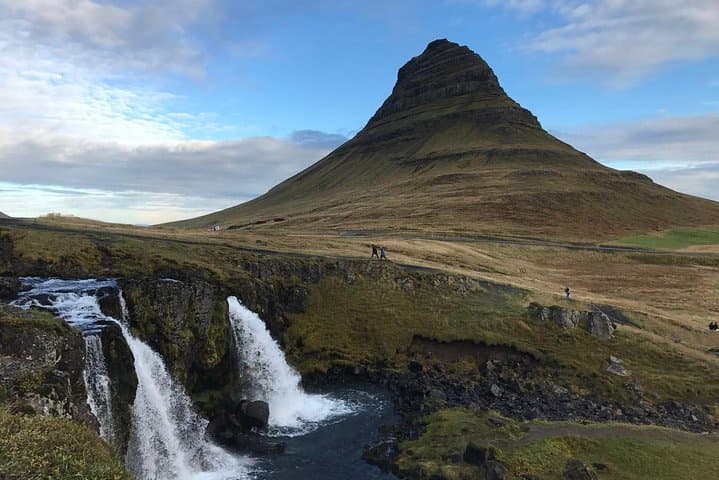
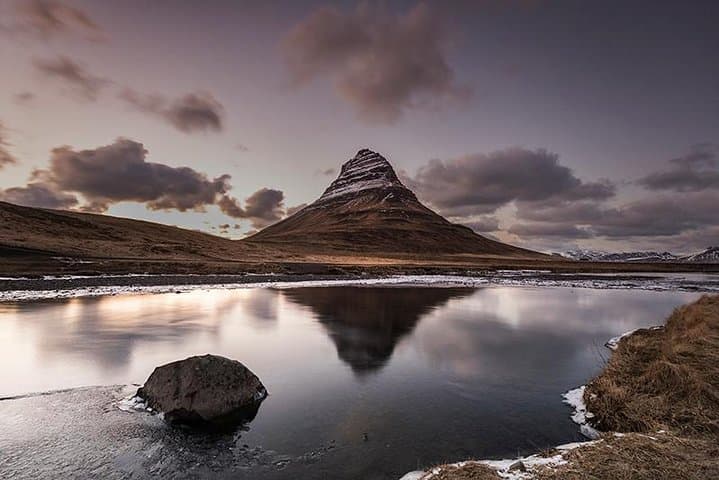
The bus hums out of Reykjavik before dawn and the landscape rearranges itself: low urban roofs give way to lava fields that still seem to be cooling. By mid-morning the driver pulls up beneath a pyramid of basalt—Kirkjufell—its flanks carved by ice and time. Guides move like translators between tourist maps and geology, pointing out cliff-side puffin colonies one moment and the striations of ancient glaciers the next.
The bus hums out of Reykjavik before dawn and the landscape rearranges itself: low urban roofs give way to lava fields that still seem to be cooling. By mid-morning the driver pulls up beneath a pyramid of basalt—Kirkjufell—its flanks carved by ice and time. Guides move like translators between tourist maps and geology, pointing out cliff-side puffin colonies one moment and the striations of ancient glaciers the next.
Over four days this tour stitches together three of Iceland’s most elemental chapters: the volcanic peninsulas of Snæfellsnes, the geothermal theatre of the Golden Circle, and the raw coastal drama of the South Coast. Snæfellsnes announces itself in black beaches, moss-muffled lava fields and the ice-capped silhouette of Snæfellsjökull, once mythologized as “the center of the earth.” On Day Two, Thingvellir opens the tectonic ledger—here the North American and Eurasian plates drift apart while the Alþingi site reminds travelers that Icelandic democracy convened here in 930 AD. The Geysir field and Gullfoss pair geothermal spectacle with glacial melt; Strokkur erupts every few minutes, a punctual reminder of subterranean pressure.
The trip’s pulse quickens on the South Coast. Seljalandsfoss and Skógafoss offer vantage points both gentle and theatrical—the former allows visitors to walk behind its curtain of water, the latter to climb a stair that rewards with a tabletop view. The itinerary culminates at Vatnajökull’s outlets: Skaftafell’s glacier hiking is managed by certified guides who fit crampons, helmets and harnesses before leading a 90-minute ice traverse. In summer a boat slips between icebergs at Jökulsárlón; in winter the lagoon’s silence and the blue ice caves feel otherworldly.
Practical note: the tour is paced with hotel nights and three included breakfasts, but expect long drives—some days include several hours on the road between highlights. Weather changes fast; layers are the first line of defense. Guides provide glacier equipment and instruction, but participants should be steady on their feet and comfortable with exposed, uneven terrain. Respect local warnings—Reynisfjara’s sneaker waves are powerful and unpredictable.
For photographers, plan for early light at Kirkjufell and late light at Jökulsárlón; mid-day overcast is actually kind to waterfalls and basalt cliffs. Bring waterproof boots, windproof outer layers, and a small daypack for snacks, extra batteries and a reusable water bottle. With grounded guidance and a firm pair of boots, this four-day route delivers Iceland’s geology, history and coastal intensity in a compact, unforgettable package.