THE ADVENTURE COLLECTIVE® · Independent discovery and booking for outdoor travel

Ride the Afrosiyob high‑speed train between three Silk Road icons and finish with a day in the Tashkent Mountains. This four‑day loop pairs world‑class Timurid architecture with an accessible alpine escape.
Ride the Afrosiyob high‑speed train between three Silk Road icons and finish with a day in the Tashkent Mountains. This four‑day loop pairs world‑class Timurid architecture with an accessible alpine escape.
You step off the Afrosiyob high‑speed train into Bukhara as the desert light softens around mudbrick minarets. Narrow lanes hum with vendors, and the Kalyan Minaret rises like an old guidepost that once warned caravans of the city ahead.
Verified experiences and guided adventures in the surrounding area.
Operated by Mirzo · Tashkent, Tashkent Region
You step off the Afrosiyob high‑speed train into Bukhara as the desert light softens around mudbrick minarets. Narrow lanes hum with vendors, and the Kalyan Minaret rises like an old guidepost that once warned caravans of the city ahead.
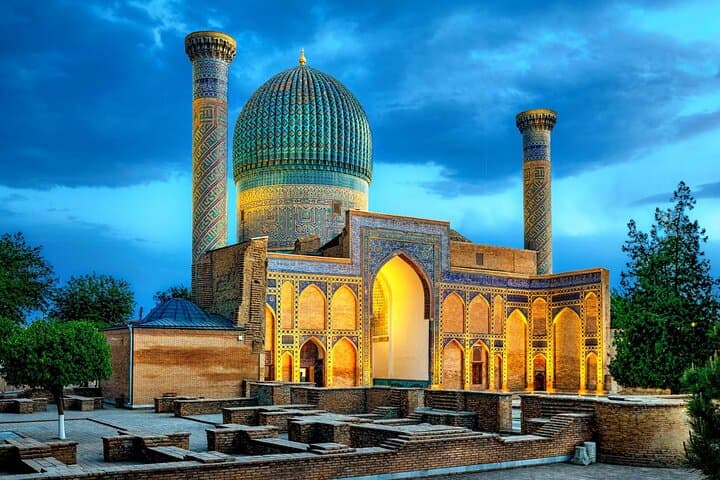
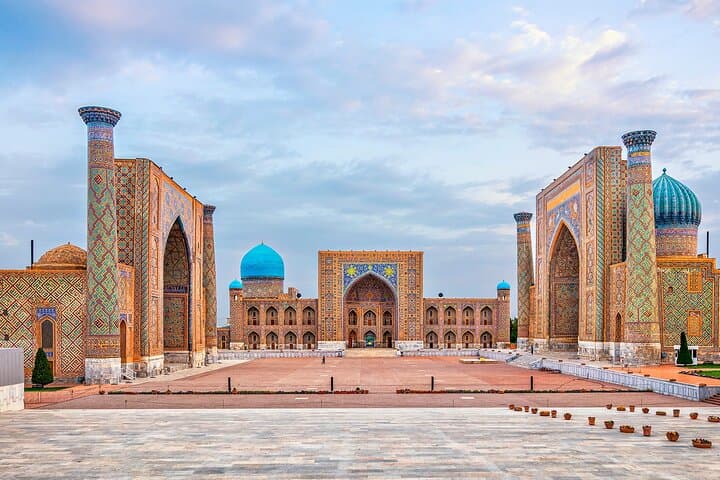
This four‑day route threads three of Uzbekistan’s defining landscapes: Tashkent’s Soviet‑era boulevards, Samarkand’s Timurid mosaics and Bukhara’s compact medieval heart, capped by a day among the Tien Shan foothills at Chimgan and the turquoise Charvak Reservoir. The architecture you’ll see—Registan’s triple madrasahs, Gur‑Emir’s turquoise dome, the Ark Fortress—reflects a convergence of Silk Road wealth and Timurid ambition.
Geologically the trip moves from irrigated river plains into ancient foothills: terraced fields give way to alum‑colored scree and alpine meadows where chairlifts in Chimgan climb to panoramic ridgelines. Culturally expect teahouses (chaikhanas), market bargaining in covered bazaars, and small workshops—Konigil’s handmade paper is a quieter highlight often missed by larger groups.
Practical notes: travel is mostly urban walking—cobblestones, shaded courtyards and short climbs to viewpoints—so good walking shoes and sun protection matter. High‑speed trains between cities are efficient; plan for midday transfers and allow time for passport control. The mountain day includes a chairlift and optional short hikes—layers are essential as temperatures shift rapidly. Carry local currency for small purchases and support family‑run stalls when possible.
This itinerary balances cultural depth with a single, accessible alpine day—perfect for travelers who want Silk Road history plus a breath of mountain air.
easy.
4 days.
Suitable for travelers in average physical condition; entails city walking (1–3 hours/day) and short, optional hikes or chairlift access in the mountains.
Yes—high‑speed train tickets (economy) between Tashkent, Bukhara and Samarkand, plus transfers and local drivers are included as stated.
Visa rules vary by nationality; many travelers use e‑visas or visa‑free entry for short stays—check current requirements with your government and Uzbekistan’s consular services before booking.
Expect moderate urban walking: 2–4 miles across a day with periods of standing at monuments; the mountain day has optional short hikes and a chairlift ride.
Uzbek som is the local currency; credit cards work at larger hotels but carry cash for markets; tipping in restaurants and for guides is customary and appreciated.
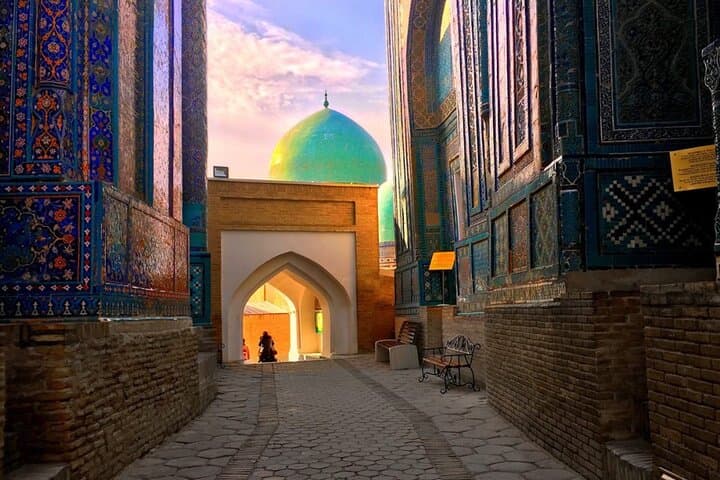
These cities grew wealthy as Silk Road hubs; Timurid patronage in the 14th–15th centuries produced the glazed tilework and monumental squares you'll visit.
Historic sites are sensitive to foot traffic and modern development; stick to marked paths, avoid touching tilework, and prefer local businesses to support sustainable tourism.
Mirzo operates guided outdoor trips and adventures with an emphasis on safety, stewardship, and memorable experiences.
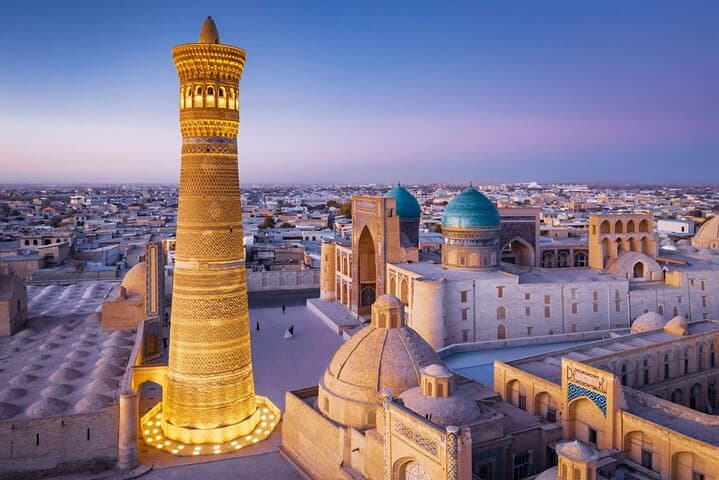
You step off the Afrosiyob high‑speed train into Bukhara as the desert light softens around mudbrick minarets. Narrow lanes hum with vendors, and the Kalyan Minaret rises like an old guidepost that once warned caravans of the city ahead.
You step off the Afrosiyob high‑speed train into Bukhara as the desert light softens around mudbrick minarets. Narrow lanes hum with vendors, and the Kalyan Minaret rises like an old guidepost that once warned caravans of the city ahead.
This four‑day route threads three of Uzbekistan’s defining landscapes: Tashkent’s Soviet‑era boulevards, Samarkand’s Timurid mosaics and Bukhara’s compact medieval heart, capped by a day among the Tien Shan foothills at Chimgan and the turquoise Charvak Reservoir. The architecture you’ll see—Registan’s triple madrasahs, Gur‑Emir’s turquoise dome, the Ark Fortress—reflects a convergence of Silk Road wealth and Timurid ambition.
Geologically the trip moves from irrigated river plains into ancient foothills: terraced fields give way to alum‑colored scree and alpine meadows where chairlifts in Chimgan climb to panoramic ridgelines. Culturally expect teahouses (chaikhanas), market bargaining in covered bazaars, and small workshops—Konigil’s handmade paper is a quieter highlight often missed by larger groups.
Practical notes: travel is mostly urban walking—cobblestones, shaded courtyards and short climbs to viewpoints—so good walking shoes and sun protection matter. High‑speed trains between cities are efficient; plan for midday transfers and allow time for passport control. The mountain day includes a chairlift and optional short hikes—layers are essential as temperatures shift rapidly. Carry local currency for small purchases and support family‑run stalls when possible.
This itinerary balances cultural depth with a single, accessible alpine day—perfect for travelers who want Silk Road history plus a breath of mountain air.