THE ADVENTURE COLLECTIVE® · Independent discovery and booking for outdoor travel

Fly from Chengdu to trace the Silk Road’s spine: Xi’an’s Terracotta Army, Dunhuang’s Mogao Grottoes, Yumen Pass and the singing dunes. This private four-day tour blends heritage, geology and desert adventure with guided access and included logistics.
Fly from Chengdu to trace the Silk Road’s spine: Xi’an’s Terracotta Army, Dunhuang’s Mogao Grottoes, Yumen Pass and the singing dunes. This private four-day tour blends heritage, geology and desert adventure with guided access and included logistics.
Morning light in the airport departure hall feels different here—part excitement, part strategy. From Chengdu you lift into the wide plains that once guided camel caravans; by the time the plane noses toward Dunhuang you can already feel the desert’s edge, air thinner, colors more honest.
Verified experiences and guided adventures in the surrounding area.
Operated by Unique Beijing Tours · Dunhuang, Gansu
Morning light in the airport departure hall feels different here—part excitement, part strategy. From Chengdu you lift into the wide plains that once guided camel caravans; by the time the plane noses toward Dunhuang you can already feel the desert’s edge, air thinner, colors more honest.
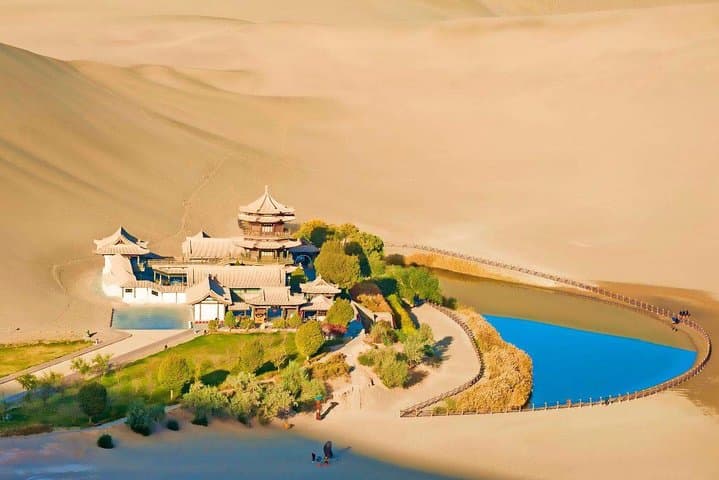
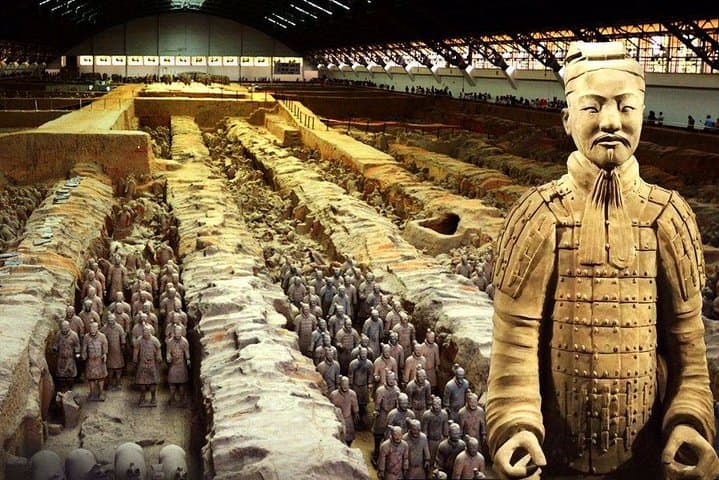
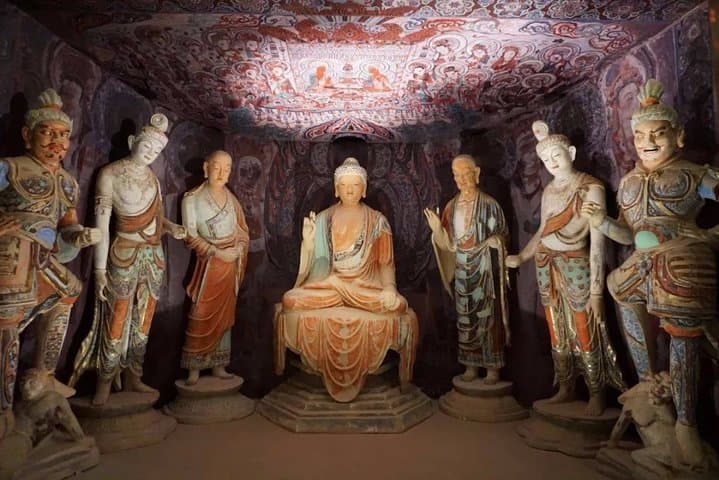
This four-day private itinerary stitches together two anchor sites of Silk Road history: Xi’an’s Terracotta Army, where Qin’s clay soldiers still stare out from burial pits, and Dunhuang’s Mogao Grottoes, a corridor of cliff-cut temples preserving a millennium of Buddhist art. Geology here matters: Yardang wind-sculpted ridges at Yadan National Geologic Park and the singing dunes owe their shapes to persistent wind erosion and fine silt from ancient lakes.
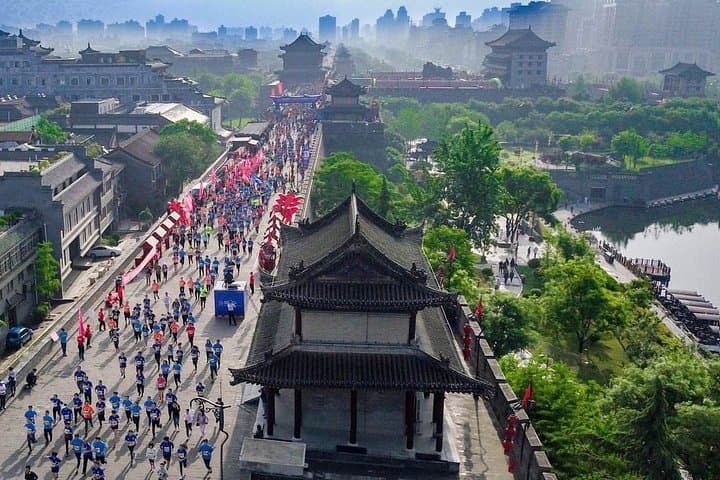
Local culture is immediate — Xi’an’s Muslim Quarter hums with hand-pulled noodles and spice; Dunhuang’s Shazhou night market offers skewers and roasted apricots under the same sky that watched Silk Road caravans pass.
Practically: expect mostly easy, guided walking with short climbs on sand dunes and steps in cave sites. Battery buses and regulated cave visits limit impact and keep access orderly; bring a small daypack, sun protection and comfortable shoes with extra traction for sand.
Plan morning visits to dunes or Yumen Pass for cooler temperatures and clearer light for photos; allow extra time for flights between cities. Guides handle most logistics—tickets, transfers and hotel pickup—so you can focus on the layers of history unfolding across an ancient trade route.
moderate.
4 days.
Suitable for travelers of average fitness—short walks, some dune climbs and stairways in grottoes; not strenuous.
Yes—this private itinerary includes economy flights between Chengdu–Xi’an and Xi’an–Dunhuang as specified in the tour inclusions.
Photography is restricted inside many caves to protect murals; the guide will indicate where photos are allowed and sometimes museums offer designated photo areas.
The tour is labeled suitable for varied fitness levels, but caves and dune areas involve steps and soft sand—travelers with limited mobility should check specific site access beforehand.
Yes—you can choose to finish the tour in Dunhuang; inform the operator at booking to arrange transfer and logistics.
Dunhuang stood at a critical Silk Road crossroads; the Mogao Grottoes accumulated Buddhist art from the 4th to 14th centuries, reflecting exchanges across Eurasia.
Visitor numbers are controlled at cave sites and battery buses reduce vehicular impact; stick to paths and follow guide instructions to protect fragile murals and desert soils.
Unique Beijing Tours operates guided outdoor trips and adventures with an emphasis on safety, stewardship, and memorable experiences.
Morning light in the airport departure hall feels different here—part excitement, part strategy. From Chengdu you lift into the wide plains that once guided camel caravans; by the time the plane noses toward Dunhuang you can already feel the desert’s edge, air thinner, colors more honest.
Morning light in the airport departure hall feels different here—part excitement, part strategy. From Chengdu you lift into the wide plains that once guided camel caravans; by the time the plane noses toward Dunhuang you can already feel the desert’s edge, air thinner, colors more honest.
This four-day private itinerary stitches together two anchor sites of Silk Road history: Xi’an’s Terracotta Army, where Qin’s clay soldiers still stare out from burial pits, and Dunhuang’s Mogao Grottoes, a corridor of cliff-cut temples preserving a millennium of Buddhist art. Geology here matters: Yardang wind-sculpted ridges at Yadan National Geologic Park and the singing dunes owe their shapes to persistent wind erosion and fine silt from ancient lakes.
Local culture is immediate — Xi’an’s Muslim Quarter hums with hand-pulled noodles and spice; Dunhuang’s Shazhou night market offers skewers and roasted apricots under the same sky that watched Silk Road caravans pass.
Practically: expect mostly easy, guided walking with short climbs on sand dunes and steps in cave sites. Battery buses and regulated cave visits limit impact and keep access orderly; bring a small daypack, sun protection and comfortable shoes with extra traction for sand.
Plan morning visits to dunes or Yumen Pass for cooler temperatures and clearer light for photos; allow extra time for flights between cities. Guides handle most logistics—tickets, transfers and hotel pickup—so you can focus on the layers of history unfolding across an ancient trade route.