THE ADVENTURE COLLECTIVE® · Independent discovery and booking for outdoor travel

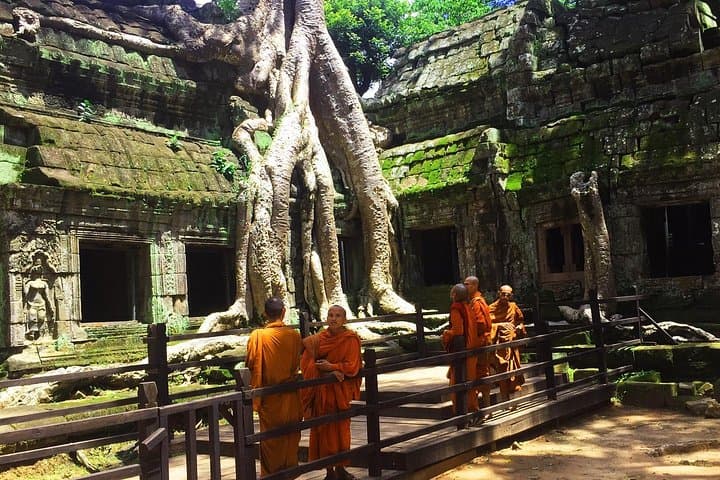
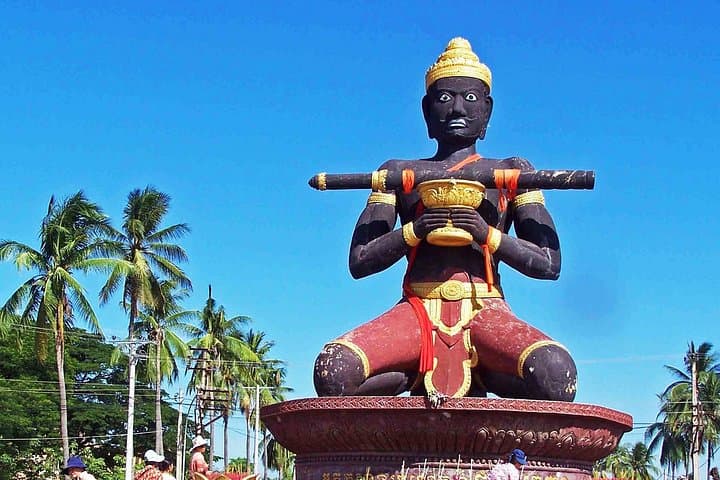
Witness Angkor Wat at sunrise, wander banyan‑rooted temple corridors at Ta Prohm, then cross into Battambang for Wat Ek Phnom and the quirky Bamboo Train. This four‑day circuit blends monumental Khmer sites with lakeside life and countryside journeys.
Witness Angkor Wat at sunrise, wander banyan‑rooted temple corridors at Ta Prohm, then cross into Battambang for Wat Ek Phnom and the quirky Bamboo Train. This four‑day circuit blends monumental Khmer sites with lakeside life and countryside journeys.
Dawn settles across the reflecting moat of Angkor Wat and a narrow line of travelers wait for that first pale light to strike the temple’s galleries. On this four-day loop you move between monumental stone, river life and quiet provincial roads — sunrise at Angkor, the root-choked corridors of Ta Prohm, then a drive west into Battambang where a patchwork of rice paddies opens to the idiosyncratic Bamboo Train.
Verified experiences and guided adventures in the surrounding area.
Operated by Peacock Asia Tours · Siem Reap, Siem Reap Province
Dawn settles across the reflecting moat of Angkor Wat and a narrow line of travelers wait for that first pale light to strike the temple’s galleries. On this four-day loop you move between monumental stone, river life and quiet provincial roads — sunrise at Angkor, the root-choked corridors of Ta Prohm, then a drive west into Battambang where a patchwork of rice paddies opens to the idiosyncratic Bamboo Train.
The itinerary threads Khmer history into daily life: Angkor Wat’s 12th‑century bas‑reliefs speak of kings and gods, Angkor Thom’s Bayon wears its hundred smiling faces, and Banteay Srei’s pink sandstone shows refined carving far from the capital. Geologically, sandstone and laterite built these monuments; monsoon-fed rivers shaped the surrounding plains and Tonle Sap Lake still dictates seasonal rhythms for lakeside communities.
Expect humid heat, flat walking broken by temple steps, and moments of intense light and shade beneath kapok and fig trees whose roots seem to tug at the ruins. Guides explain iconography, local rice farming and the floating villages’ adaptations to the lake’s rise and fall.
Practical guidance: carry a refillable water bottle, sun protection, and conservative clothing for sacred sites; plan sunrise visits early and allow cushion for traffic between Siem Reap and Battambang. Entrance fees (Angkor Park multi‑day pass) are required; the Bamboo Train and small site fees in Battambang are paid locally. With steady walking and moderate heat tolerance this route suits most travelers looking for culture, short hikes and a snapshot of Cambodia’s living heritage.
moderate.
4 days (approx. 8–9 hours/day).
Suitable for travelers in average fitness: expect multiple short walks, occasional stairs and standing while exploring temples.
Yes — a multi‑day Angkor Park pass (2‑day option commonly used) is required and is purchased at the official ticket center in Siem Reap.
Lunches are typically provided or arranged at local restaurants as noted in the itinerary; check your booking for exact inclusions.
The Bamboo Train is a short, informal local ride with basic platforms; operators charge a small fee and rides are generally safe but simple—expect minimal safety infrastructure.
Temples have uneven steps and soft ground; travelers with limited mobility may need assistance and should disclose needs ahead of booking for suitable arrangements.
The Angkor complex grew under the Khmer Empire (9th–15th centuries), with Angkor Wat built in the early 12th century as a state temple to Vishnu before its gradual Buddhist conversion.
High visitor numbers stress fragile stone and local water systems; stick to marked paths, avoid climbing on carvings and support community initiatives when visiting floating villages.
Peacock Asia Tours operates guided outdoor trips and adventures with an emphasis on safety, stewardship, and memorable experiences.
Dawn settles across the reflecting moat of Angkor Wat and a narrow line of travelers wait for that first pale light to strike the temple’s galleries. On this four-day loop you move between monumental stone, river life and quiet provincial roads — sunrise at Angkor, the root-choked corridors of Ta Prohm, then a drive west into Battambang where a patchwork of rice paddies opens to the idiosyncratic Bamboo Train.
Dawn settles across the reflecting moat of Angkor Wat and a narrow line of travelers wait for that first pale light to strike the temple’s galleries. On this four-day loop you move between monumental stone, river life and quiet provincial roads — sunrise at Angkor, the root-choked corridors of Ta Prohm, then a drive west into Battambang where a patchwork of rice paddies opens to the idiosyncratic Bamboo Train.
The itinerary threads Khmer history into daily life: Angkor Wat’s 12th‑century bas‑reliefs speak of kings and gods, Angkor Thom’s Bayon wears its hundred smiling faces, and Banteay Srei’s pink sandstone shows refined carving far from the capital. Geologically, sandstone and laterite built these monuments; monsoon-fed rivers shaped the surrounding plains and Tonle Sap Lake still dictates seasonal rhythms for lakeside communities.
Expect humid heat, flat walking broken by temple steps, and moments of intense light and shade beneath kapok and fig trees whose roots seem to tug at the ruins. Guides explain iconography, local rice farming and the floating villages’ adaptations to the lake’s rise and fall.
Practical guidance: carry a refillable water bottle, sun protection, and conservative clothing for sacred sites; plan sunrise visits early and allow cushion for traffic between Siem Reap and Battambang. Entrance fees (Angkor Park multi‑day pass) are required; the Bamboo Train and small site fees in Battambang are paid locally. With steady walking and moderate heat tolerance this route suits most travelers looking for culture, short hikes and a snapshot of Cambodia’s living heritage.