THE ADVENTURE COLLECTIVE® · Independent discovery and booking for outdoor travel

Follow the great migration on a four-day loop from Arusha into northern Serengeti and Ngorongoro—time your visit for dramatic Mara River crossings, close game drives, and overnight stays in tented lodges. Expect early mornings, dusty tracks, and sustained wildlife viewing rather than hiking.
Follow the great migration on a four-day loop from Arusha into northern Serengeti and Ngorongoro—time your visit for dramatic Mara River crossings, close game drives, and overnight stays in tented lodges. Expect early mornings, dusty tracks, and sustained wildlife viewing rather than hiking.
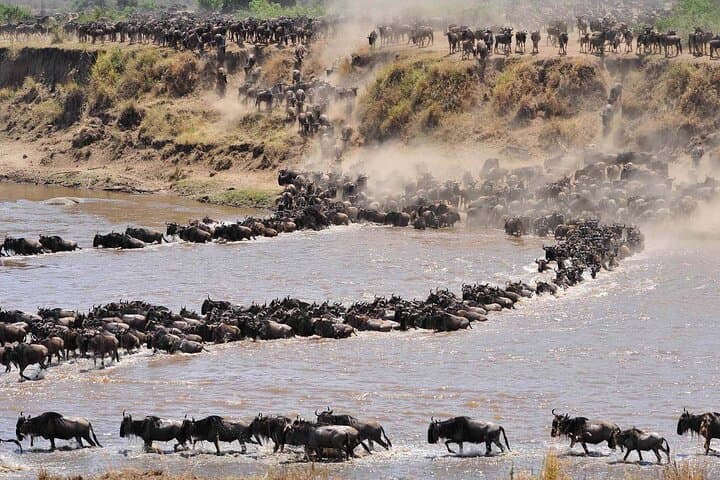
Dust raises like a low roar as safari wheels push across the Serengeti rim; acacia silhouettes slice the sky and the Mara River waits below, dark and purposeful, daring herds to test its current. On this four-day loop from Arusha you move with the animals—long plains one moment, the sudden clench of riverbank drama the next—tracking the great migration at the point where thousands of hooves and the Mara’s crocodiles meet.
Verified experiences and guided adventures in the surrounding area.
Operated by MERU SLOPES TOURS AND SAFARIS · Serengeti, Mara Region
Dust raises like a low roar as safari wheels push across the Serengeti rim; acacia silhouettes slice the sky and the Mara River waits below, dark and purposeful, daring herds to test its current. On this four-day loop from Arusha you move with the animals—long plains one moment, the sudden clench of riverbank drama the next—tracking the great migration at the point where thousands of hooves and the Mara’s crocodiles meet.
The route threads through landscapes shaped by ancient volcanism and river incision: the open granite kopjes that dot the plains, the nutrient-rich floodplains that feed wildebeest herds, and the high-walled caldera of Ngorongoro—an ecological pocket that retains a year-round concentration of wildlife. Maasai culture remains present along roadsides; many communities still keep cattle and read weather the same seasonal cues that guide the migration.
Practically speaking, expect early starts and long, bumpy game drives from tented lodges and simple lodgings. Guides balance patience and timing—finding crossings is part science, part local knowledge. Bring layered clothing for cool mornings, binoculars for scanning far ridgelines, and a camera with a decent zoom. Hydration and sun protection are essentials; vehicles provide shade but little shelter from dust.
This itinerary pairs cinematic animal behavior with straightforward logistics: private transport, park fees, and three nights inside core wildlife areas before a last-day descent into Ngorongoro Crater. For travelers wanting close, sustained wildlife viewing without strenuous hiking, it’s one of East Africa’s most direct windows into the migration’s scale and suspense.
easy.
4 days.
Light fitness; most time is spent in vehicle with short, flat walks—comfortable mobility and stamina for bumpy rides recommended
The northern Serengeti and Mara River crossings most commonly occur June–October, but timing varies by year and herd movements—your guide will target crossing hotspots.
Travelers should check Tanzania entry visa rules and consult a travel clinic for recommended vaccinations (e.g., yellow fever proof if required, malaria precautions) before travel.
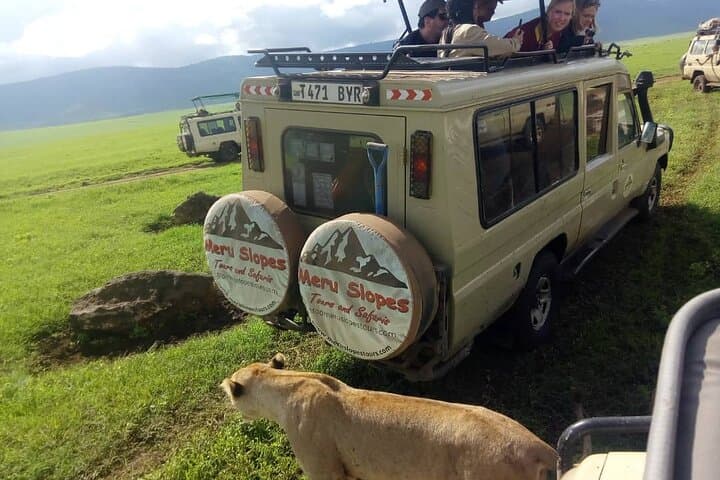
Expect long, unpaved roads with corrugation and occasional river fords; vehicles are 4x4 game-drive models but you should be prepared for bumpy, dusty conditions.
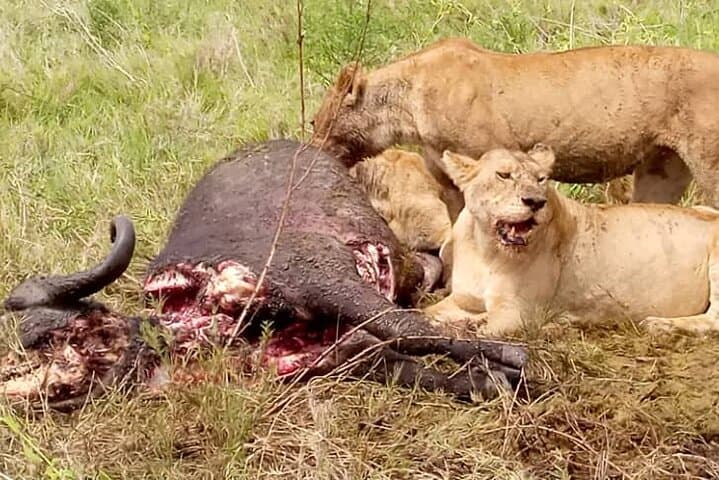
Ngorongoro Crater offers one of the highest chances to see the Big Five in a single day, while sightings in the Serengeti are excellent for predators, buffalo, elephants and rhino are rarer but possible.
The Serengeti’s name comes from Maasai word siringet—land of endless plains; the region’s ecology has supported migratory herds for millennia.
Park management balances tourism with anti-poaching efforts and community initiatives; visitors should minimize single-use plastics and support local lodges that contribute to conservation.
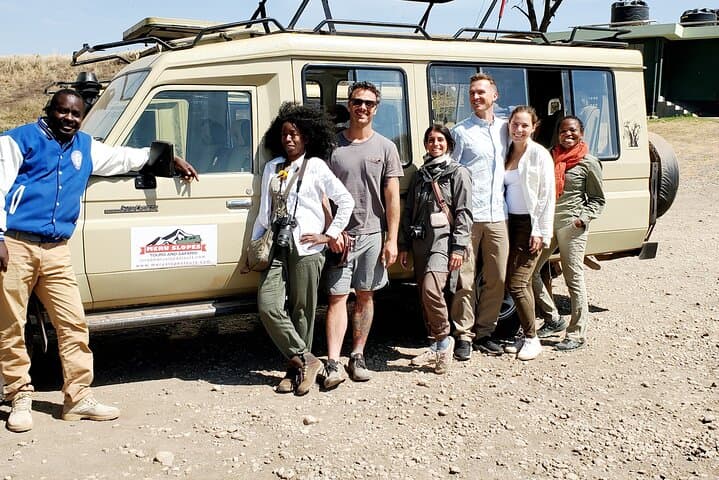
MERU SLOPES TOURS AND SAFARIS operates guided outdoor trips and adventures with an emphasis on safety, stewardship, and memorable experiences.
Dust raises like a low roar as safari wheels push across the Serengeti rim; acacia silhouettes slice the sky and the Mara River waits below, dark and purposeful, daring herds to test its current. On this four-day loop from Arusha you move with the animals—long plains one moment, the sudden clench of riverbank drama the next—tracking the great migration at the point where thousands of hooves and the Mara’s crocodiles meet.
Dust raises like a low roar as safari wheels push across the Serengeti rim; acacia silhouettes slice the sky and the Mara River waits below, dark and purposeful, daring herds to test its current. On this four-day loop from Arusha you move with the animals—long plains one moment, the sudden clench of riverbank drama the next—tracking the great migration at the point where thousands of hooves and the Mara’s crocodiles meet.
The route threads through landscapes shaped by ancient volcanism and river incision: the open granite kopjes that dot the plains, the nutrient-rich floodplains that feed wildebeest herds, and the high-walled caldera of Ngorongoro—an ecological pocket that retains a year-round concentration of wildlife. Maasai culture remains present along roadsides; many communities still keep cattle and read weather the same seasonal cues that guide the migration.
Practically speaking, expect early starts and long, bumpy game drives from tented lodges and simple lodgings. Guides balance patience and timing—finding crossings is part science, part local knowledge. Bring layered clothing for cool mornings, binoculars for scanning far ridgelines, and a camera with a decent zoom. Hydration and sun protection are essentials; vehicles provide shade but little shelter from dust.
This itinerary pairs cinematic animal behavior with straightforward logistics: private transport, park fees, and three nights inside core wildlife areas before a last-day descent into Ngorongoro Crater. For travelers wanting close, sustained wildlife viewing without strenuous hiking, it’s one of East Africa’s most direct windows into the migration’s scale and suspense.