THE ADVENTURE COLLECTIVE® · Independent discovery and booking for outdoor travel

Spend four days crossing salt flats, thermal springs and vividly colored lagoons between La Paz and San Pedro de Atacama. This private excursion combines unique geology, flamingo colonies and remote high‑altitude travel with overnight stays in a salt hotel and mountain lodges.
Spend four days crossing salt flats, thermal springs and vividly colored lagoons between La Paz and San Pedro de Atacama. This private excursion combines unique geology, flamingo colonies and remote high‑altitude travel with overnight stays in a salt hotel and mountain lodges.
On the high Bolivian plateau the salt flat stretches like an old, blank map reflecting sky so precisely it erases the horizon. Travelers begin in La Paz, climb into an overnight coach and wake to the endless white of Salar de Uyuni at roughly 3,656 m, where the ground can feel like a slow-moving ocean of salt and wind that nudges you onward.
Verified experiences and guided adventures in the surrounding area.
Operated by Mundicontact Expeditions · Uyuni, Potosí Department
On the high Bolivian plateau the salt flat stretches like an old, blank map reflecting sky so precisely it erases the horizon. Travelers begin in La Paz, climb into an overnight coach and wake to the endless white of Salar de Uyuni at roughly 3,656 m, where the ground can feel like a slow-moving ocean of salt and wind that nudges you onward.
This route threads geology and culture: the salt plain is the remnant of prehistoric lakes (Lake Minchin and later Lake Tauca), while the Eduardo Avaroa Reserve farther south hides volcanic plateaus, mineral-rich lagoons and flamingo colonies at 4,000–4,500 m. Laguna Colorada’s iron-rich shallows turn a stubborn red and the Sol de Mañana geysers boil at nearly 4,800 m—raw reminders of the Andes’ volcanic furnace. Small Quechua and Aymara communities and century-old mining relics dot the edges of this landscape, and the Uyuni train cemetery tells a quieter industrial history.
Practical guidance: expect long drives—La Paz to Uyuni is typically a 10–12 hour overnight bus; daily field drives on gravel roads can range from 3–6 hours. Nights are cold; daytime sun is intense. Hotels include a night in a salt-built lodge and mountain lodges around Laguna Colorada; the final transfer deposits travelers in San Pedro de Atacama, Chile (border formalities required). Pack layered, warm clothing, sun protection and at least 3–4 L of water per person. Allow time to acclimatize and monitor for altitude symptoms. With proper preparation, this four-day corridor of salt, color and steam delivers dramatic high-altitude scenery and wildlife encounters that feel elemental and immediate.
moderate.
4 days.
Moderate fitness: able to tolerate several hours in a vehicle each day and short walks at high altitude; stair-free travel but expect uneven ground.
Yes—most of the route reaches 3,600–4,800 m. Acclimatize in La Paz if possible, stay hydrated, avoid alcohol, and tell guides if you feel headaches, nausea or breathlessness.
Salt hotels are basic but unique; rooms are private and heated variable—expect simple heating and bring warm layers for the night.
Yes—this itinerary includes a transfer to the Chilean border and drop-off in San Pedro de Atacama; you must carry a passport and meet visa requirements for Chile.
The Eduardo Avaroa Reserve is known for Andean flamingos in the colored lagoons and for sightings of vicuñas and other high‑altitude fauna.
The Salar de Uyuni sits atop evaporated prehistoric lakes; salt harvesting and 19th–20th century railway remnants shaped local settlement patterns.
The high‑altitude wetlands are ecologically fragile—stay on designated tracks, avoid disturbing flamingo nesting areas and pack out all waste.
Mundicontact Expeditions operates guided outdoor trips and adventures with an emphasis on safety, stewardship, and memorable experiences.
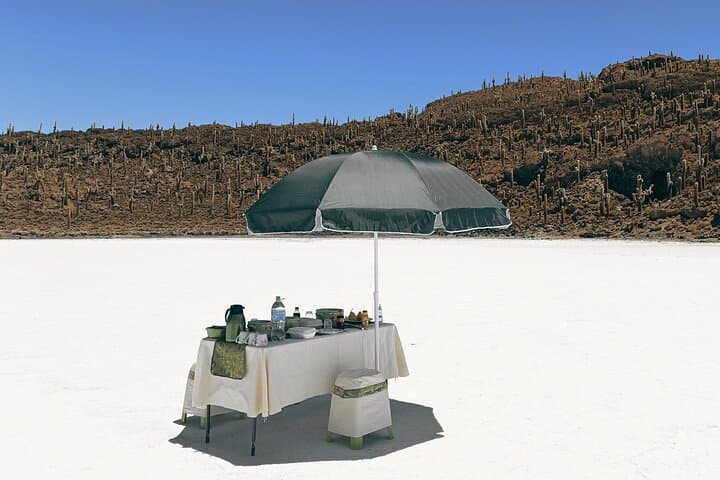

On the high Bolivian plateau the salt flat stretches like an old, blank map reflecting sky so precisely it erases the horizon. Travelers begin in La Paz, climb into an overnight coach and wake to the endless white of Salar de Uyuni at roughly 3,656 m, where the ground can feel like a slow-moving ocean of salt and wind that nudges you onward.
On the high Bolivian plateau the salt flat stretches like an old, blank map reflecting sky so precisely it erases the horizon. Travelers begin in La Paz, climb into an overnight coach and wake to the endless white of Salar de Uyuni at roughly 3,656 m, where the ground can feel like a slow-moving ocean of salt and wind that nudges you onward.
This route threads geology and culture: the salt plain is the remnant of prehistoric lakes (Lake Minchin and later Lake Tauca), while the Eduardo Avaroa Reserve farther south hides volcanic plateaus, mineral-rich lagoons and flamingo colonies at 4,000–4,500 m. Laguna Colorada’s iron-rich shallows turn a stubborn red and the Sol de Mañana geysers boil at nearly 4,800 m—raw reminders of the Andes’ volcanic furnace. Small Quechua and Aymara communities and century-old mining relics dot the edges of this landscape, and the Uyuni train cemetery tells a quieter industrial history.
Practical guidance: expect long drives—La Paz to Uyuni is typically a 10–12 hour overnight bus; daily field drives on gravel roads can range from 3–6 hours. Nights are cold; daytime sun is intense. Hotels include a night in a salt-built lodge and mountain lodges around Laguna Colorada; the final transfer deposits travelers in San Pedro de Atacama, Chile (border formalities required). Pack layered, warm clothing, sun protection and at least 3–4 L of water per person. Allow time to acclimatize and monitor for altitude symptoms. With proper preparation, this four-day corridor of salt, color and steam delivers dramatic high-altitude scenery and wildlife encounters that feel elemental and immediate.