THE ADVENTURE COLLECTIVE® · Independent discovery and booking for outdoor travel

Walk with nomads for four days across the sand seas near Zagora, sleeping in mobile desert camps at Erg Lhnanich, Bogawar and Erg Lhniti. This slow-paced trek emphasizes immersion, simple camp comforts, and practical desert travel skills.
Walk with nomads for four days across the sand seas near Zagora, sleeping in mobile desert camps at Erg Lhnanich, Bogawar and Erg Lhniti. This slow-paced trek emphasizes immersion, simple camp comforts, and practical desert travel skills.
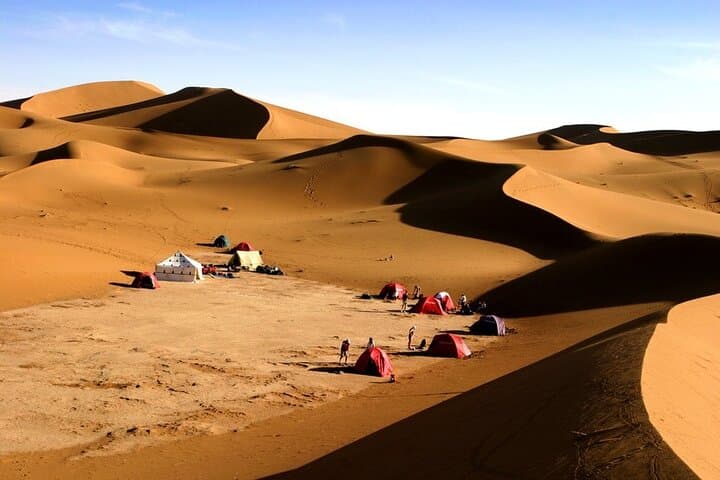
A shoulder of dawn slides over the dunes as the caravan forms — camels inhale the cold air and the first footprints sink into sand that moves underfoot. The trek begins near Zagora and leads across open plains and the named erg systems of Erg Lhnanich, Bogawar and Erg Lhniti, where wind sculpts ridgelines that shift by the hour.
Verified experiences and guided adventures in the surrounding area.
Operated by Dar Toda · Zagora, Drâa-Tafilalet
A shoulder of dawn slides over the dunes as the caravan forms — camels inhale the cold air and the first footprints sink into sand that moves underfoot. The trek begins near Zagora and leads across open plains and the named erg systems of Erg Lhnanich, Bogawar and Erg Lhniti, where wind sculpts ridgelines that shift by the hour.
This route follows centuries-old paths used by trans-Saharan nomads; rock outcrops and occasional acacia trees mark ancient water routes through the Hamada and sandy erg transition zones. Geologically the area is recent Quaternary sand laid atop older desert plateaus, so expect alternating hard-packed paths and soft, wind-blown dunes. Culturally, evenings center on shared meals and storytelling around small fires — a living exchange with nomadic guides who manage camels and camps.
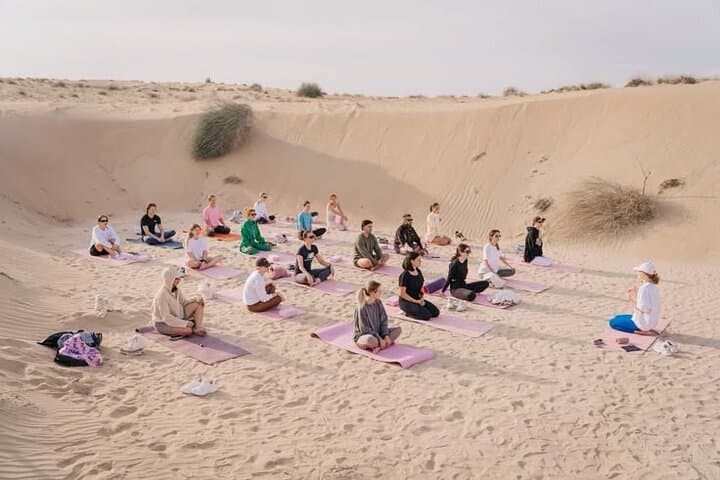
Over four days and three nights, walkers cover varied terrain at a slow pace: plain crossings, steep dune shoulders, and ridge cresting that rewards with long southwest views toward the Drâa valley. Nights are cold and stark; days can be intensely hot and bright. The experience balances solitude and community: deliberate walking, chance meditation, and practical camp life where sleeping kits are provided.
Practical guidance: start early to avoid peak heat, carry at least 3–4 liters of water per day, use high-SPF sun protection and wrap clothing to reduce sand abrasion. Shoes with solid midsoles help on soft sand; poles aid balance on dune slopes. Expect minimal cell coverage and prepare to leave little trace — pack out waste and respect nomadic land-use practices.
moderate.
4 days.
Suitable for people in good general health who can walk 3–6 hours a day on variable desert terrain; basic stamina required.
The itinerary is paced gently and suitable for most people with basic fitness, but expect multi-hour walks on sand which demand more energy than firm trails.
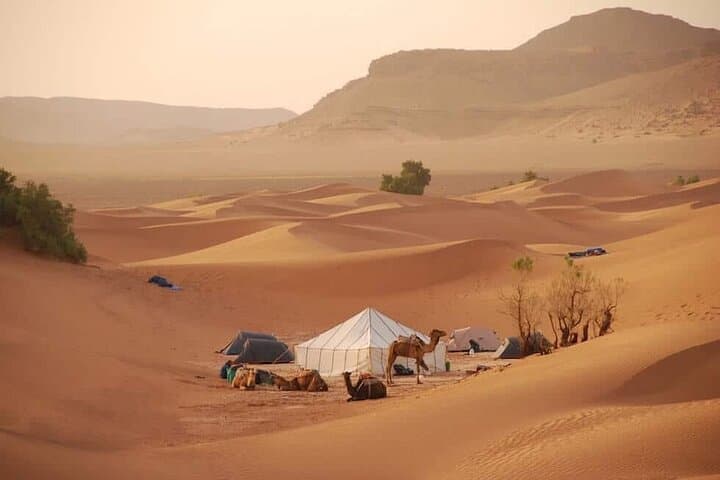
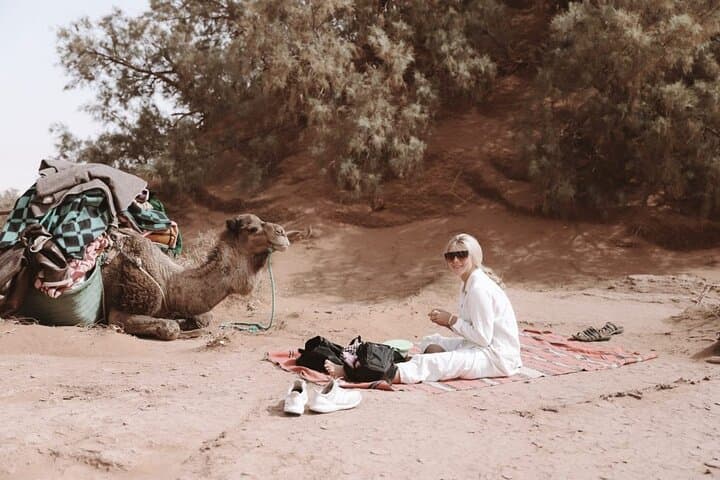
Yes — camels carry luggage and camp equipment while participants walk; you need only carry a daypack with water and essentials.
You sleep in nomadic wild camps; mattresses, blankets and sleeping bags are provided, with options to sleep under the stars when conditions allow.
Cell coverage is intermittent; potable water is provided at camps but bring extra water and purification means if you prefer backups.
This part of the Sahara has been crossed for centuries by nomadic peoples and trade caravans linking the Drâa valley to deeper Saharan routes; local culture preserves oral histories and desert navigation skills.
Groups are encouraged to follow low-impact camping: pack out waste, avoid cutting vegetation, and respect nomadic grazing areas to reduce disturbance to fragile dune systems.
Dar Toda operates guided outdoor trips and adventures with an emphasis on safety, stewardship, and memorable experiences.
A shoulder of dawn slides over the dunes as the caravan forms — camels inhale the cold air and the first footprints sink into sand that moves underfoot. The trek begins near Zagora and leads across open plains and the named erg systems of Erg Lhnanich, Bogawar and Erg Lhniti, where wind sculpts ridgelines that shift by the hour.
A shoulder of dawn slides over the dunes as the caravan forms — camels inhale the cold air and the first footprints sink into sand that moves underfoot. The trek begins near Zagora and leads across open plains and the named erg systems of Erg Lhnanich, Bogawar and Erg Lhniti, where wind sculpts ridgelines that shift by the hour.
This route follows centuries-old paths used by trans-Saharan nomads; rock outcrops and occasional acacia trees mark ancient water routes through the Hamada and sandy erg transition zones. Geologically the area is recent Quaternary sand laid atop older desert plateaus, so expect alternating hard-packed paths and soft, wind-blown dunes. Culturally, evenings center on shared meals and storytelling around small fires — a living exchange with nomadic guides who manage camels and camps.
Over four days and three nights, walkers cover varied terrain at a slow pace: plain crossings, steep dune shoulders, and ridge cresting that rewards with long southwest views toward the Drâa valley. Nights are cold and stark; days can be intensely hot and bright. The experience balances solitude and community: deliberate walking, chance meditation, and practical camp life where sleeping kits are provided.
Practical guidance: start early to avoid peak heat, carry at least 3–4 liters of water per day, use high-SPF sun protection and wrap clothing to reduce sand abrasion. Shoes with solid midsoles help on soft sand; poles aid balance on dune slopes. Expect minimal cell coverage and prepare to leave little trace — pack out waste and respect nomadic land-use practices.