THE ADVENTURE COLLECTIVE® · Independent discovery and booking for outdoor travel

Cross the High Atlas, explore Aït Ben Haddou and ride camels into the orange seas of Erg Chebbi on this four-day loop from Marrakech. Expect long drives, dramatic geology, desert camp nights and rich cultural stops through southern Morocco.
Cross the High Atlas, explore Aït Ben Haddou and ride camels into the orange seas of Erg Chebbi on this four-day loop from Marrakech. Expect long drives, dramatic geology, desert camp nights and rich cultural stops through southern Morocco.
You crest the Tizi n’Tichka and the world suddenly changes: the High Atlas drops into layered red and ochre ridges, then flattens into scarps that give way to a sky so wide the dunes look like an island on a horizon. Over four days this tour moves from Marrakech’s old-city bustle across mountain passes to the towering waves of Erg Chebbi, stopping at fortified ksars, oases and narrow canyons.
Verified experiences and guided adventures in the surrounding area.
Operated by Best Travel Only · Merzouga, Drâa-Tafilalet
You crest the Tizi n’Tichka and the world suddenly changes: the High Atlas drops into layered red and ochre ridges, then flattens into scarps that give way to a sky so wide the dunes look like an island on a horizon. Over four days this tour moves from Marrakech’s old-city bustle across mountain passes to the towering waves of Erg Chebbi, stopping at fortified ksars, oases and narrow canyons.
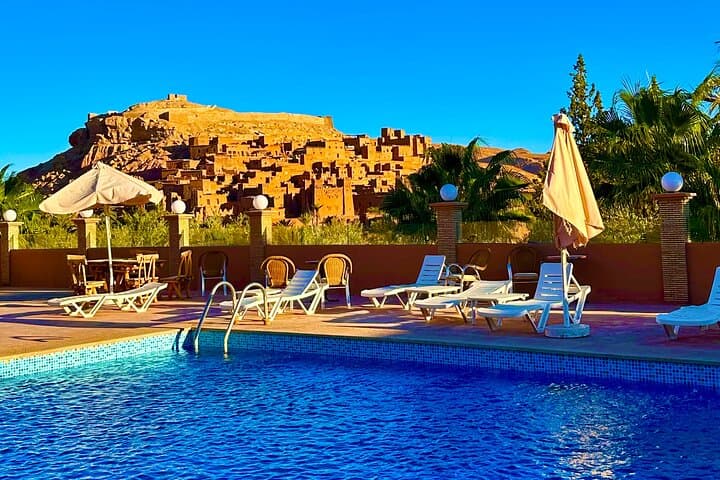
The route follows ancient trading corridors; Aït Ben Haddou’s mud-brick kasbahs recall caravan wealth and the architectural logic of adobe in a semi-arid climate. Geologically the journey transitions from folded metamorphics and red sandstone in the Atlas to wind-sculpted silicate sand in the Sahara, and then into limestone gorges at Todra and the sculpted spines of the Dades Valley.
Culture is tactile here: palm groves irrigated by khettaras, cooperative rose fields in the Valley of Roses, and nights in a desert camp where Berber music and hospitality punctuate the hours. Wildlife is quiet but present — larks, desert foxes and small reptiles move the margins of camp life.
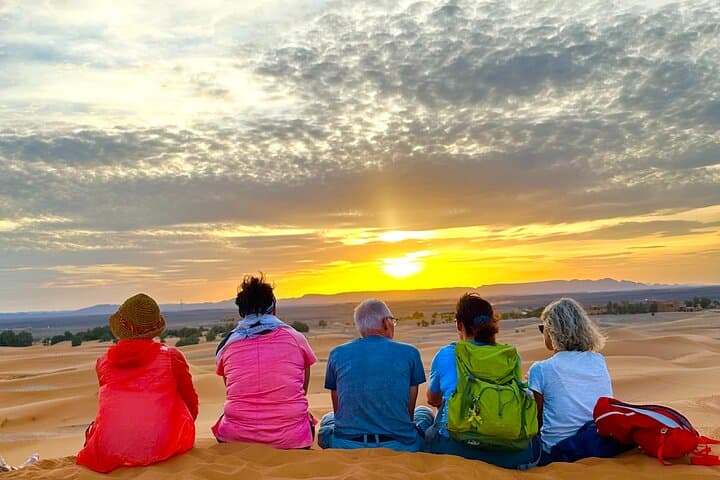
Practical guidance: plan for long drives (daily seat time varies), strong daytime sun and cold desert nights. Pack layered clothing, sun protection and at least 2–3 liters of water per day; a short camel ride delivers you to camp but expect sandy, uneven footing. Photography is best at sunrise and sunset when dunes throw long, dramatic shadows. Confirm pickup details in Marrakech and carry photocopies of your passport—remote support is limited once you leave main towns.
moderate.
4 days (approx. 96 hours).
Light to moderate fitness; able to tolerate several hours of driving, short hikes and walking on sand and uneven canyon terrain.
Daily driving varies: expect several hours on day transitions (Marrakech to Aït Ben Haddou/Skoura, and Skoura to Merzouga) with shorter stops for sights and photo breaks.
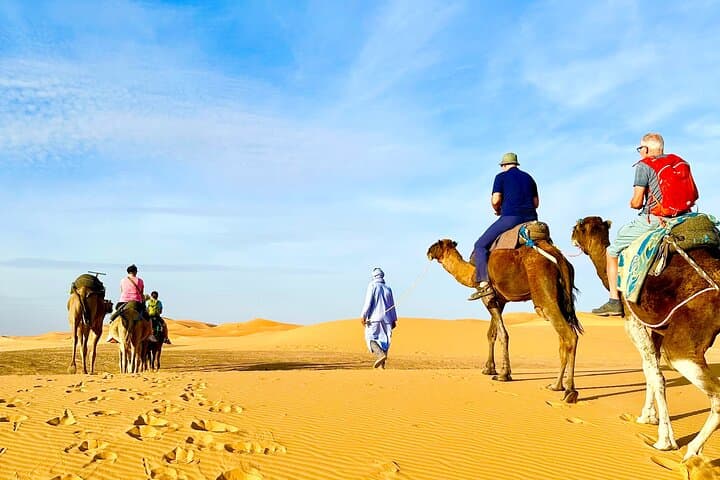
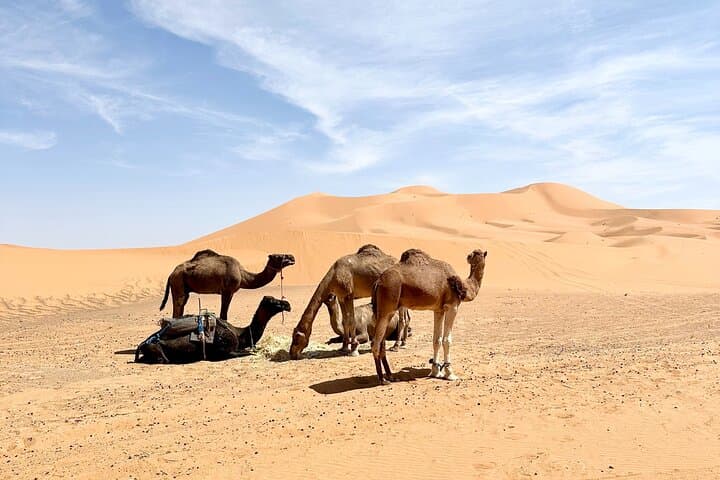
The camel ride to camp is short and suitable for most travelers; mounts can be steadied by guides, but those with back issues should notify the operator and consider walking parts of the route.
Accommodations include riads, hotels or guesthouses in towns and a desert luxury camp near Erg Chebbi with shared facilities — confirm specifics at booking for private or upgraded options.
Spring and fall offer milder days and cool nights; summer can be extremely hot during daylight hours, and winter brings cold nights and possible wind on the pass.
This corridor links historic trans-Saharan trade routes; kasbahs and ksars like Aït Ben Haddou grew as fortified caravan stops for salt, spices and textiles.
Dune systems and oasis water tables are fragile — stick to marked tracks, avoid driving on dunes and support local cooperatives to encourage sustainable tourism.
Best Travel Only operates guided outdoor trips and adventures with an emphasis on safety, stewardship, and memorable experiences.
You crest the Tizi n’Tichka and the world suddenly changes: the High Atlas drops into layered red and ochre ridges, then flattens into scarps that give way to a sky so wide the dunes look like an island on a horizon. Over four days this tour moves from Marrakech’s old-city bustle across mountain passes to the towering waves of Erg Chebbi, stopping at fortified ksars, oases and narrow canyons.
You crest the Tizi n’Tichka and the world suddenly changes: the High Atlas drops into layered red and ochre ridges, then flattens into scarps that give way to a sky so wide the dunes look like an island on a horizon. Over four days this tour moves from Marrakech’s old-city bustle across mountain passes to the towering waves of Erg Chebbi, stopping at fortified ksars, oases and narrow canyons.
The route follows ancient trading corridors; Aït Ben Haddou’s mud-brick kasbahs recall caravan wealth and the architectural logic of adobe in a semi-arid climate. Geologically the journey transitions from folded metamorphics and red sandstone in the Atlas to wind-sculpted silicate sand in the Sahara, and then into limestone gorges at Todra and the sculpted spines of the Dades Valley.
Culture is tactile here: palm groves irrigated by khettaras, cooperative rose fields in the Valley of Roses, and nights in a desert camp where Berber music and hospitality punctuate the hours. Wildlife is quiet but present — larks, desert foxes and small reptiles move the margins of camp life.
Practical guidance: plan for long drives (daily seat time varies), strong daytime sun and cold desert nights. Pack layered clothing, sun protection and at least 2–3 liters of water per day; a short camel ride delivers you to camp but expect sandy, uneven footing. Photography is best at sunrise and sunset when dunes throw long, dramatic shadows. Confirm pickup details in Marrakech and carry photocopies of your passport—remote support is limited once you leave main towns.