THE ADVENTURE COLLECTIVE® · Independent discovery and booking for outdoor travel

Cross the High Atlas, walk a UNESCO ksar, and sleep under the stars in Erg Chebbi on a compact 4-day loop from Marrakech. This private-feel itinerary combines dramatic gorges, film-set towns and an authentic camel-camp night in the Sahara.
Cross the High Atlas, walk a UNESCO ksar, and sleep under the stars in Erg Chebbi on a compact 4-day loop from Marrakech. This private-feel itinerary combines dramatic gorges, film-set towns and an authentic camel-camp night in the Sahara.
The first light slices across the High Atlas as your vehicle climbs Tizi n'Tichka and the city of Marrakech slides behind you. By midday the road spills you into ochre villages and the cubic walls of Ait Ben Haddou, where earthen towers hold the sun like a slow-burning lamp. Over four days you'll move from cedar-lined passes to the sharpened cliffs of Todra and, finally, into the rolling plates of Erg Chebbi where a single dune will dominate the horizon.
Verified experiences and guided adventures in the surrounding area.
Operated by Trek Desert Morocco · Marrakech, Marrakech-Safi
The first light slices across the High Atlas as your vehicle climbs Tizi n'Tichka and the city of Marrakech slides behind you. By midday the road spills you into ochre villages and the cubic walls of Ait Ben Haddou, where earthen towers hold the sun like a slow-burning lamp. Over four days you'll move from cedar-lined passes to the sharpened cliffs of Todra and, finally, into the rolling plates of Erg Chebbi where a single dune will dominate the horizon.
This route threads centuries of history: ancient caravan roads, Berber kasbahs, and Ait Ben Haddou's 17th-century ksar — a living example of southern Moroccan clay architecture and a frequent film set. Geologically the Todra and Dades gorges expose vertical limestone faces carved by seasonal torrents, while the Sahara transitions from gravel plains to wind-sculpted sand seas outside Merzouga.
Expect cultural notes at every stop: riads in Dades, local guides who speak Amazigh and Arabic, and evening taarab or Berber music around a campfire. Practicalities matter: drives are long (several 3–5 hour stretches), walking in gorges is flat but occasionally uneven, and the camel trek is gentle but requires basic balance.
Pack for temperature swings — hot days, cold desert nights — and plan activities around sunrise and sunset when dunes are best explored. Hydrate, use sun protection, and keep valuables secure in towns and camps. For travelers seeking a compact, varied introduction to southern Morocco, this four-day loop combines geology, culture, and desert solitude into a tight, manageable adventure.
moderate.
4 days.
Good for travelers who can manage several hours of driving each day, short hikes on uneven ground, and a one-hour camel ride; not strenuous but requires stamina.
Yes. Camel rides are led by experienced guides and last about an hour; wear long pants and hold on when the camel stands and sits.
Camps typically offer canvas tents with beds and shared toilets; some camps have private tents and the option to sleep outdoors under the stars.
Long transfers and sandy or uneven terrain make parts of the tour challenging; travelers with serious mobility issues should consult the operator first.
Most breakfasts and dinners are included on the itinerary, but many lunches and city meals are paid locally—bring cash for stops.
This corridor links trans‑Saharan trade routes; Ait Ben Haddou preserves fortified clay architecture and Ouarzazate grew into a film hub in the 20th century.
Water is scarce and dune ecosystems are fragile—use reusable bottles, avoid disturbing vegetation, and hire local guides to support community economies.
Trek Desert Morocco operates guided outdoor trips and adventures with an emphasis on safety, stewardship, and memorable experiences.
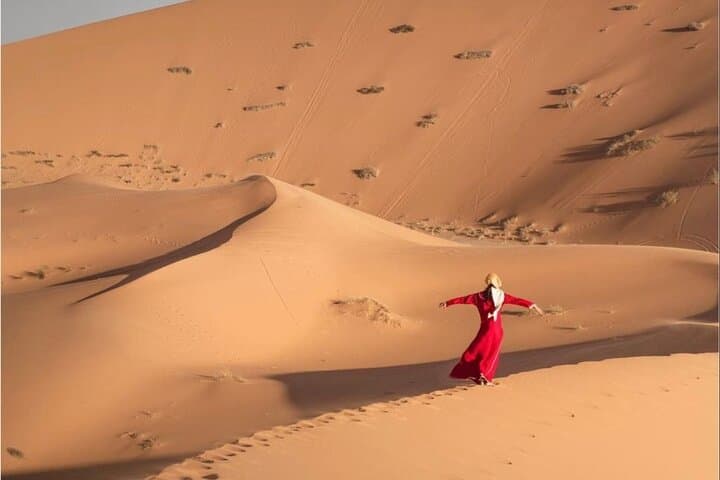
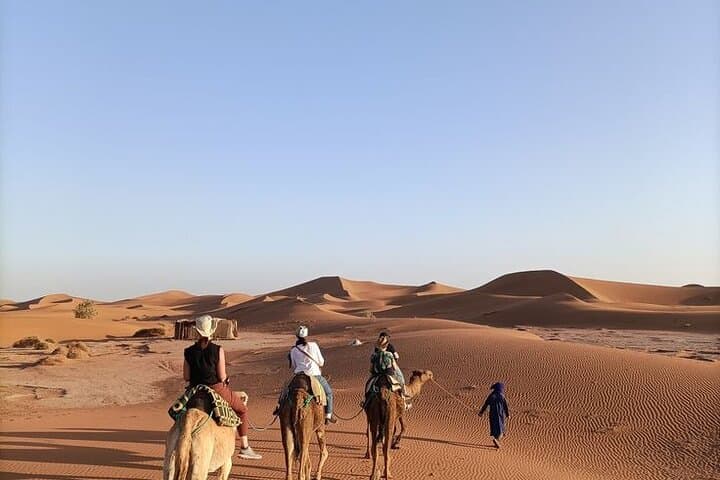
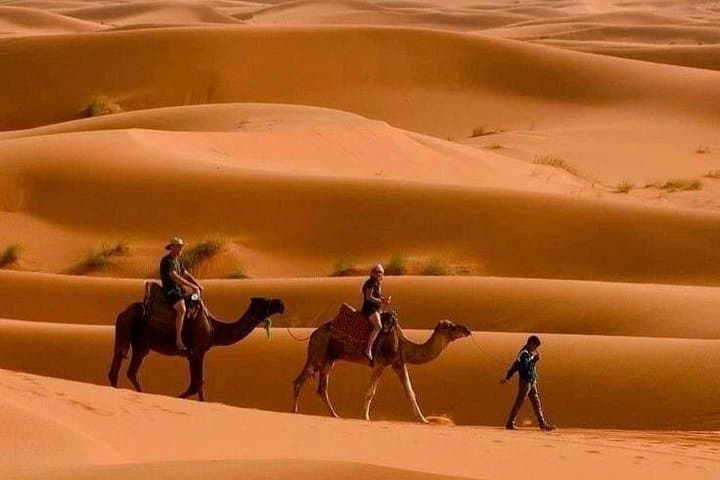
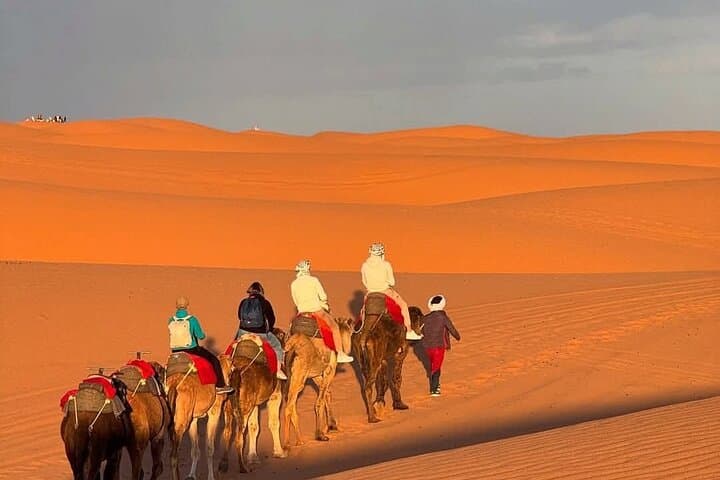
The first light slices across the High Atlas as your vehicle climbs Tizi n'Tichka and the city of Marrakech slides behind you. By midday the road spills you into ochre villages and the cubic walls of Ait Ben Haddou, where earthen towers hold the sun like a slow-burning lamp. Over four days you'll move from cedar-lined passes to the sharpened cliffs of Todra and, finally, into the rolling plates of Erg Chebbi where a single dune will dominate the horizon.
The first light slices across the High Atlas as your vehicle climbs Tizi n'Tichka and the city of Marrakech slides behind you. By midday the road spills you into ochre villages and the cubic walls of Ait Ben Haddou, where earthen towers hold the sun like a slow-burning lamp. Over four days you'll move from cedar-lined passes to the sharpened cliffs of Todra and, finally, into the rolling plates of Erg Chebbi where a single dune will dominate the horizon.
This route threads centuries of history: ancient caravan roads, Berber kasbahs, and Ait Ben Haddou's 17th-century ksar — a living example of southern Moroccan clay architecture and a frequent film set. Geologically the Todra and Dades gorges expose vertical limestone faces carved by seasonal torrents, while the Sahara transitions from gravel plains to wind-sculpted sand seas outside Merzouga.
Expect cultural notes at every stop: riads in Dades, local guides who speak Amazigh and Arabic, and evening taarab or Berber music around a campfire. Practicalities matter: drives are long (several 3–5 hour stretches), walking in gorges is flat but occasionally uneven, and the camel trek is gentle but requires basic balance.
Pack for temperature swings — hot days, cold desert nights — and plan activities around sunrise and sunset when dunes are best explored. Hydrate, use sun protection, and keep valuables secure in towns and camps. For travelers seeking a compact, varied introduction to southern Morocco, this four-day loop combines geology, culture, and desert solitude into a tight, manageable adventure.