THE ADVENTURE COLLECTIVE® · Independent discovery and booking for outdoor travel

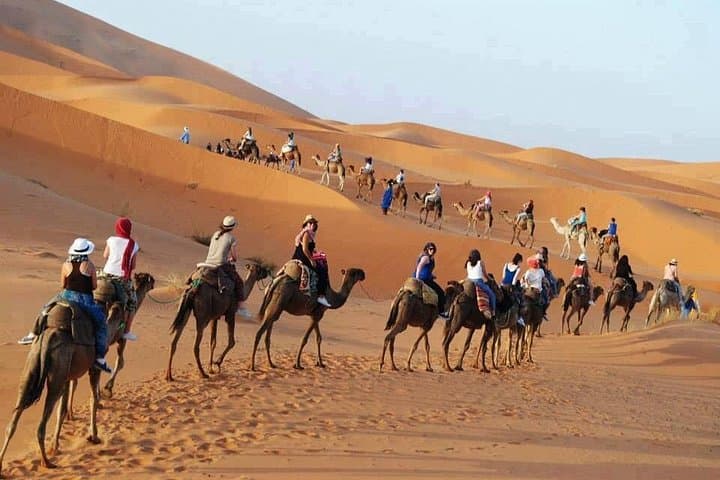
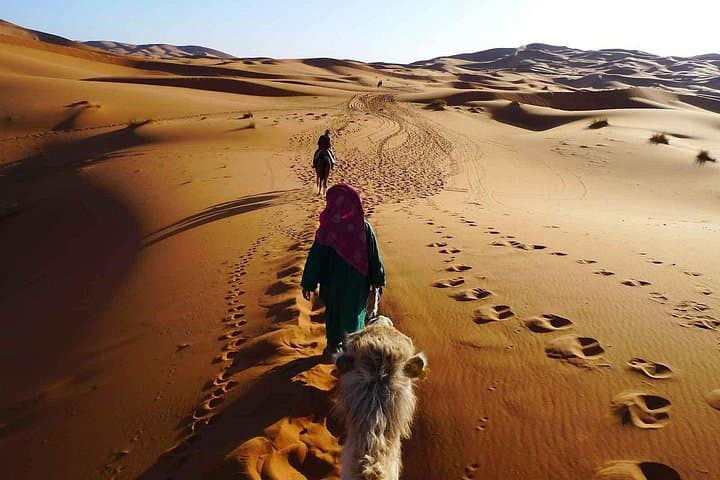
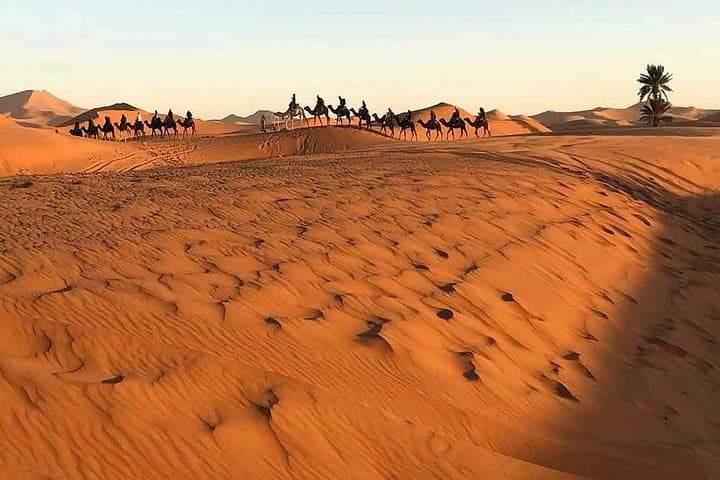
Cross the High Atlas and follow the Draa Valley to Merzouga on this four-day loop from Marrakech. Camp beneath vast skies, ride camels over Erg Chebbi, and explore kasbahs, gorges and oasis towns along the Road of 1,000 Kasbahs.
Cross the High Atlas and follow the Draa Valley to Merzouga on this four-day loop from Marrakech. Camp beneath vast skies, ride camels over Erg Chebbi, and explore kasbahs, gorges and oasis towns along the Road of 1,000 Kasbahs.
You leave Marrakech at dawn, tucking the ochre city behind you as the road climbs into the High Atlas. The minivan hums over the Tizi-n-Tichka pass; stone villages slide by, goats pick their way across terraced fields, and the wind off the mountains begins to taste of sand. By evening the palms of the Draa Valley fold open, then the dunes of Merzouga rise like a slow-moving sea that dares you to walk its crests.
Verified experiences and guided adventures in the surrounding area.
Operated by Atlas Discovery Tours · Marrakech, Marrakech-Safi
You leave Marrakech at dawn, tucking the ochre city behind you as the road climbs into the High Atlas. The minivan hums over the Tizi-n-Tichka pass; stone villages slide by, goats pick their way across terraced fields, and the wind off the mountains begins to taste of sand. By evening the palms of the Draa Valley fold open, then the dunes of Merzouga rise like a slow-moving sea that dares you to walk its crests.
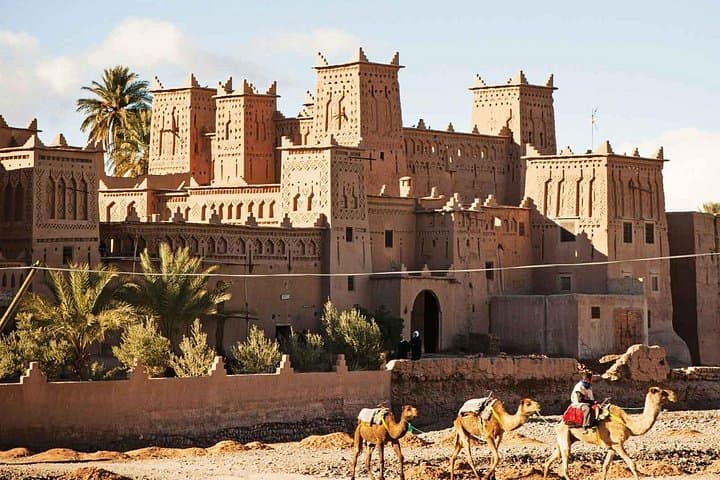
This route threads history and geology: kasbah-built earthen architecture along the Road of 1,000 Kasbahs, the fossil-rich layers around Erfoud, and the carved limestone walls of Todgha Gorge where a river has patiently cut a corridor into the High Atlas. Berber culture remains visible in village life and in local music around desert campfires, while Ait Benhaddou stands as a fortified example of southern Moroccan kasbah construction and trade-route heritage.
Practical guidance: expect long drives—four days combine multiple scenic drives with camel transfers—pack for heat by day and cool nights, and bring sturdy shoes for short walks on uneven sand and rock. Sunrise and sunset on the dunes are the best light for photos and the coolest times to trek. Hydrate regularly; sun protection and layered clothing are essential as desert temperatures swing.
Logistics: transport and two nights in desert camps are included; some lunches and site entrance fees are typically paid locally. Ask about pickup/drop-off times and confirm luggage limits for the camel transfers.
moderate.
4 days.
Suitable for travelers in average fitness: short camel treks and light dune walks, but expect hours in a vehicle and uneven terrain for brief hikes.
Camel rides are gentle and guided—most guests find them low-impact; dune walks can be moderate depending on distance and sand depth, but are optional and paced for comfort.
The tour includes pickup, A/C vehicle transport, most breakfasts and dinners, and two desert camp nights; some lunches and site fees are usually paid locally—confirm at booking.
Bring warm layers, a sleeping layer if you sleep in basic tents, toiletries, and any personal medication—your guide will advise on luggage limits for camel transfers.
You cross the Tizi-n-Tichka pass (~2,260 m) but altitude effects are minimal for most travelers; allow extra time if you have health concerns and notify your operator in advance.
The route follows historic caravan roads between Marrakech and Saharan trade centers; Ait Benhaddou was a strategic stop for trans-Sahara caravans and later a film location.
Visitors are encouraged to minimize plastic use in fragile oasis and dune environments; respect local grazing practices and stick to marked routes to reduce erosion.
Atlas Discovery Tours operates guided outdoor trips and adventures with an emphasis on safety, stewardship, and memorable experiences.
You leave Marrakech at dawn, tucking the ochre city behind you as the road climbs into the High Atlas. The minivan hums over the Tizi-n-Tichka pass; stone villages slide by, goats pick their way across terraced fields, and the wind off the mountains begins to taste of sand. By evening the palms of the Draa Valley fold open, then the dunes of Merzouga rise like a slow-moving sea that dares you to walk its crests.
You leave Marrakech at dawn, tucking the ochre city behind you as the road climbs into the High Atlas. The minivan hums over the Tizi-n-Tichka pass; stone villages slide by, goats pick their way across terraced fields, and the wind off the mountains begins to taste of sand. By evening the palms of the Draa Valley fold open, then the dunes of Merzouga rise like a slow-moving sea that dares you to walk its crests.
This route threads history and geology: kasbah-built earthen architecture along the Road of 1,000 Kasbahs, the fossil-rich layers around Erfoud, and the carved limestone walls of Todgha Gorge where a river has patiently cut a corridor into the High Atlas. Berber culture remains visible in village life and in local music around desert campfires, while Ait Benhaddou stands as a fortified example of southern Moroccan kasbah construction and trade-route heritage.
Practical guidance: expect long drives—four days combine multiple scenic drives with camel transfers—pack for heat by day and cool nights, and bring sturdy shoes for short walks on uneven sand and rock. Sunrise and sunset on the dunes are the best light for photos and the coolest times to trek. Hydrate regularly; sun protection and layered clothing are essential as desert temperatures swing.
Logistics: transport and two nights in desert camps are included; some lunches and site entrance fees are typically paid locally. Ask about pickup/drop-off times and confirm luggage limits for the camel transfers.