THE ADVENTURE COLLECTIVE® · Independent discovery and booking for outdoor travel

Walk across great dunes with a nomadic guide and camel caravan on this four-day Sahara hike from Mhamid. Expect quiet desert days, star-filled nights, and visits to palm oases and local marabouts.
Walk across great dunes with a nomadic guide and camel caravan on this four-day Sahara hike from Mhamid. Expect quiet desert days, star-filled nights, and visits to palm oases and local marabouts.
Dawn pours gold across rippling dunes as your camel caravan nudges forward and the last palms of the Draa valley recede behind you. The air is sharp and dry; footprints and camel tracks stitch a temporary route across sand that shifts with every wind. Over four days you walk with a professional nomadic guide, carry minimal gear, and sleep in mobile camps where the sky reads like a catalog of stars.
Verified experiences and guided adventures in the surrounding area.
Operated by Desertbrise Travel · M'Hamid El Ghizlane, Drâa-Tafilalet
Dawn pours gold across rippling dunes as your camel caravan nudges forward and the last palms of the Draa valley recede behind you. The air is sharp and dry; footprints and camel tracks stitch a temporary route across sand that shifts with every wind. Over four days you walk with a professional nomadic guide, carry minimal gear, and sleep in mobile camps where the sky reads like a catalog of stars.
This route follows age-old caravan corridors through the Moroccan Sahara, passing small palm oases, marabout sites, and the ochre kasbahs you first glimpsed beyond the Atlas foothills. Geologically the landscape alternates between wind-scoured sand seas (ergs) and stony plateaus—each step on sand feels looser and more deliberate than on packed trails. Culturally, you’ll meet local nomadic traditions: tea rituals, oral histories at marabouts, and practical desert knowledge passed down generations.
Expect moderate daily walking—minutes stretch into hours by the rhythm of the sun—and afternoons shaded under tamarisks for lunch and rest. Camels carry the heavy loads; you carry a daypack. Nights can be warm under stars or surprisingly cold; the dunes hold daytime heat and surrender it quickly after sunset.
Practical tips: start early to avoid peak heat, protect skin and eyes from reflected sunlight, and ration water even when mineral water is provided. Respect local customs at villages and marabout sites. This trek is immersive and low-impact—leave only footprints and take the quiet with you.
moderate.
4 days.
Suitable for people in general good health with basic endurance — expect several hours of walking on sand daily.
Daily walking is moderate: several hours over soft sand and rocky plateaus. Camels carry luggage so you only need a daypack; basic endurance is recommended.
Yes—breakfasts, lunches and dinners are included as specified, and mineral water is provided, but you should still carry your own water and rehydration supplies.
Accommodation is in mobile camps—tents or sleeping under the stars depending on the night and your preference; the operator offers nomadic-standard camps.
Not recommended for pregnant travelers; suitability for children depends on age and fitness—check with the operator for specifics.
This route follows historical caravan tracks that linked southern oases to the Atlas foothills; Ait Benhaddou and kasbahs along the way reflect centuries of trade and fortified settlement.
The Sahara’s ecosystems are fragile—stick to established tracks where possible, pack out waste, and minimize water use; local guides emphasize low-impact practices.
Desertbrise Travel operates guided outdoor trips and adventures with an emphasis on safety, stewardship, and memorable experiences.


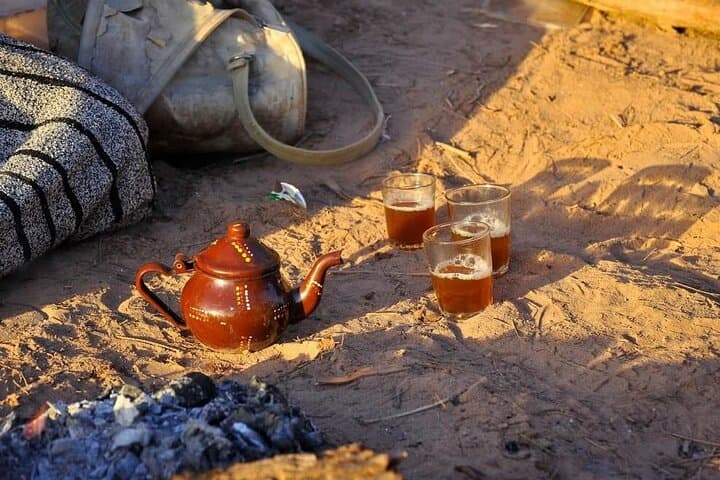

Dawn pours gold across rippling dunes as your camel caravan nudges forward and the last palms of the Draa valley recede behind you. The air is sharp and dry; footprints and camel tracks stitch a temporary route across sand that shifts with every wind. Over four days you walk with a professional nomadic guide, carry minimal gear, and sleep in mobile camps where the sky reads like a catalog of stars.
Dawn pours gold across rippling dunes as your camel caravan nudges forward and the last palms of the Draa valley recede behind you. The air is sharp and dry; footprints and camel tracks stitch a temporary route across sand that shifts with every wind. Over four days you walk with a professional nomadic guide, carry minimal gear, and sleep in mobile camps where the sky reads like a catalog of stars.
This route follows age-old caravan corridors through the Moroccan Sahara, passing small palm oases, marabout sites, and the ochre kasbahs you first glimpsed beyond the Atlas foothills. Geologically the landscape alternates between wind-scoured sand seas (ergs) and stony plateaus—each step on sand feels looser and more deliberate than on packed trails. Culturally, you’ll meet local nomadic traditions: tea rituals, oral histories at marabouts, and practical desert knowledge passed down generations.
Expect moderate daily walking—minutes stretch into hours by the rhythm of the sun—and afternoons shaded under tamarisks for lunch and rest. Camels carry the heavy loads; you carry a daypack. Nights can be warm under stars or surprisingly cold; the dunes hold daytime heat and surrender it quickly after sunset.
Practical tips: start early to avoid peak heat, protect skin and eyes from reflected sunlight, and ration water even when mineral water is provided. Respect local customs at villages and marabout sites. This trek is immersive and low-impact—leave only footprints and take the quiet with you.