THE ADVENTURE COLLECTIVE® · Independent discovery and booking for outdoor travel

Cross the High Atlas, ride camels to gigantic dunes, and sleep under high desert stars on a private four-day Saharan journey. This itinerary pairs cinematic kasbahs with remote Erg Chegaga scenery and guided nomad hospitality.
Cross the High Atlas, ride camels to gigantic dunes, and sleep under high desert stars on a private four-day Saharan journey. This itinerary pairs cinematic kasbahs with remote Erg Chegaga scenery and guided nomad hospitality.
You step off the 4x4 onto a shoulder of sand as the light thins and the dune exhales — a ridgeline of wind-scoured gold that seems to move under your feet. Camels stand like patient silhouettes; the desert stretches toward a horizon that swallows sound and sharpens the sky.
Verified experiences and guided adventures in the surrounding area.
Operated by Z Marrakch Travel · M'Hamid El Ghizlane, Drâa-Tafilalet
You step off the 4x4 onto a shoulder of sand as the light thins and the dune exhales — a ridgeline of wind-scoured gold that seems to move under your feet. Camels stand like patient silhouettes; the desert stretches toward a horizon that swallows sound and sharpens the sky.
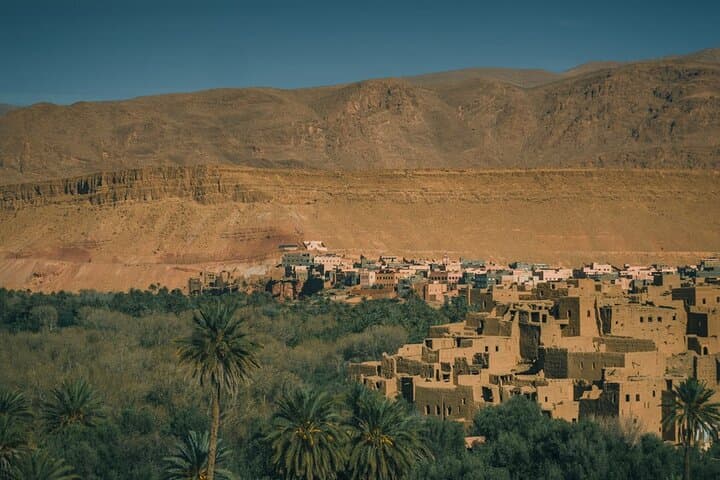
This four-day private route traces a classic southern Morocco corridor: Marrakech, the Tizi-n-Tichka pass across the High Atlas, the mud-brick drama of Ait Ben Haddou, cinematic Ouarzazate, and then farther south through palmeries and caravan roads to M’Hamid and the great Erg Chegaga dunes. Geologically the landscape shifts from stony hammada and compact reg to soft erg — dunes formed by millennia of wind and occasional torrents — and you’ll cross fossil-rich flats and seasonal salt pans near Lake Iriqui.
Cultural notes arrive in the form of kasbah ruins, the Quranic library at Tamegroute, Berber carpet cooperatives, and nights in nomad-style camps where musicians keep oral histories moving across generations. Local guides (many from Saharan nomad families) read the land the way others read maps.
Practical guidance: travel light but layered — days are hot, nights drop sharply. Footwear with closed toes and good tread helps for dune traverses; a sun hat, high-SPF sunscreen and at least 2–3 liters of water per day are essential. Camel rides to dune crests are typically 1–2 hours; expect several hours of 4x4 driving on rough tracks. Aim for sunrise or sunset on the dunes for the best light and cooler conditions, and plan for basic camping comforts rather than luxury conveniences in remote bivouacs.
moderate.
4 days.
Moderate stamina for short camel treks and walking on dunes; comfortable with several hours in a vehicle each day.
Camel rides to dune bases are gentle and suitable for most people; they typically last 1–2 hours and include short periods of walking on foot over sand.
Accommodations range from basic nomad tents at desert bivouacs to luxury desert camps; confirm the level when booking and expect simpler facilities in remote sites.
Yes—families often travel this route, but long drives and overnight camps may be tiring for very young children; check camel seat options and vehicle access for infants.
Visitors should carry travel health insurance, check vaccination requirements for Morocco, and confirm visa rules based on their nationality before travel.
This corridor was once part of trans-Saharan caravan routes; kasbahs and palmeries grew around trade in salt, dates and textiles, shaped by Berber and Arab cultures.
Dune ecosystems and oases are sensitive to erosion and overuse—stay on established paths, pack out waste, and avoid disturbing native plants and archaeological sites.
Z Marrakch Travel operates guided outdoor trips and adventures with an emphasis on safety, stewardship, and memorable experiences.
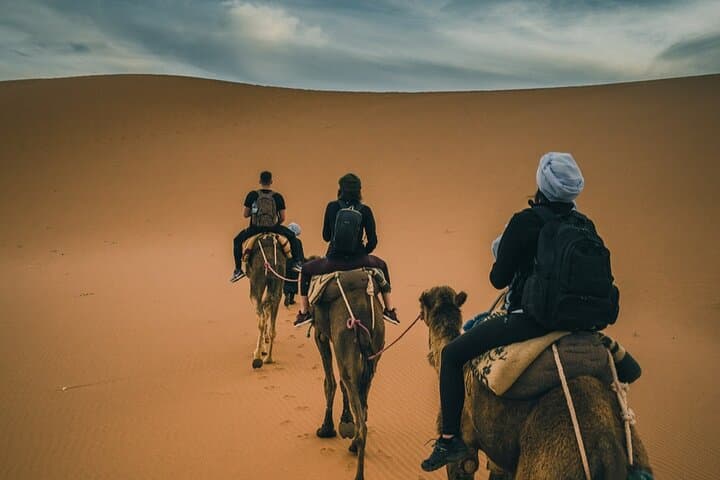
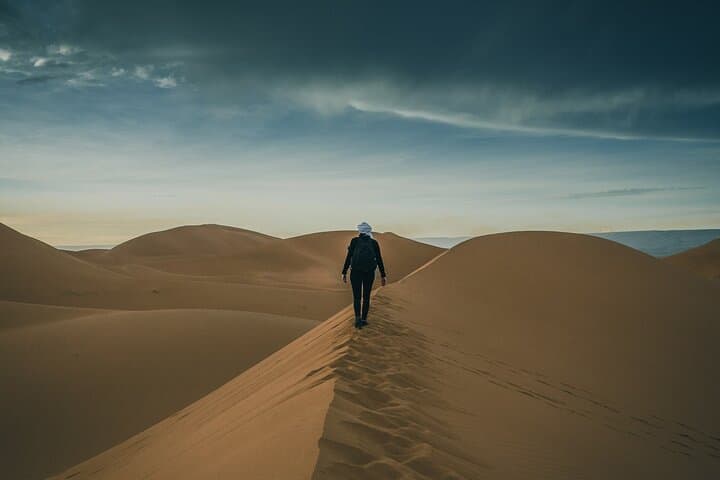

You step off the 4x4 onto a shoulder of sand as the light thins and the dune exhales — a ridgeline of wind-scoured gold that seems to move under your feet. Camels stand like patient silhouettes; the desert stretches toward a horizon that swallows sound and sharpens the sky.
You step off the 4x4 onto a shoulder of sand as the light thins and the dune exhales — a ridgeline of wind-scoured gold that seems to move under your feet. Camels stand like patient silhouettes; the desert stretches toward a horizon that swallows sound and sharpens the sky.
This four-day private route traces a classic southern Morocco corridor: Marrakech, the Tizi-n-Tichka pass across the High Atlas, the mud-brick drama of Ait Ben Haddou, cinematic Ouarzazate, and then farther south through palmeries and caravan roads to M’Hamid and the great Erg Chegaga dunes. Geologically the landscape shifts from stony hammada and compact reg to soft erg — dunes formed by millennia of wind and occasional torrents — and you’ll cross fossil-rich flats and seasonal salt pans near Lake Iriqui.
Cultural notes arrive in the form of kasbah ruins, the Quranic library at Tamegroute, Berber carpet cooperatives, and nights in nomad-style camps where musicians keep oral histories moving across generations. Local guides (many from Saharan nomad families) read the land the way others read maps.
Practical guidance: travel light but layered — days are hot, nights drop sharply. Footwear with closed toes and good tread helps for dune traverses; a sun hat, high-SPF sunscreen and at least 2–3 liters of water per day are essential. Camel rides to dune crests are typically 1–2 hours; expect several hours of 4x4 driving on rough tracks. Aim for sunrise or sunset on the dunes for the best light and cooler conditions, and plan for basic camping comforts rather than luxury conveniences in remote bivouacs.