THE ADVENTURE COLLECTIVE® · Independent discovery and booking for outdoor travel

A focused four-day private safari that visits Tarangire’s elephant-rich river, the sweeping plains of the Serengeti, and the depth of Ngorongoro Crater. Expect long drives, focused game drives, and strong wildlife encounters with an experienced guide.
A focused four-day private safari that visits Tarangire’s elephant-rich river, the sweeping plains of the Serengeti, and the depth of Ngorongoro Crater. Expect long drives, focused game drives, and strong wildlife encounters with an experienced guide.
Dawn light filters through the acacia as your private 4x4 rolls onto the Tarangire plains, the river ahead humming with elephant activity. Dust rises in bands from distant herds, and your guide lifts a hand to point: a lone baobab, a tower of knobbly branches, watches the scene like an old guardian.
Verified experiences and guided adventures in the surrounding area.
Operated by ZAFS Tours · Arusha, Arusha Region
Dawn light filters through the acacia as your private 4x4 rolls onto the Tarangire plains, the river ahead humming with elephant activity. Dust rises in bands from distant herds, and your guide lifts a hand to point: a lone baobab, a tower of knobbly branches, watches the scene like an old guardian.
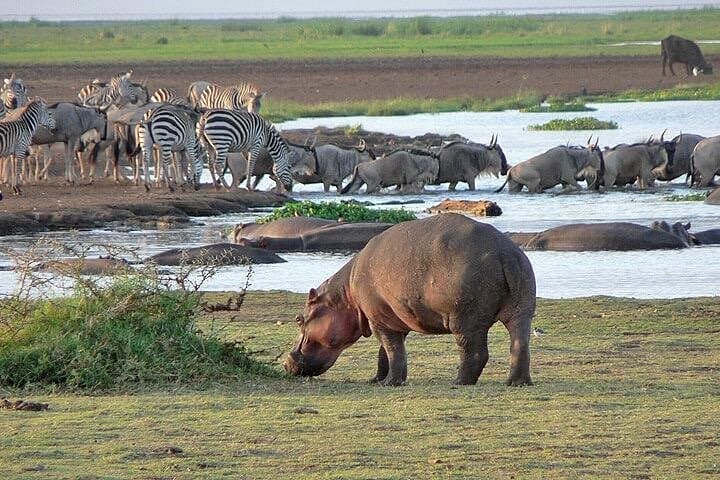
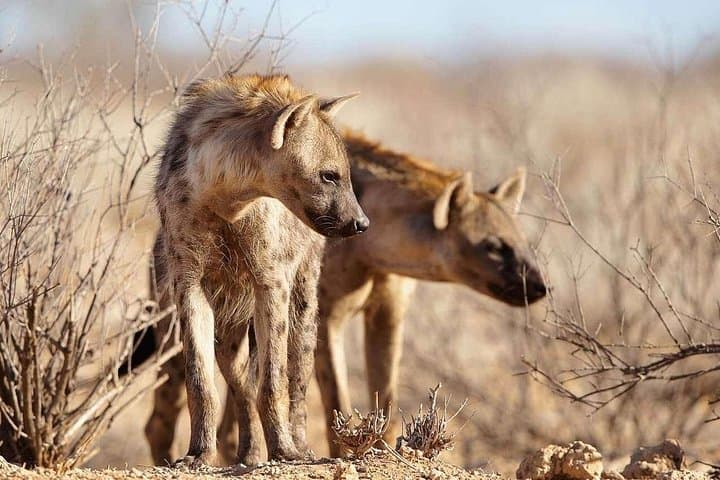
This compact four-day loop stitches together three of northern Tanzania’s most powerful wildlife arenas. Tarangire’s river corridor concentrates elephants and waterbirds, the Serengeti’s grassy plains host vast herds and predators, and Ngorongoro’s caldera — a 260 km2 volcanic bowl formed 2–3 million years ago — funnels a dense mix of species onto its floor. Culturally, the route crosses Maasai grazing lands and the Ngorongoro Conservation Area, where pastoral traditions and wildlife management coexist.
Expect long but rewarding driving days (Serengeti transfers can be ~4 hours across gravel and conservation road), multiple 3–5 hour game drives, and a dramatic 610 m descent into the crater. Terrain shifts from riparian woodland and baobab-studded savanna to open grassy plains and a volcanic basin; elevation ranges from roughly 1,200–2,200 m depending on camp and rim positions.
Practical pointers: travel light, pack sun protection and a good pair of binoculars, and plan for early starts to catch predators and cooler air. Vehicles are high-clearance but can be bumpy; motion sensitivity and basic mobility are considerations. A professional guide handles permits, park fees, and route timing — all included — leaving you to focus on fieldcraft: patient observation, steady camera work, and respectful distance from wildlife.
moderate.
4 days.
Basic fitness for multiple 3–5 hour game drives and short walks; ability to climb in/out of safari vehicles helpful
Yes—this itinerary lists all park and crater fees as included in the package price.
Drives commonly start at first light (around 5:30–6:00am) to maximize predator activity and cooler temperatures.
Accommodations vary by night but are full-board and range from permanent lodges to tented camps as listed in the itinerary.
Consult your travel clinic—yellow fever requirements and malaria prophylaxis depend on your origin and current health guidance.
Ngorongoro was formed when a volcanic massif collapsed 2–3 million years ago; its intact caldera now supports exceptionally dense wildlife populations.
The Ngorongoro Conservation Area balances pastoral Maasai land use with wildlife protection; visitors should stick to designated roads and follow guide directions to reduce disturbance.
ZAFS Tours operates guided outdoor trips and adventures with an emphasis on safety, stewardship, and memorable experiences.
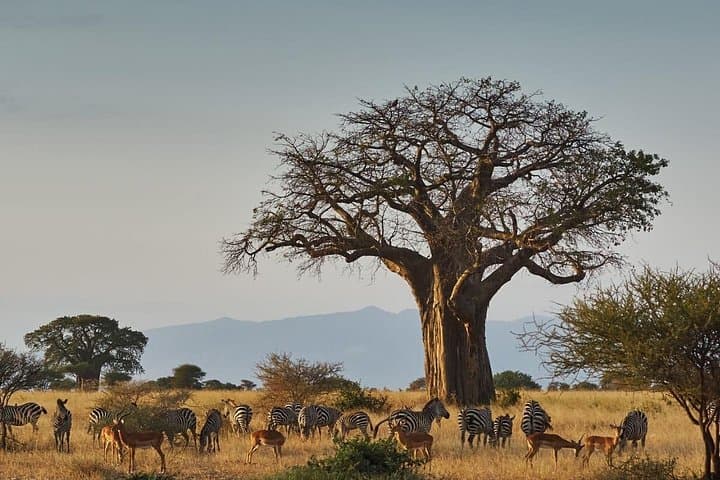
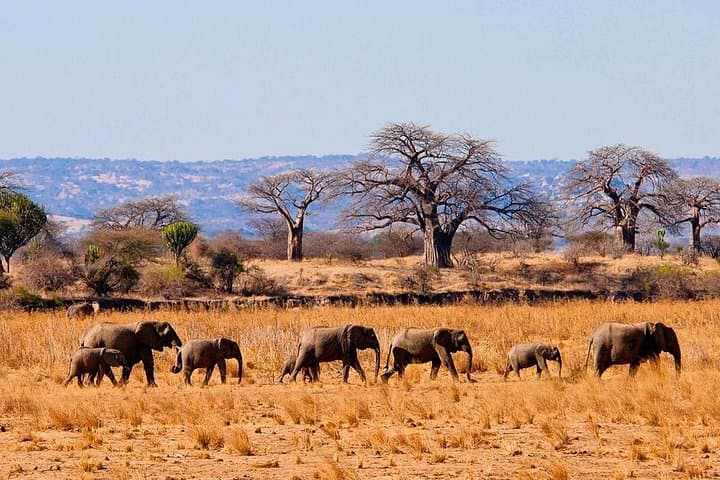
Dawn light filters through the acacia as your private 4x4 rolls onto the Tarangire plains, the river ahead humming with elephant activity. Dust rises in bands from distant herds, and your guide lifts a hand to point: a lone baobab, a tower of knobbly branches, watches the scene like an old guardian.
Dawn light filters through the acacia as your private 4x4 rolls onto the Tarangire plains, the river ahead humming with elephant activity. Dust rises in bands from distant herds, and your guide lifts a hand to point: a lone baobab, a tower of knobbly branches, watches the scene like an old guardian.
This compact four-day loop stitches together three of northern Tanzania’s most powerful wildlife arenas. Tarangire’s river corridor concentrates elephants and waterbirds, the Serengeti’s grassy plains host vast herds and predators, and Ngorongoro’s caldera — a 260 km2 volcanic bowl formed 2–3 million years ago — funnels a dense mix of species onto its floor. Culturally, the route crosses Maasai grazing lands and the Ngorongoro Conservation Area, where pastoral traditions and wildlife management coexist.
Expect long but rewarding driving days (Serengeti transfers can be ~4 hours across gravel and conservation road), multiple 3–5 hour game drives, and a dramatic 610 m descent into the crater. Terrain shifts from riparian woodland and baobab-studded savanna to open grassy plains and a volcanic basin; elevation ranges from roughly 1,200–2,200 m depending on camp and rim positions.
Practical pointers: travel light, pack sun protection and a good pair of binoculars, and plan for early starts to catch predators and cooler air. Vehicles are high-clearance but can be bumpy; motion sensitivity and basic mobility are considerations. A professional guide handles permits, park fees, and route timing — all included — leaving you to focus on fieldcraft: patient observation, steady camera work, and respectful distance from wildlife.