THE ADVENTURE COLLECTIVE® · Independent discovery and booking for outdoor travel

A focused four-day ascent of Mount Meru that trades crowds for commitment: steep ridgelines, a pre-dawn summit push, and a crater rim sunrise with a chance to see Kilimanjaro above the clouds. Perfect for climbers looking for technical exposure without fixed-rope climbing.
A focused four-day ascent of Mount Meru that trades crowds for commitment: steep ridgelines, a pre-dawn summit push, and a crater rim sunrise with a chance to see Kilimanjaro above the clouds. Perfect for climbers looking for technical exposure without fixed-rope climbing.
You step out of the jeep before dawn and the profile of Mount Meru looms like a sleeping giant—dark, curved, and impossibly steep against the faint orange of the horizon. The trail from Momella Gate immediately climbs, the path carving through acacia and montane forest where colobus monkeys flit and the ground hums with insects. By the time you reach Miriakamba Hut the air has thinned and the crater’s inner walls begin to show: a raw, volcanic amphitheater that demands respect.
Verified experiences and guided adventures in the surrounding area.
Operated by Climb Kili · Arusha, Arusha Region
You step out of the jeep before dawn and the profile of Mount Meru looms like a sleeping giant—dark, curved, and impossibly steep against the faint orange of the horizon. The trail from Momella Gate immediately climbs, the path carving through acacia and montane forest where colobus monkeys flit and the ground hums with insects. By the time you reach Miriakamba Hut the air has thinned and the crater’s inner walls begin to show: a raw, volcanic amphitheater that demands respect.
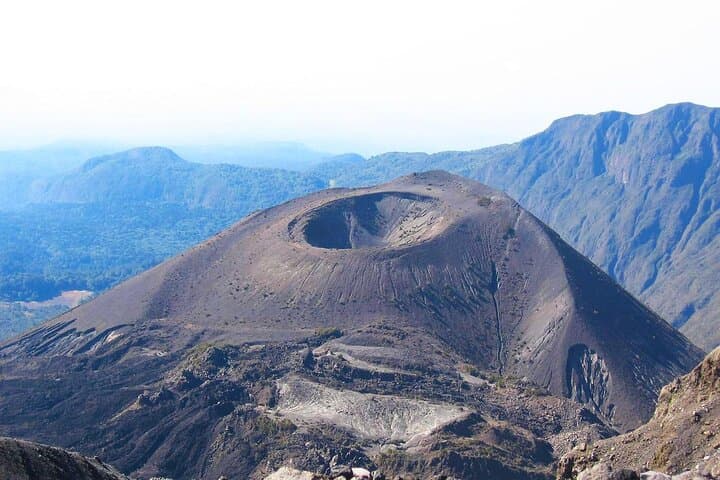
Mount Meru is Kilimanjaro’s quieter sister: younger, steeper, and geologically complex. Formed by repeated eruptions and a massive collapse that created the ash cone and inner crater, Meru’s ridgelines offer dramatic views into a caldera and, on a clear morning, a ghostly Kilimanjaro peak breaking above the cloud layer. Culturally, the mountain sits in Maasai grazing country and near Arusha’s agricultural belt; routes cut through land where local guides still read weather from the same slopes their grandparents did.
The itinerary is direct and demanding. Day 1 climbs roughly 6.8 miles to Miriakamba Hut at about 2,865 m, passing savanna and forest with an armed ranger escort due to occasional elephant and buffalo in the park. Day 2 is a sharp push to Saddle Hut (≈3,500 m) with an optional late-afternoon scramble to Little Meru (3,820 m) for sunset. Day 3 starts around 1:30 a.m.—a 10–12 hour summit push via Rhino Point and Cobra Point, with the final narrow ridge offering one of East Africa’s most exposed summit approaches before the 4,566 m summit and sunrise. Day 4 is a quick descent to Momella Gate and return to Arusha.
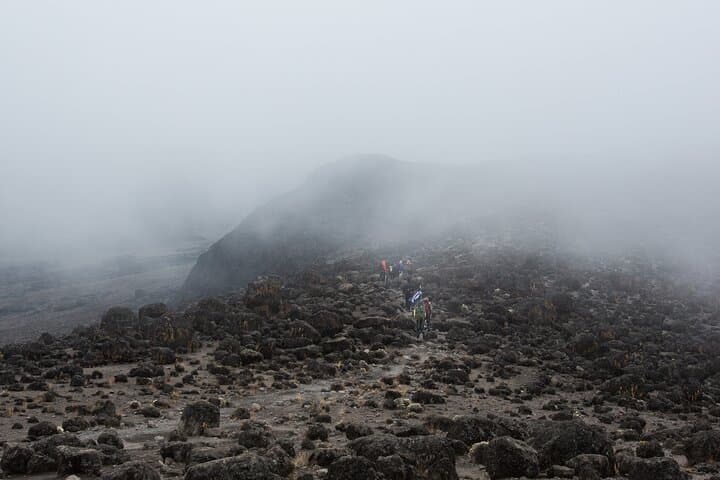
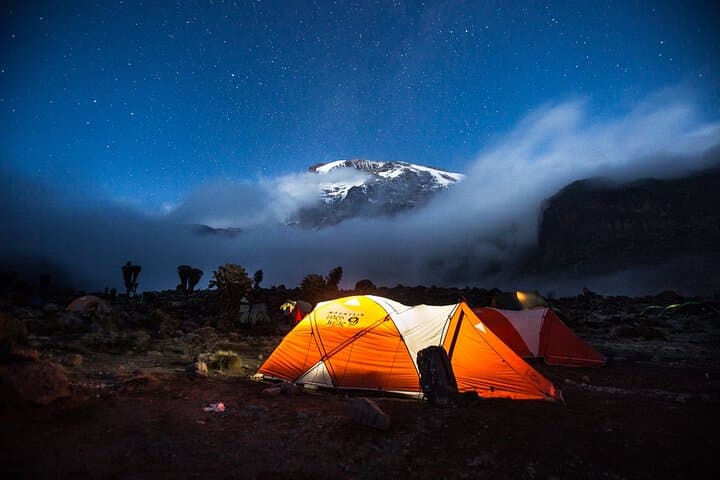
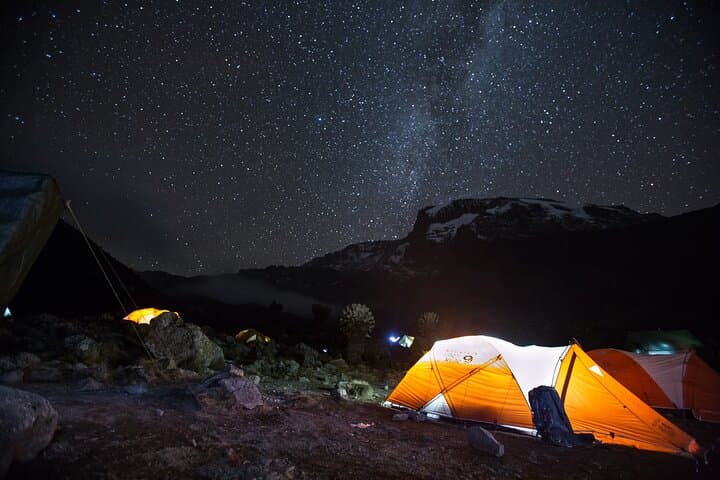
Practical edge: the climb is technical only in exposure and endurance, not in rope work. You’ll sleep in camp tents, eat five days of meals provided, and travel with porters and experienced guides. Altitude is the real challenge—acclimatization strategy, steady pacing, and hydration are non-negotiable. Expect loose scree on upper slopes, steep switchbacks, and a final ridge where footing matters.
Book transport from Arusha (pickup included), and plan for high physical exertion—train on sustained uphill hikes, and test gear in cold nights. Pack layers for sub-zero summit temperatures and waterproof shells for the region’s unpredictable rains. With careful preparation, Meru delivers a high-reward mountain day: solitude, crater views that dare you closer, and a sunrise that can reveal Kilimanjaro’s peak sitting like a crown beyond the clouds.
challenging.
4 days (total hiking time 20–26 hours).
You should be in strong aerobic condition—regular uphill hikes, stair sessions, and long-day conditioning are recommended.
No ropes or technical gear are required; however the route is exposed and steep in places, so good balance and experience on steep terrain helps.
Summit altitude is 4,566 m; acclimatization on the itinerary reduces risk but be prepared for shortness of breath, headaches, and slower pace—inform guides of symptoms early.
Yes—experienced guides, porters, camping equipment, and meals for the four days are provided as part of the tour.
Camp-style pit toilets are used at huts; on steeper sections you may need to use alpine toileting protocols—bring hand sanitizer and toilet paper.
Dry months (January–March and June–October) offer the most stable conditions and clearer summit views, though climbs run year-round with weather variability.
No—this climb is not recommended for pregnant travelers due to altitude and physical demands.
Meru’s eruptive history and crater collapse created its distinctive ash cone and inner caldera; the mountain has long been a navigational landmark for local Maasai and Kikuya communities.
Mount Meru sits inside Arusha National Park—stay on trails, avoid single-use plastics in camp, and follow guide instructions to minimize wildlife disturbance.
Climb Kili operates guided outdoor trips and adventures with an emphasis on safety, stewardship, and memorable experiences.
You step out of the jeep before dawn and the profile of Mount Meru looms like a sleeping giant—dark, curved, and impossibly steep against the faint orange of the horizon. The trail from Momella Gate immediately climbs, the path carving through acacia and montane forest where colobus monkeys flit and the ground hums with insects. By the time you reach Miriakamba Hut the air has thinned and the crater’s inner walls begin to show: a raw, volcanic amphitheater that demands respect.
You step out of the jeep before dawn and the profile of Mount Meru looms like a sleeping giant—dark, curved, and impossibly steep against the faint orange of the horizon. The trail from Momella Gate immediately climbs, the path carving through acacia and montane forest where colobus monkeys flit and the ground hums with insects. By the time you reach Miriakamba Hut the air has thinned and the crater’s inner walls begin to show: a raw, volcanic amphitheater that demands respect.
Mount Meru is Kilimanjaro’s quieter sister: younger, steeper, and geologically complex. Formed by repeated eruptions and a massive collapse that created the ash cone and inner crater, Meru’s ridgelines offer dramatic views into a caldera and, on a clear morning, a ghostly Kilimanjaro peak breaking above the cloud layer. Culturally, the mountain sits in Maasai grazing country and near Arusha’s agricultural belt; routes cut through land where local guides still read weather from the same slopes their grandparents did.
The itinerary is direct and demanding. Day 1 climbs roughly 6.8 miles to Miriakamba Hut at about 2,865 m, passing savanna and forest with an armed ranger escort due to occasional elephant and buffalo in the park. Day 2 is a sharp push to Saddle Hut (≈3,500 m) with an optional late-afternoon scramble to Little Meru (3,820 m) for sunset. Day 3 starts around 1:30 a.m.—a 10–12 hour summit push via Rhino Point and Cobra Point, with the final narrow ridge offering one of East Africa’s most exposed summit approaches before the 4,566 m summit and sunrise. Day 4 is a quick descent to Momella Gate and return to Arusha.
Practical edge: the climb is technical only in exposure and endurance, not in rope work. You’ll sleep in camp tents, eat five days of meals provided, and travel with porters and experienced guides. Altitude is the real challenge—acclimatization strategy, steady pacing, and hydration are non-negotiable. Expect loose scree on upper slopes, steep switchbacks, and a final ridge where footing matters.
Book transport from Arusha (pickup included), and plan for high physical exertion—train on sustained uphill hikes, and test gear in cold nights. Pack layers for sub-zero summit temperatures and waterproof shells for the region’s unpredictable rains. With careful preparation, Meru delivers a high-reward mountain day: solitude, crater views that dare you closer, and a sunrise that can reveal Kilimanjaro’s peak sitting like a crown beyond the clouds.