THE ADVENTURE COLLECTIVE® · Independent discovery and booking for outdoor travel

A private, four-day loop from Marrakech to Merzouga that threads High Atlas passes, fortified kasbahs, gorge country and the orange dunes of Erg Chebbi. Expect long drives, short hikes, a camel ride and an overnight in a desert camp under stars.
A private, four-day loop from Marrakech to Merzouga that threads High Atlas passes, fortified kasbahs, gorge country and the orange dunes of Erg Chebbi. Expect long drives, short hikes, a camel ride and an overnight in a desert camp under stars.
Morning in Marrakech smells of spice and diesel as your private vehicle slips out of the city and climbs toward the High Atlas. The road tightens at Tizi n’Tichka (2,260 m), where dry wind scours red earth from ridgelines and small Berber villages watch the valley below. By late afternoon you’ll be moving through the mud-brick alleys of Aït Benhaddou, then slotting into the twisting gorge country of the Dades.
Verified experiences and guided adventures in the surrounding area.
Operated by Mhidi Travel · Merzouga, Drâa-Tafilalet
Morning in Marrakech smells of spice and diesel as your private vehicle slips out of the city and climbs toward the High Atlas. The road tightens at Tizi n’Tichka (2,260 m), where dry wind scours red earth from ridgelines and small Berber villages watch the valley below. By late afternoon you’ll be moving through the mud-brick alleys of Aït Benhaddou, then slotting into the twisting gorge country of the Dades.
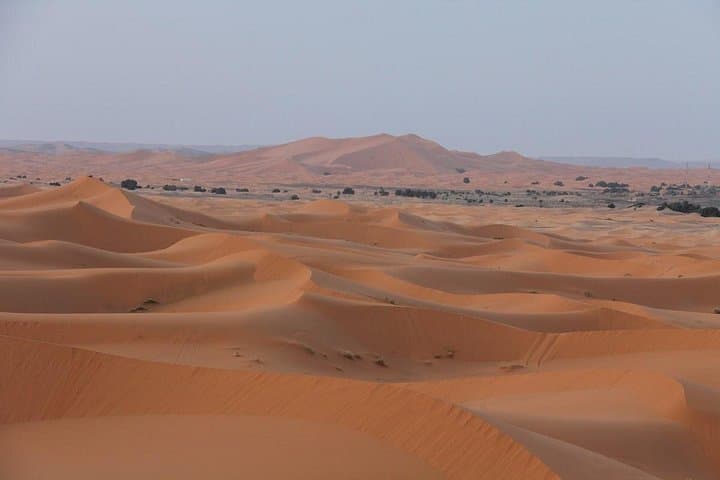
On day two the landscape loosens into the ochre sweep of the Tafilalet oasis and finally the dunes of Erg Chebbi near Merzouga. Sand here is alive—ridges that push and reform with each wind; climb a dune at sunset and the horizon becomes a slow-moving ocean. Afternoons bring camel treks and evenings gather around a campfire as local musicians keep time.
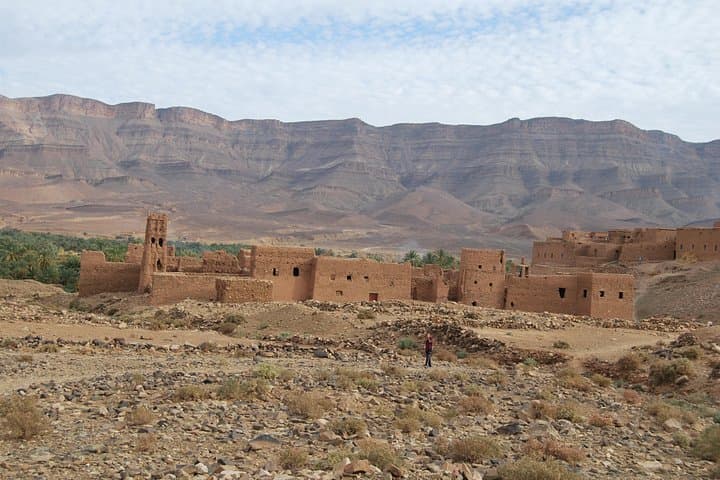
Geology and history are visible at every turn: fortress kasbahs that served former caravan routes, river-cut gorges through limestone, and alluvial plains that feed date palm oases. Culture is hands-on—market towns like Rissani still trade in goods and stories.
Practical notes: expect multiple long drives (Marrakech–Merzouga ~9–10 hours by road spread across days), high-plateau passes, and basic desert camp accommodations. Pack layers for hot days and cool nights, sunscreen, and a small daypack for dune walks. If you’re aiming for strong photos, target sunrise over the dunes when light is flat and shadows lengthen.
moderate.
4 days (approx. 48–60 hours including transfers).
Suitable for travelers with general fitness who can handle several hours of driving, short dune climbs and basic walking on uneven sand and gravel.
Yes—private pickup and drop-off in Marrakech are included; confirm your pickup point at booking.
Camps are basic to comfortable: equipped tents with bedding, shared facilities and traditional meals, but expect simple amenities.
Children are allowed but must be accompanied by an adult; camel treks and desert conditions may be challenging for very young kids.
Travel insurance covering medical evacuation is recommended; no special vaccinations are universally required but check with your health provider for current advice.
This route follows historic caravan corridors linking sub‑Saharan trade with Marrakech; kasbahs like Aït Benhaddou once protected merchants and granaries.
The region faces water scarcity and fragile dune ecosystems—stick to marked routes, minimize water use, and support local guides to promote sustainable tourism.
Mhidi Travel operates guided outdoor trips and adventures with an emphasis on safety, stewardship, and memorable experiences.
Morning in Marrakech smells of spice and diesel as your private vehicle slips out of the city and climbs toward the High Atlas. The road tightens at Tizi n’Tichka (2,260 m), where dry wind scours red earth from ridgelines and small Berber villages watch the valley below. By late afternoon you’ll be moving through the mud-brick alleys of Aït Benhaddou, then slotting into the twisting gorge country of the Dades.
Morning in Marrakech smells of spice and diesel as your private vehicle slips out of the city and climbs toward the High Atlas. The road tightens at Tizi n’Tichka (2,260 m), where dry wind scours red earth from ridgelines and small Berber villages watch the valley below. By late afternoon you’ll be moving through the mud-brick alleys of Aït Benhaddou, then slotting into the twisting gorge country of the Dades.
On day two the landscape loosens into the ochre sweep of the Tafilalet oasis and finally the dunes of Erg Chebbi near Merzouga. Sand here is alive—ridges that push and reform with each wind; climb a dune at sunset and the horizon becomes a slow-moving ocean. Afternoons bring camel treks and evenings gather around a campfire as local musicians keep time.
Geology and history are visible at every turn: fortress kasbahs that served former caravan routes, river-cut gorges through limestone, and alluvial plains that feed date palm oases. Culture is hands-on—market towns like Rissani still trade in goods and stories.
Practical notes: expect multiple long drives (Marrakech–Merzouga ~9–10 hours by road spread across days), high-plateau passes, and basic desert camp accommodations. Pack layers for hot days and cool nights, sunscreen, and a small daypack for dune walks. If you’re aiming for strong photos, target sunrise over the dunes when light is flat and shadows lengthen.