THE ADVENTURE COLLECTIVE® · Independent discovery and booking for outdoor travel

Cross the High Atlas, explore kasbahs and sleep under the stars in Erg Chebbi on a private four-day journey from Marrakech. Expect long scenic drives, a sunset camel trek and sunrise over 100–150 m sand dunes.
Cross the High Atlas, explore kasbahs and sleep under the stars in Erg Chebbi on a private four-day journey from Marrakech. Expect long scenic drives, a sunset camel trek and sunrise over 100–150 m sand dunes.
The sun has thinned to a blade of gold when your convoy slips out of the High Atlas shadows and the road unwinds toward sand. Wind-scoured ridgelines give way to ochre plains; camels lift slow silhouettes against the dune crest as the air cools and the desert seems to breathe around you.
Verified experiences and guided adventures in the surrounding area.
Operated by Sahara desert tour · Merzouga, Drâa-Tafilalet
The sun has thinned to a blade of gold when your convoy slips out of the High Atlas shadows and the road unwinds toward sand. Wind-scoured ridgelines give way to ochre plains; camels lift slow silhouettes against the dune crest as the air cools and the desert seems to breathe around you.
This four-day private route links Marrakech with Merzouga’s Erg Chebbi, threading the Tizi n’Tichka Pass (2,260 m), Ait Ben Haddou’s mud-brick kasbah, the roses and gorges of the Dades and Todgha, and fossil-rich plains near Erfoud. Geologically, Erg Chebbi is a star of wind-driven sand—dunes here can tower to roughly 100–150 m—formed by Saharan pasquinades of wind and seasonal storms. Culturally you’ll pass Berber villages, caravan-era kasbahs and markets that still trade in dates, handwoven cloth and fossil artifacts.
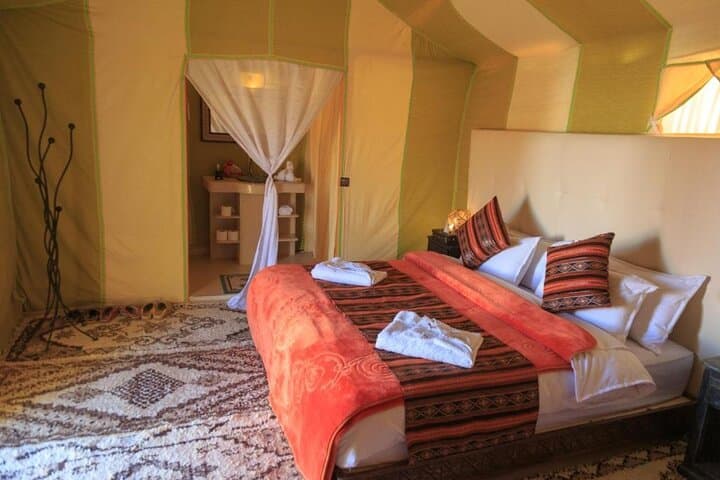
Expect long driving legs—Marrakech to Merzouga is roughly 500–600 km of scenic but sustained travel split across days—balanced by short hikes at gorges and a late-afternoon camel trek to camp. The camel ride into the dunes is gentle but uneven; handlers know the safest lines up the ridges. Camps offer simple comforts: dinner, a drumming circle, and private or shared facilities depending on booking.
Practical notes: hydrate steadily before and during desert days, layer for big diurnal swings (hot days, cold nights), and time your dune walks for sunrise or sunset when sand is firmest. Carry cash for remote towns and respect local customs—modest dress in villages, ask before photographing people. With steady pacing and basic preparation, this itinerary delivers high-desert panoramas, cinematic kasbahs, and an intimate encounter with Sahara light and silence.
moderate.
4 days.
Suitable for travelers with moderate fitness: able to tolerate multi-hour vehicle transfers, short hikes, and 1–2 hour camel rides.
Typical camel treks to the camp are 45–90 minutes each way depending on the camp location and pace; handlers lead safe, steady routes up dune crests.
Options vary; many tours offer private tents or shared facilities—this particular private tour includes an overnight in a desert camp with private bathrooms noted in the inclusions.
The itinerary is rated physically easy for travel but not recommended for those with serious back, heart, or pregnancy-related restrictions; camel mounts and uneven sand may be challenging for mobility-limited travelers.
Bring Moroccan dirham for markets, tips, and small purchases; larger hotels accept cards but remote towns and some camps prefer cash.
The route follows ancient caravan arteries and colonial-era roads; Ait Ben Haddou is a UNESCO-listed ksar that grew wealthy on trans-Saharan trade and later became a famed film location.
The Sahara’s fragile soils and sparse water make low-impact travel essential—stick to marked routes, avoid disturbing wildlife, and minimize single-use plastics to reduce strain on remote communities.
Sahara desert tour operates guided outdoor trips and adventures with an emphasis on safety, stewardship, and memorable experiences.
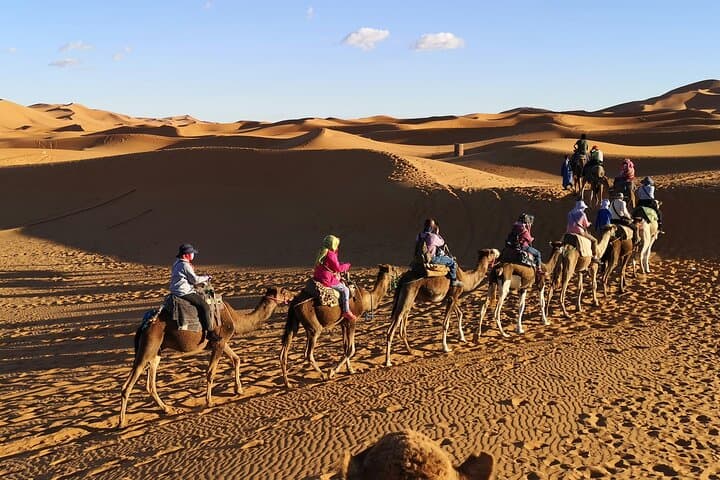

The sun has thinned to a blade of gold when your convoy slips out of the High Atlas shadows and the road unwinds toward sand. Wind-scoured ridgelines give way to ochre plains; camels lift slow silhouettes against the dune crest as the air cools and the desert seems to breathe around you.
The sun has thinned to a blade of gold when your convoy slips out of the High Atlas shadows and the road unwinds toward sand. Wind-scoured ridgelines give way to ochre plains; camels lift slow silhouettes against the dune crest as the air cools and the desert seems to breathe around you.
This four-day private route links Marrakech with Merzouga’s Erg Chebbi, threading the Tizi n’Tichka Pass (2,260 m), Ait Ben Haddou’s mud-brick kasbah, the roses and gorges of the Dades and Todgha, and fossil-rich plains near Erfoud. Geologically, Erg Chebbi is a star of wind-driven sand—dunes here can tower to roughly 100–150 m—formed by Saharan pasquinades of wind and seasonal storms. Culturally you’ll pass Berber villages, caravan-era kasbahs and markets that still trade in dates, handwoven cloth and fossil artifacts.
Expect long driving legs—Marrakech to Merzouga is roughly 500–600 km of scenic but sustained travel split across days—balanced by short hikes at gorges and a late-afternoon camel trek to camp. The camel ride into the dunes is gentle but uneven; handlers know the safest lines up the ridges. Camps offer simple comforts: dinner, a drumming circle, and private or shared facilities depending on booking.
Practical notes: hydrate steadily before and during desert days, layer for big diurnal swings (hot days, cold nights), and time your dune walks for sunrise or sunset when sand is firmest. Carry cash for remote towns and respect local customs—modest dress in villages, ask before photographing people. With steady pacing and basic preparation, this itinerary delivers high-desert panoramas, cinematic kasbahs, and an intimate encounter with Sahara light and silence.