THE ADVENTURE COLLECTIVE® · Independent discovery and booking for outdoor travel

A focused four-day private tour of Lagos that pairs city galleries and markets with coastal nature at Lekki, the sobering history of Badagry, and a climb up Olumo Rock in Abeokuta. Expect humid days, short walks, and local insights from a private guide.
A focused four-day private tour of Lagos that pairs city galleries and markets with coastal nature at Lekki, the sobering history of Badagry, and a climb up Olumo Rock in Abeokuta. Expect humid days, short walks, and local insights from a private guide.
You step out into Lagos with the Atlantic on one side and a metropolis that never pauses on the other: horns, market calls and the smell of grilled fish under a sky that can switch from fierce sun to sudden rain.
Verified experiences and guided adventures in the surrounding area.
Operated by Ucomeafrik-Tours · Lagos, Lagos State
You step out into Lagos with the Atlantic on one side and a metropolis that never pauses on the other: horns, market calls and the smell of grilled fish under a sky that can switch from fierce sun to sudden rain.
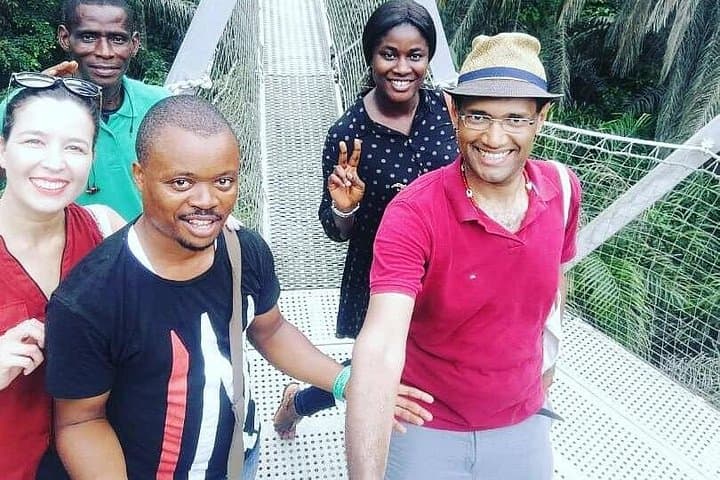
Begin at the Nike Art Gallery where paint and textile crafts speak to generations of West African makers, then move to the Lekki Conservation Centre where a raised boardwalk threads through mangroves and the canopy walkway dares you to look down at herons and the lagoon below. On day three, Badagry’s Slave Museum traces Lagos’s coastal role in transatlantic trade—difficult history presented plainly—before quieter, reflective streets of the town. Finish at Abeokuta with a climb up Olumo Rock, a lateritic outcrop that has long been a strategic refuge for the Egba people and offers wide views of the surrounding plains.
Geology here is coastal and lateritic: sandy lagoons, mangrove roots, and the iron-rich rock of Olumo. Culture is visible in markets, palmwine stalls, and in the Yoruba histories that shape names and rituals across the route. Guides bridge language and context, making museums and monuments feel immediate.
Practical side: expect humid heat, intermittent showers, and uneven paths at heritage sites. Carry water, local currency, and a lightweight rain shell. Wear sturdy shoes for rock and boardwalk sections. Allow time for traffic when moving between island and mainland. This private, four-day loop balances civic history, urban nature, and hands-on cultural encounters—best for travelers who want context-rich exploration without rigid schedules.
moderate.
4 days (approx. 96 hours).
Moderate fitness: comfortable walking, short climbs and some stairs; able to spend full days touring.
Some sites listed (like Nike Art Gallery and Lekki Conservation Centre) are indicated as included; others such as museums in Badagry or Olumo Rock may require separate local fees—confirm with your operator.
The itinerary notes stroller access for infants but advises moderate fitness; steep steps at Olumo Rock and long travel days may be tiring for very young children or those with mobility limits.
Standard travel vaccines are recommended; malaria prophylaxis and up-to-date routine immunizations are advised—check with a travel clinic for personalized guidance.
The tour provides air-conditioned vehicle transport; you’ll confirm a pickup point and flight arrival details during booking so guides can meet you on arrival.
Lagos grew from coastal fishing settlements into a colonial port central to the transatlantic slave trade; Badagry preserves sites tied to that history while Olumo Rock served as a natural fortress for the Egba people.
The Lekki Conservation Centre is managed by the Nigerian Conservation Foundation and highlights urban mangrove protection; visitors can help by staying on boardwalks and minimizing single-use plastics.
Ucomeafrik-Tours operates guided outdoor trips and adventures with an emphasis on safety, stewardship, and memorable experiences.
You step out into Lagos with the Atlantic on one side and a metropolis that never pauses on the other: horns, market calls and the smell of grilled fish under a sky that can switch from fierce sun to sudden rain.
You step out into Lagos with the Atlantic on one side and a metropolis that never pauses on the other: horns, market calls and the smell of grilled fish under a sky that can switch from fierce sun to sudden rain.
Begin at the Nike Art Gallery where paint and textile crafts speak to generations of West African makers, then move to the Lekki Conservation Centre where a raised boardwalk threads through mangroves and the canopy walkway dares you to look down at herons and the lagoon below. On day three, Badagry’s Slave Museum traces Lagos’s coastal role in transatlantic trade—difficult history presented plainly—before quieter, reflective streets of the town. Finish at Abeokuta with a climb up Olumo Rock, a lateritic outcrop that has long been a strategic refuge for the Egba people and offers wide views of the surrounding plains.
Geology here is coastal and lateritic: sandy lagoons, mangrove roots, and the iron-rich rock of Olumo. Culture is visible in markets, palmwine stalls, and in the Yoruba histories that shape names and rituals across the route. Guides bridge language and context, making museums and monuments feel immediate.
Practical side: expect humid heat, intermittent showers, and uneven paths at heritage sites. Carry water, local currency, and a lightweight rain shell. Wear sturdy shoes for rock and boardwalk sections. Allow time for traffic when moving between island and mainland. This private, four-day loop balances civic history, urban nature, and hands-on cultural encounters—best for travelers who want context-rich exploration without rigid schedules.