THE ADVENTURE COLLECTIVE® · Independent discovery and booking for outdoor travel

Track mountain gorillas in misty Bwindi, cruise the Kazinga Channel, and search for tree-climbing lions in Ishasha on this private 4‑day safari. Practical briefing, essential packing tips, and what to expect from steep forest trails to riverside wildlife viewing.
Track mountain gorillas in misty Bwindi, cruise the Kazinga Channel, and search for tree-climbing lions in Ishasha on this private 4‑day safari. Practical briefing, essential packing tips, and what to expect from steep forest trails to riverside wildlife viewing.
Dawn presses cold mist through the impenetrable forest as your guide checks permits and adjusts zippers—today the mountains answer with leaves and distant grunts. You step onto a narrow, root-strewn track that climbs and drops through moss-draped trees; sunlight slices the canopy in thin beams and the air smells of wet earth and green. By midmorning you might stand, silent and careful, six meters from a family of mountain gorillas: mothers feeding, juveniles tumbling, a silverback watching like a slow-moving guardian.
Verified experiences and guided adventures in the surrounding area.
Operated by All in Africa Safaris · Kisoro, Southwestern Region
Dawn presses cold mist through the impenetrable forest as your guide checks permits and adjusts zippers—today the mountains answer with leaves and distant grunts. You step onto a narrow, root-strewn track that climbs and drops through moss-draped trees; sunlight slices the canopy in thin beams and the air smells of wet earth and green. By midmorning you might stand, silent and careful, six meters from a family of mountain gorillas: mothers feeding, juveniles tumbling, a silverback watching like a slow-moving guardian.
Bwindi Impenetrable National Park is ancient rainforest—part of the Albertine Rift with rugged ridges from roughly 1,160 to 2,600 meters elevation—habitat to mountain gorillas and dozens of endemic plants and birds. Nearby Queen Elizabeth National Park shifts the scene: broad savanna, the Kazinga Channel’s lazy boat traffic and tree-climbing lions in Ishasha. Local communities, including Bakiga and historically the Batwa, shape the human story here; conservation has remade livelihoods and set strict rules for contact and tourism.
Practically, expect steep, wet trails and variable days: gorilla treks run 2–8 hours depending on troop movement and can cover 4–12 km with significant elevation changes. Start early—briefings often at 6 a.m.—bring sturdy waterproof boots, a rain shell, at least 2 liters of water, and consider a porter for steep sections. Health restrictions apply: not recommended for pregnant travelers or those with serious back or heart conditions. Stay quiet, keep distance, and follow ranger instructions—your behavior protects both you and the gorillas.
challenging.
4 days (daily activities vary; trekking 2–8 hours).
Expect steep, uneven terrain—good cardiovascular fitness and sturdy legs help; some stretches are scrambling and slippery.
Yes—gorilla permits are required, limited in number, and typically arranged by your tour operator ahead of the trek.
Difficulty varies by troop location; treks can be short and gentle or long and steep—participants should be in good health and prepared for 2–8 hours of hiking.
Age restrictions are common and vary by park and permit rules—check with the operator; children may also find the terrain challenging.
Maintain the ranger‑enforced distance (about 6 meters), avoid visiting if ill, and follow hand‑sanitizing guidance to reduce disease transmission.
Bwindi Impenetrable Forest is part of the Albertine Rift and was designated a UNESCO World Heritage Site for its biodiversity and as critical mountain gorilla habitat.
Strict permit limits, ranger briefings and distance rules help protect gorilla health; choose operators that support community conservation and fair porter practices.
All in Africa Safaris operates guided outdoor trips and adventures with an emphasis on safety, stewardship, and memorable experiences.
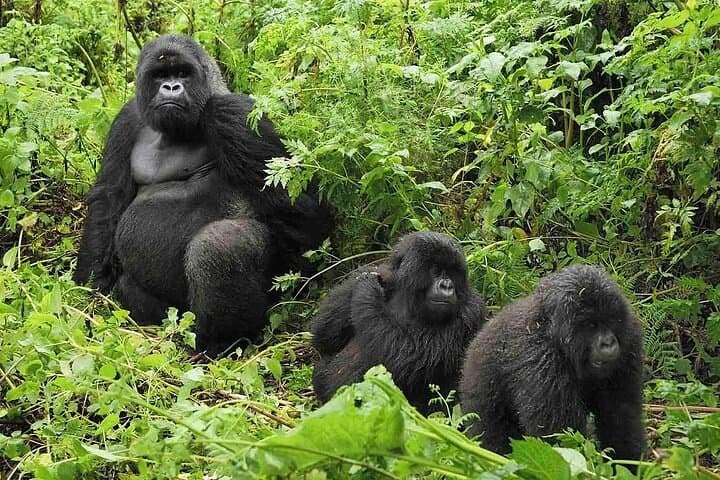
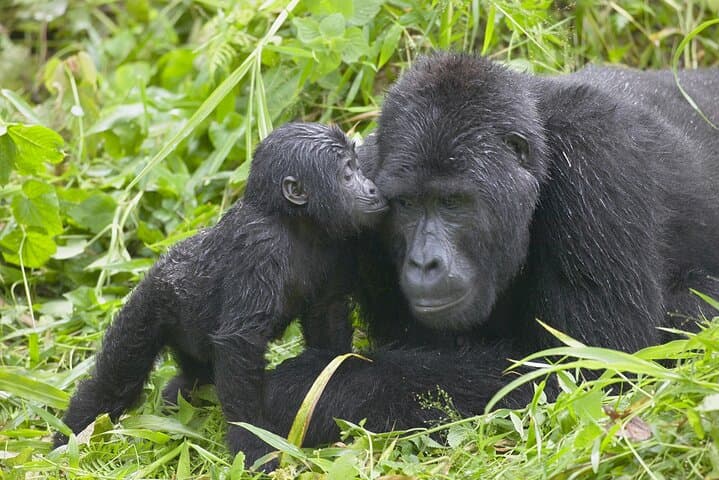
Dawn presses cold mist through the impenetrable forest as your guide checks permits and adjusts zippers—today the mountains answer with leaves and distant grunts. You step onto a narrow, root-strewn track that climbs and drops through moss-draped trees; sunlight slices the canopy in thin beams and the air smells of wet earth and green. By midmorning you might stand, silent and careful, six meters from a family of mountain gorillas: mothers feeding, juveniles tumbling, a silverback watching like a slow-moving guardian.
Dawn presses cold mist through the impenetrable forest as your guide checks permits and adjusts zippers—today the mountains answer with leaves and distant grunts. You step onto a narrow, root-strewn track that climbs and drops through moss-draped trees; sunlight slices the canopy in thin beams and the air smells of wet earth and green. By midmorning you might stand, silent and careful, six meters from a family of mountain gorillas: mothers feeding, juveniles tumbling, a silverback watching like a slow-moving guardian.
Bwindi Impenetrable National Park is ancient rainforest—part of the Albertine Rift with rugged ridges from roughly 1,160 to 2,600 meters elevation—habitat to mountain gorillas and dozens of endemic plants and birds. Nearby Queen Elizabeth National Park shifts the scene: broad savanna, the Kazinga Channel’s lazy boat traffic and tree-climbing lions in Ishasha. Local communities, including Bakiga and historically the Batwa, shape the human story here; conservation has remade livelihoods and set strict rules for contact and tourism.
Practically, expect steep, wet trails and variable days: gorilla treks run 2–8 hours depending on troop movement and can cover 4–12 km with significant elevation changes. Start early—briefings often at 6 a.m.—bring sturdy waterproof boots, a rain shell, at least 2 liters of water, and consider a porter for steep sections. Health restrictions apply: not recommended for pregnant travelers or those with serious back or heart conditions. Stay quiet, keep distance, and follow ranger instructions—your behavior protects both you and the gorillas.